

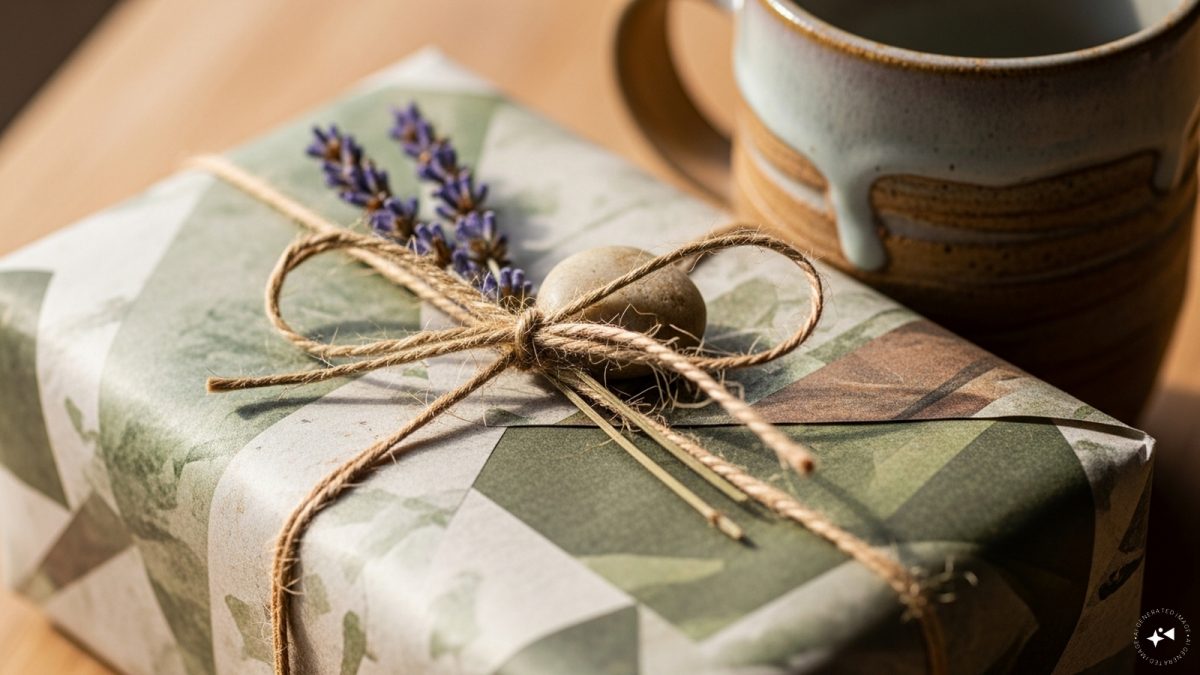
 "A clutter-free, sustainable gift guide for Christmas")
Every December, the pressure to gift well quietly turns into pressure to gift more. More things, more wrapping, more objects that feel thoughtful in the moment and slightly burdensome a few weeks later.
Sustainable gifting is often framed as a moral exercise: buy better, buy greener, buy consciously. But in practice, the most sustainable gifts tend to be simpler. It can be simple and thoughtful, rooted in how people actually live. Often, the best gifts are the ones that do not linger physically but still leave a mark.
Here’s a practical way to think about sustainable gifting for the festive season, one that works in shared spaces and busy lives, without turning the act of giving into a lecture.
Experience or skill-based gifts
Some of the most memorable gifts never make it home.
Tickets to a film screening, a concert, or a local event offer a break from routine. A short class or workshop, whether it is cooking, candle-making, fitness, or learning a new skill, creates time set aside for something different. Museum or cultural space memberships work similarly, especially in cities where people mean to visit but never quite do.
Experiences don’t need shelves, storage boxes, or careful rearranging. Once they’re done, they live on quietly as memories, which is perhaps the lightest footprint a gift can leave.
Consumables they already use or grow
The most useful gifts often replace something that already exists.
Food and drinks work best when they fit into existing habits. A bag of their favourite coffee beans, the matcha set they have been wanting to buy, or a homemade treat you know they actually like, feels thoughtful without being excessive. These are things meant to be used, not saved for a special occasion, and they slip easily into daily routines.
This category also includes small growing gifts, like herb plants or seed kits suited for balconies and windowsills. When chosen carefully, these don’t overwhelm the recipient with responsibility. They add a little life to spaces that already exist.
If it gets used, eaten, or grown slowly, it doesn’t become clutter.
Second-hand or pre-owned gifts (with context)
Second-hand gifts work best when they come with a story.
A book you’ve read and loved, a vintage home object meant for daily use, or thoughtfully chosen pre-owned clothing can feel far more personal than something new pulled off a shelf. What matters is not perfection, but the reason behind the choice.
When shared with care, these objects feel considered rather than leftover. They carry a sense of having been lived with before.
Digital and paper-light gifts
Some gifts don’t need to exist physically at all.
E-books, audiobooks, or digital magazine access are easy to carry and easy to return to. Online courses or short learning subscriptions allow people to explore interests without adding physical weight. Even a curated playlist or a shared photo folder can feel surprisingly intimate.
These gifts move easily across cities and time zones, and often stay with people longer than expected.
Repair instead of replacement
This is one of the most underrated forms of gifting.
Getting shoes resoled, a bag repaired, a watch serviced, or an appliance fixed might not look festive, but it is deeply practical. It shows that you noticed something they use and care about.
In a culture that constantly pushes us towards buying new things, choosing repair is a quiet act of care. It keeps objects in circulation and acknowledges that longevity, not novelty, is often what we actually need.
A quieter way to gift
Sustainable gifting isn’t about restraint or perfection. It can be about fitting better into someone’s life. If something gets used, finished, repaired, or remembered, it has already done what a gift is meant to do. And while it may feel small, these small deliberate choices quietly add up beyond our immediate lives: the resources we consume today shape the world future generations will inherit.

 "Worry for Trump: Unemployment rises to 4-year high, says US jobs report")
 "From Trump’s ‘alcoholic personality’ to Musk’s ‘avowed’ drug use: Bombshells from Susie Wiles’ interview")
 "What do Virginia Giuffre, Shafali Verma and Zohran Mamdani have in common? They are the underdogs of 2025")
 "Trump can build ballroom in White House, rules US federal judge")
 "Worry for Trump: Unemployment rises to 4-year high, says US jobs report")
 "From Trump’s ‘alcoholic personality’ to Musk’s ‘avowed’ drug use: Bombshells from Susie Wiles’ interview")
 "What do Virginia Giuffre, Shafali Verma and Zohran Mamdani have in common? They are the underdogs of 2025")
 "Trump can build ballroom in White House, rules US federal judge")



