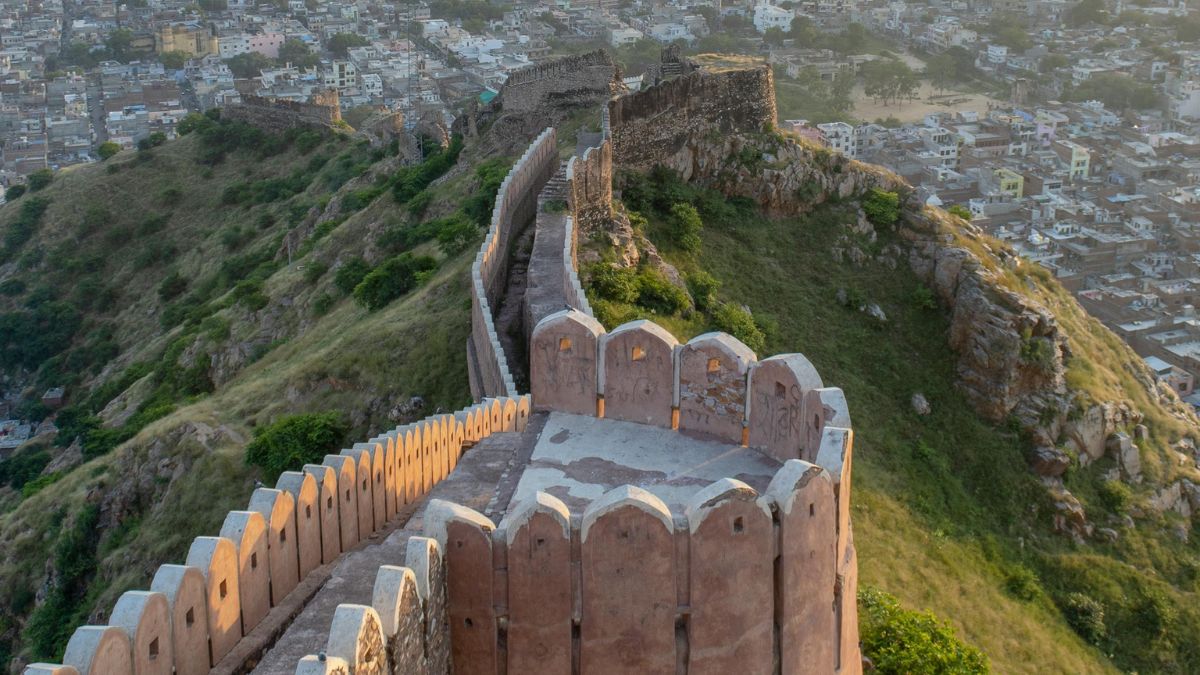
 "India’s invincible forts, from Janjira to Kumbhalgarh, stand as enduring symbols of military genius, architectural brilliance, and resilience, having withstood centuries of sieges without ever being conquered. Image courtesy/Pexel")
India is home to some of the world’s most historic Indian forts, many of which stand as testaments to architectural brilliance, military strategy, and resilience. Among them, a select few are legendary for being forts never conquered in battle.
These unconquered forts in India not only survived centuries of invasions but continue to inspire awe for their defensive ingenuity and grandeur.
In this article, we explore the strongest forts in India, uncover their fascinating stories, and dive into the legacy of these invincible forts in India.
1. Janjira Fort, Maharashtra
Located off the Konkan coast, Janjira Fort is one of the strongest forts in India, famous for being never defeated by the Portuguese, Marathas, or British forces. Surrounded entirely by the Arabian Sea, its invincible architecture included hidden cannons, thick walls, and advanced defense mechanisms.
Even today, Janjira is celebrated as a heritage fort in India and a marvel of Indian fort architecture history, drawing visitors interested in military history in India and coastal defense engineering.
2. Mehrangarh Fort, Rajasthan
Perched atop a steep hill in Jodhpur, Mehrangarh Fort is a prime example of ancient forts in India that remained unconquered in battle. Its massive walls, strategic location, and ingenious design thwarted countless invaders over the centuries.
This fort is not only one of the famous forts of India, but also a treasure trove for those exploring Indian history facts and the evolution of military architecture in India.
3. Jaisalmer Fort, Rajasthan
Known as the “Golden Fort of India,” Jaisalmer Fort is one of the largest inhabited forts in the world. Despite facing multiple sieges, including by Alauddin Khilji, it was never captured, making it one of the most invincible forts in India.
Its maze-like streets, towering walls, and heritage architecture make it a must-visit for travelers exploring unexplored forts in India and those fascinated by Indian fort history.
4. Kumbhalgarh Fort, Rajasthan
Spread across the Aravalli hills, Kumbhalgarh Fort boasts a wall stretching over 36 km, earning it the title of one of the strongest forts in India. It was never conquered in warfare, though it once fell due to a water shortage.
Kumbhalgarh is a perfect example of ancient forts in India designed for military advantage and remains a celebrated heritage fort in India, highlighting the brilliance of Indian architecture history.
What makes these forts unbeatable?
Several common features contributed to their invincibility:
1. Strategic location: Island, hilltop, or desert positioning made direct attacks difficult.
2. Massive walls and gates: Designed to withstand cannon fire and prolonged sieges.
3. Resource management: Hidden water reservoirs and storage for food and ammunition allowed defenders to survive long blockades.
4. Architectural ingenuity: Maze-like passages, multiple layers of defense, and steep approaches confused and stalled attackers.
Anuj is a senior sub-editor (lifestyle desk) at Firstpost who covers food, travel, health, and fitness, mostly because they’re all excellent excuses to leave the house. Powered by coffee, he spends his downtime airplane-spotting and exploring spirituality, hoping one day to understand both turbulence and the universe.