 "I went to the high-end salon that was forced to pay ₹25 lakh for a ‘bad haircut’. Here’s what happened.")
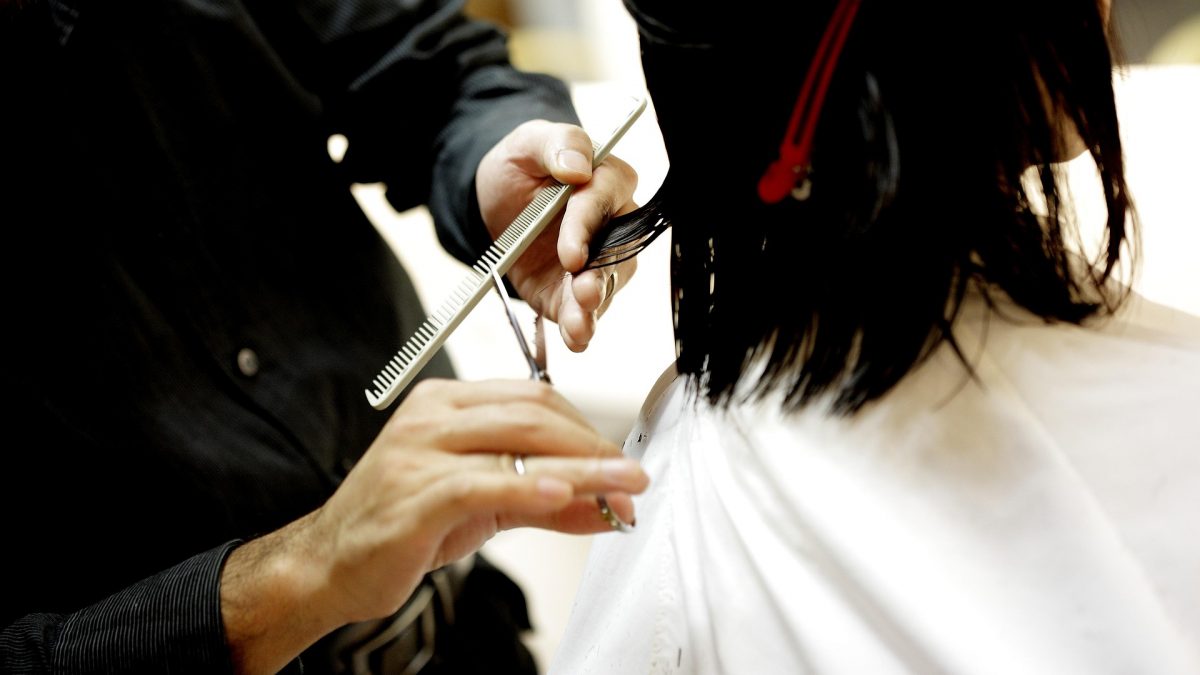
A woman was recently awarded ₹25 lakh in damages over a bad haircut at a high-end salon located in a luxury hotel in New Delhi. The compensation for alleged deficiency in service was cut (pun intended) from ₹2 crore by no less than the Supreme Court.
I tried to remember the last time I left a salon upset enough to consider litigation. My sister used to cry after nearly every haircut, convinced her bangs had been butchered. I, meanwhile, have always been the kid who falls asleep mid-trim, waking up to whatever fate decided, oblivious to the fuss of it all. On her part, the complainant alleged financial loss and emotional trauma for filing the case against the salon.
To finally understand what the fuss was about — and to test whether a place could truly ruin mood, career and hair — I ventured into ITC Maurya. I booked an appointment in advance. As I waited with a red towel draped over my shoulders, a middle-aged woman entered briskly and began fastening a cape around me as I explained what I wanted. I didn’t want anything too regrettable; I certainly did not have the time or resources to find myself entangled in a seven-year legal battle as the woman who won the reduced damages if things went south. But I also didn’t want something too safe. Then what would be the point of this little experiment? Or, as they say, for the plot.
I showed her several Pinterest videos and photos I had saved the night before. She glanced at them quickly and concluded I needed soft layers, while I was still talking about volume and length. She reminded me of the petite, middle-aged hairstylist my family used to visit in my father’s hometown — a small salon in the middle of a small town we drove an hour and a half to reach whenever we visited relatives. That woman was efficient, confident, and decisive. The kind of woman who had studied hair catalogues long before Instagram made everyone their own stylist. Back then, you trusted the salon lady more than you trusted yourself. Now we bleach our own hair and attempt wolf cuts at midnight.
“Is that why you’re worried?”
She called me “beta,” asked where I was from and whether I was working. Between the small talk, I asked how long she had worked there. “Thirty-five years,” she said. I hesitated before bringing up the lawsuit. Had she read about the model who sued the salon?
She laughed, not defensive, just amused. “Is that why you’re worried?”
I denied it quickly, though I realised I was a tad nervous. She dismissed the case as exaggerated, saying the woman had been a regular customer who left satisfied. “There’s CCTV footage of her walking out happily,” she added. News reports did note that the court referred to footage of the woman entering and exiting the salon as part of its inference that she appeared satisfied with the service.
The stylist mused that some people simply have too much time on their hands. She said the complainant’s brother was a lawyer. The implication hung in the air.
If beauty was once aspirational, it is now litigable.
For many, stepping into a high-end salon is an occasional indulgence. Most of us are caught in the productivity loop, measuring our days in tasks completed. Rest is scheduled. Leisure is optimised. Even a haircut becomes something to tick off, squeezed in between work meetings and errands. As long as it is passable, it works. We move on to the next thing.
How was the haircut?
By the time my hairstylist finished recounting stories about clients and colleagues, my haircut was done. The cape came off. I looked at myself in the mirror.
In the end, it was anticlimactic. I looked like myself, with slightly softer layers, a careful blow-dry, marginally fresher. Not transformed. Not devastated. Just … me.
Was I expecting a catastrophe dramatic enough to sue for ₹2 crore? Not really. The staff were skilled and warm. Nothing about the experience suggested ruin. If anything, it made me ask a simpler question than I thought I’d be addressing: how much does a haircut really matter?
For a day, maybe a week, it feels transformative. If you do something drastic, like the time I dyed my bangs pink, the thrill might last months. But beyond that, it fades into routine. Hair grows. Styles change. Life moves on.
But that’s me.
The complainant was clearly aggrieved at the haircut. She was outraged enough to measure it, contest it and earn punitive damages. That casts haircuts in India in a new light.