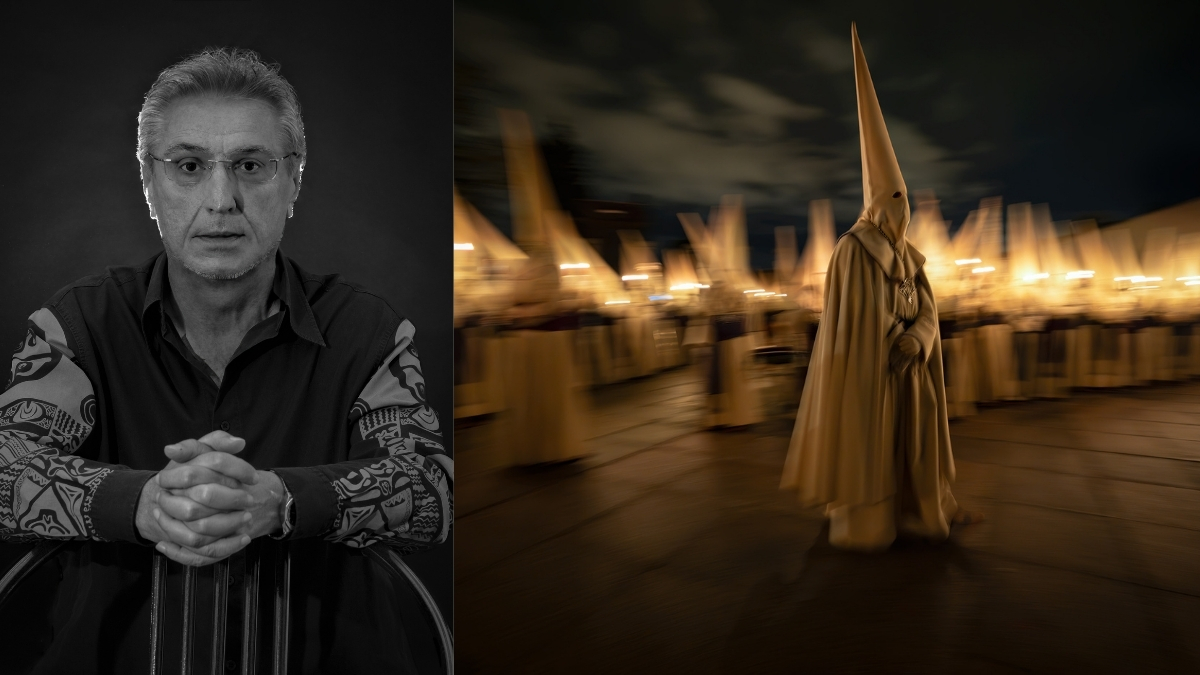
 "L-R: Image of Athanasios Maloukos, Holy Week processions of Zamora, Spain. PHOTO ©️ ATHANASIOS MALOUKOS")
Travel and photography are almost like two peas in a pod and the good thing is, the world recognizes this combination. Travel changes perceptions and if that gets reflected in one’s photo camera, the journey is well documented.
Overall winner of Travel Photographer of the Year 2025, Athanasios Maloukos of Greece was recognised for two powerful bodies of work that explore ritual, belief, and movement across cultures.
His winning series document the solemn Holy Week processions in Zamora, Spain and the Sema ceremony of whirling dervishes in Konya, Turkey.
Shot in challenging low-light conditions, both projects rely on carefully judged shutter speeds that balance blur and stillness, allowing motion to become an expressive element rather than a technical limitation.
The images evoke rhythm, reverence, and intensity, capturing moments where faith and movement merge.
“These images require immense skill to get right,” said TPOTY founder Chris Coe.
In an exclusive interview with Firstpost, Maloukos delved into his journey of photography and how a civil engineer by profession won the highest award for travel photography.
Edited excerpts from the interview
When did photography become central to your life, and how did your journey as a travel photographer begin?
There wasn’t a single turning point. Photography gradually became central to my life as I realized it was the most honest way for me to observe and understand the world.
Quick Reads
View AllMy journey into travel photography began through curiosity rather than ambition, traveling, encountering different cultures, and feeling the need to document what I was witnessing.
Over time, that instinct evolved into a focused body of work centered on cultural expression and lived traditions.
What drew you to the subject or moment captured in your winning photographs?
I am drawn to moments where collective experience becomes visible through gesture and movement.
In the case of the winning photographs, what interested me was the intensity contained within disciplined form, how faith, memory, and identity are expressed through posture, rhythm, and silence.
It was less about spectacle and more about witnessing a community fully immersed in its own tradition.
How do you balance being an observer with being respectful when documenting people, cultures, or rituals?
Respect comes before the photograph. I spend time understanding the context, speaking with participants when possible, and observing without the camera before I begin shooting.
I avoid interfering with the natural flow of events and remain aware of boundaries, both cultural and personal. Being an observer means accepting that not every moment is mine to capture.
How has your body of work evolved over the years, and what has remained consistent in your visual approach?
Over the years, my work has become more focused and intentional. In the beginning, I photographed more broadly, responding instinctively to what I encountered.
Gradually, my projects became long-term explorations centered on belief, identity, and collective expression.
What has remained consistent is my emphasis on composition, natural light, and the human presence within a wider cultural framework. I aim to let the scene unfold rather than construct it.
What did winning Travel Photographer of the Year mean to you personally and professionally?
Personally, it was a deeply meaningful recognition of years of commitment and independent work.
Since photography is not my primary profession, I am a Civil Engineer, the award carries an added sense of validation that serious, long-term dedication outside a full-time career can still reach the highest level.
Professionally, it offers international visibility and opens doors to wider audiences. It reinforces that disciplined, research-based storytelling can stand on equal footing in a global competition.
How do travel and time spent in unfamiliar places shape the way you see the world?
Travel, especially to places where I am culturally and socially an outsider, reshapes my understanding of how people interpret the world. Each community operates within its own framework of history, belief, and shared memory.
Spending time in unfamiliar environments challenges my assumptions and forces me to reconsider what I take for granted.
It becomes less about documenting difference and more about recognizing parallel human concerns expressed in different ways.
That process deepens empathy. When you witness how identity, grief, celebration, or devotion are embodied in daily life, you begin to see beyond stereotypes or simplified narratives.
Travel, for me, is not movement for its own sake; it is a gradual education in perspective. It reminds me that understanding requires patience, proximity, and humility, qualities that influence not only how I photograph, but how I engage with the world.
What advice would you offer to photographers trying to build a meaningful, ethical travel photography practice today?
Do not rush. Build your work slowly. Spend time understanding the context before raising the camera, and research the history behind what you photograph.
Meaningful travel photography is not about collecting striking images, but about developing sustained engagement with a place or community.
Ethically, be transparent about your intentions, respect boundaries, and accept that some moments are not yours to document.
Avoid staging or manipulating reality for impact. In the long run, consistency, patience, and integrity will define the value of your work more than visibility or social media reach.
An aspiring globetrotter, Arpita Chowdhury is a writer, poet, and researcher with a strong grounding in human-interest storytelling. She holds an MA in Journalism and International Affairs from University College Dublin, completed in collaboration with the CNN Academy. Her reporting and commentary have appeared in several national and international dailies, spanning travel, culture, politics, and people-centric narratives. Powered by adrak chai, she is always chasing stories that connect place with people. Reach her at arpita.chowdhury2@nw18.com