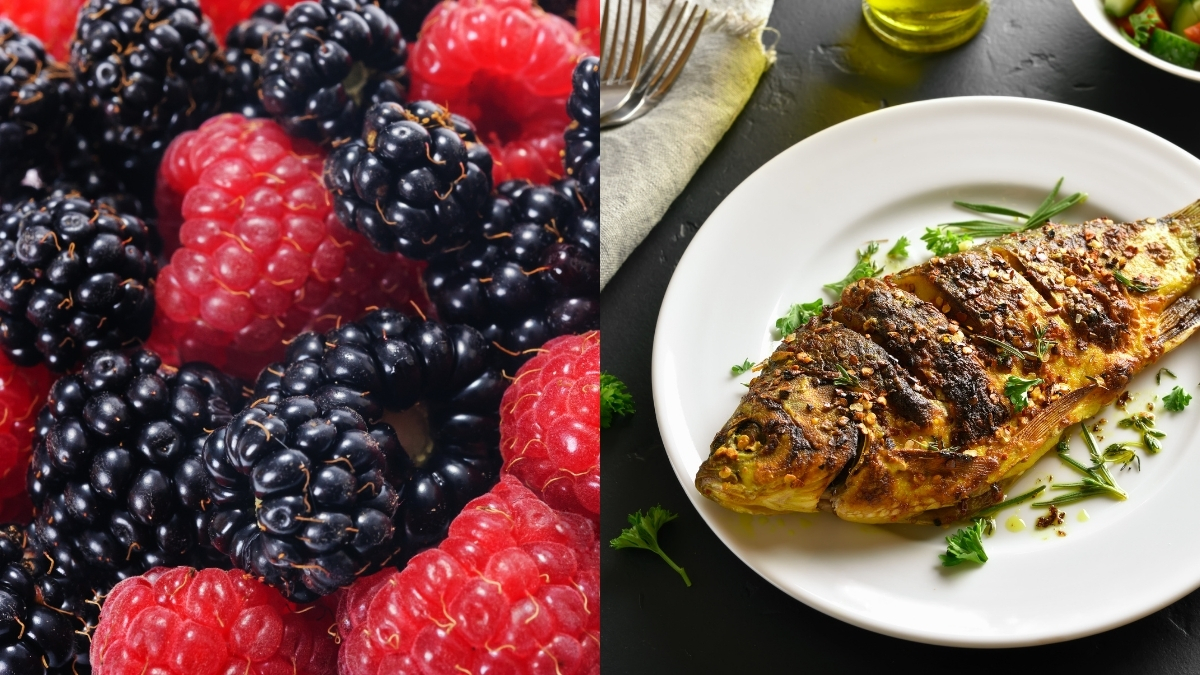
 "The idea behind the MIND diet is simple. What is good for the heart is often good for the brain. Credits/Pexels")
Food for the body has long been in focus, but brain health is now entering the conversation. What if your daily diet could also help slow down how your brain ages?
A new study suggests that the MIND diet may help slow down brain ageing, adding to growing interest in how food choices affect long-term brain health.
Published in the Journal of Neurology, Neurosurgery & Psychiatry, the study looked at the diets of more than 1,600 adults from an offshoot of the Framingham Heart Study.
Over a follow-up period of about 12 years, people who followed the MIND diet more closely showed a slower decline in grey matter, a key part of the brain.
A higher diet score was linked to a pace of brain ageing that was about 2.5 years slower.
Researchers also found slower changes in other brain markers linked to ageing.
What is the MIND diet?
The MIND diet, short for Mediterranean-DASH Diet Intervention for Neurodegenerative Delay, is a way of eating designed to support brain health.
It combines parts of the Mediterranean diet and the DASH diet, which focuses on reducing salt.
The MIND method emphasizes eating specific foods thought to reduce the risk of dementia: berries, beans, leafy green vegetables, fish, poultry, whole grains, olive oil and nuts.
Foods with saturated fats, such as cheese, butter, red meat and fried foods, are extremely limited.
In 2015, Martha Clare Morris and her team at Rush University Medical Center and the Harvard T.H. Chan School of Public Health introduced the diet.
Both the Mediterranean and DASH diets were already linked to better heart health and, in turn, better brain function.
Quick Reads
View AllWhy the diet matters?
The idea behind the MIND diet is simple. What is good for the heart is often good for the brain.
The diet focuses on plant-based foods and limits items high in saturated fat. It is also being studied for its role in reducing the risk of dementia.
What to eat and avoid?
The MIND diet highlights certain foods as “brain healthy” and suggests cutting down on others.
Foods to include:
3 or more servings a day of whole grains
At least 1 serving a day of
vegetables
, apart from green leafy ones
6 or more servings a week of green leafy vegetables
5 or more servings a week of nuts
4 or more meals a week of beans
2 or more servings a week of berries
2 or more meals a week of poultry
1 or more meals a week of fish
Olive oil as the main added fat
Foods to limit:
Less than 5 servings a week of sweets and pastries
Less than 4 servings a week of red meat
Less than one serving a week of cheese and fried foods
Less than 1 tablespoon a day of butter or margarine
What researchers say
“Berries are rich in antioxidants and other bioactive compounds, and poultry can provide high-quality protein as part of a balanced diet,” said first author Hui Chen from the Zhejiang University School of Medicine, speaking to CNN.
“In contrast, higher intakes of sweets and fried fast foods tended to be associated with faster brain aging over time,” Chen said in an email conversation with CNN.
“Foods are consumed together, and their combined effects may be more important than the contribution of one food alone,” Chen said.
One of the authors of the research, Changzheng Yuan told CNN, “In addition to less shrinkage in gray matter, those participants who more closely followed the MIND Diet ‘had slower enlargement of the ventricles, the fluid-filled spaces that tend to expand as brain tissue shrinks with age.’”
The development of larger ventricles, which accelerates after age 60, is a sign of increased brain atrophy linked to Alzheimer’s disease and cognitive decline.
What other studies show
Other large studies have found similar patterns. People who follow the MIND diet more closely tend to have better memory, better overall brain function and a lower risk of dementia. This includes people living with Alzheimer’s disease or those who have had a stroke.
Some of the grey areas
The MIND diet is flexible in that it does not include rigid meal plans. However, this also means that people will need to create their own meal plans and recipes based on the foods recommended on the MIND diet.
This may be challenging for those who do not cook. Those who eat out frequently may need to spend time reviewing restaurant menus.
Although the diet plan specifies daily and weekly amounts of foods to include and not include, it does not restrict the diet to eating only these foods.
It also does not provide meal plans or emphasize portion sizes or exercise.
Should you really try it?
The MIND diet is not a strict or restrictive plan, which makes it easier to follow over time. It focuses on everyday foods and simple changes.
Experts generally see it as a safe and balanced way of eating, especially since it overlaps with well-known heart-healthy diets.
However, it is not a quick fix. The benefits are linked to long-term habits, so consistency matters more than perfection.
As with any diet change, it is best to adapt it to your needs and speak to a healthcare professional if you have existing health conditions.