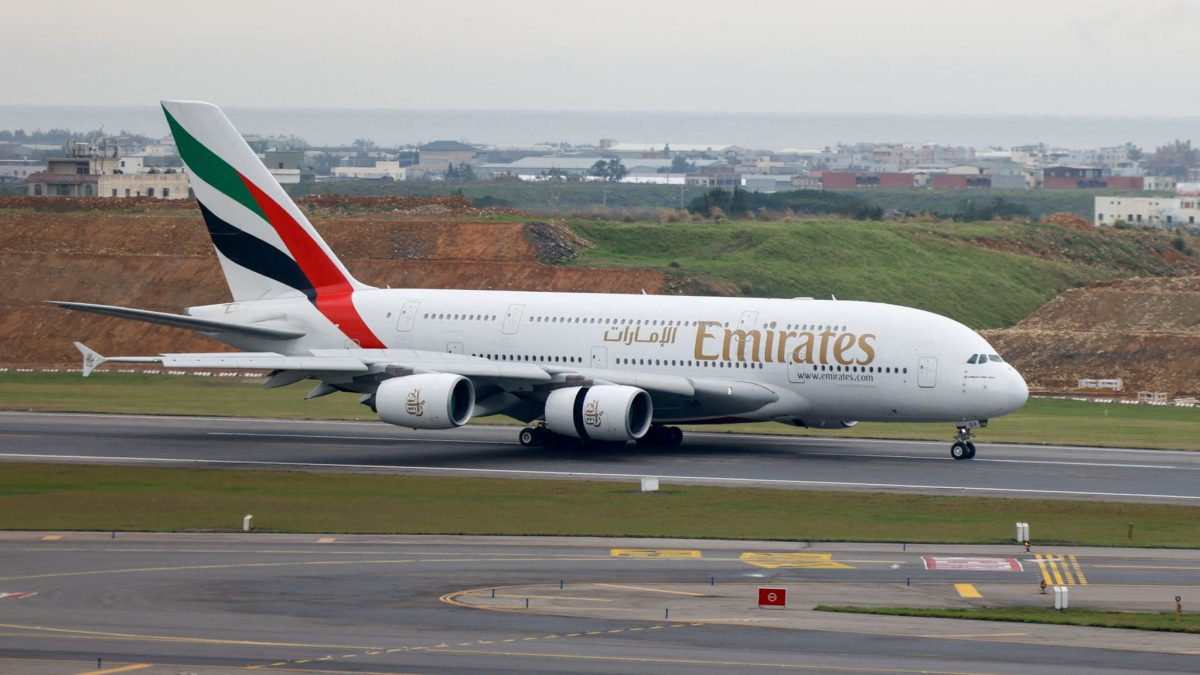
 "An Emirates flight departing from Dubai , amid the U.S.-Israel conflict with Iran, lands in Taiwan. REUTERS/File Photo")
Airfares on several international routes have surged sharply in recent days as widespread travel disruptions in the Gulf ripple across global aviation networks.
Airspace closures and airport shutdowns across parts of the Middle East have forced airlines to cancel or reroute flights, dramatically reducing seat availability on many routes connecting Asia, Europe and the Gulf. The disruptions come amid escalating regional tensions that have restricted key flight corridors used by international carriers. As a result, travellers are now facing soaring ticket prices, particularly on routes linking India with the United Arab Emirates and Europe.
UAE–India fares touch ₹1 Lakh
One of the sharpest spikes has been seen on India–Gulf routes. Return and one-way ticket prices between the UAE and India have surged dramatically as stranded passengers scramble to secure seats home.
On some routes, such as Dubai–Mumbai, fares have climbed to nearly ₹1 lakh for a one-way ticket, several times higher than usual prices. The spike has been driven by flight cancellations, limited capacity and sudden demand from travellers attempting to leave the region. Travel agents say price gaps have also widened between direct flights and indirect routes, with connecting flights sometimes becoming the only available option.
Asia–Europe routes also affected
The impact is not limited to the Gulf. Prices on routes between Asia and Europe have also risen after major aviation hubs in the Middle East reduced operations.
Many long-haul flights normally pass through Gulf airspace or rely on airports such as Dubai, Doha and Abu Dhabi as transit hubs. When those hubs slowed or temporarily closed, airlines had to reroute aircraft or cancel services altogether, shrinking available capacity across the network. On some routes, airline websites have shown flights fully booked for days, further driving up ticket prices.
Rerouting flights adds costs
Avoiding restricted airspace means aircraft must take longer detours, increasing both travel time and fuel consumption. These operational challenges can quickly translate into higher fares for passengers. In some cases, airlines have also introduced technical stops on long-haul flights to manage fuel requirements for longer routes.
Travel experts say the disruption highlights how dependent global aviation is on the Gulf corridor, which sits at the centre of many of the world’s busiest long-distance flight paths.
Quick Reads
View AllUncertain outlook for travellers
Although some flights have gradually resumed, schedules remain volatile as airlines continue to adjust routes and monitor security conditions. Industry analysts say ticket prices may remain elevated until airlines can restore normal operations and reopen key airspace corridors.
For now, travellers booking international flights, particularly between India, the Gulf and Europe, may face higher fares and limited seat availability.