Firstpost
  • Video Shows
    Vantage Firstpost America Firstpost Africa First Sports
  • World
    US News
  • Explainers
  • News
    India Opinion Cricket Entertainment Business Sports Tech Photostories Health
  • Lifestyle

Sections

  • Home
  • Live TV
  • Videos
  • Shows
  • World
  • Entertainment
  • India
  • Explainers
  • Opinion
  • Sports
  • Cricket
  • Lifestyle
  • Health
  • Tech/Auto
  • Web Stories
  • Business
  • Impact Shorts

Shows

  • Vantage
  • Firstpost America
  • Firstpost Africa
  • First Sports
  • Fast and Factual
  • Between The Lines
  • Flashback
  • Live TV

Events

  • Raisina Dialogue 2026
  • Putin in India
  • Bihar Election
  • Independence Day
  • Champions Trophy
  • Delhi Elections 2025
  • Budget 2025
  • Firstpost Defence Summit
Trending:
  • West Asia war
  • Trump China visit
  • Pakistan-Afghanistan conflict
  • Attacks in the UAE
  • Netanyahu death rumours
  • Fide Candidates 2026
advertisement
fp-logo
Climate change and human pressure shrink India's natural forests
Whatsapp Facebook Twitter

Sections

  • Home
  • Live TV
  • Videos
  • Shows
  • World
  • Entertainment
  • India
  • Explainers
  • Opinion
  • Sports
  • Cricket
  • Lifestyle
  • Health
  • Tech/Auto
  • Web Stories
  • Business
  • Impact Shorts

Shows

  • Vantage
  • Firstpost America
  • Firstpost Africa
  • First Sports
  • Fast and Factual
  • Between The Lines
  • Flashback
  • Live TV

Events

  • Raisina Dialogue 2026
  • Putin in India
  • Bihar Election
  • Independence Day
  • Champions Trophy
  • Delhi Elections 2025
  • Budget 2025
  • Firstpost Defence Summit

Climate change and human pressure shrink India's natural forests

Treya Sinha • March 17, 2026, 14:00:25 IST
Whatsapp Facebook Twitter
advertisement

The Panchmarhi Biosphere Reserve (PBR), a vital ecological anchor in the heart of Madhya Pradesh, is currently witnessing a transformative and troubling shift. Once celebrated as a dense stronghold of Central India’s tropical deciduous forests, this protected landscape is thinning at an accelerating rate.

Advertisement
Subscribe Join Us
+ Follow us On Google
Climate change and human pressure shrink India's natural forests
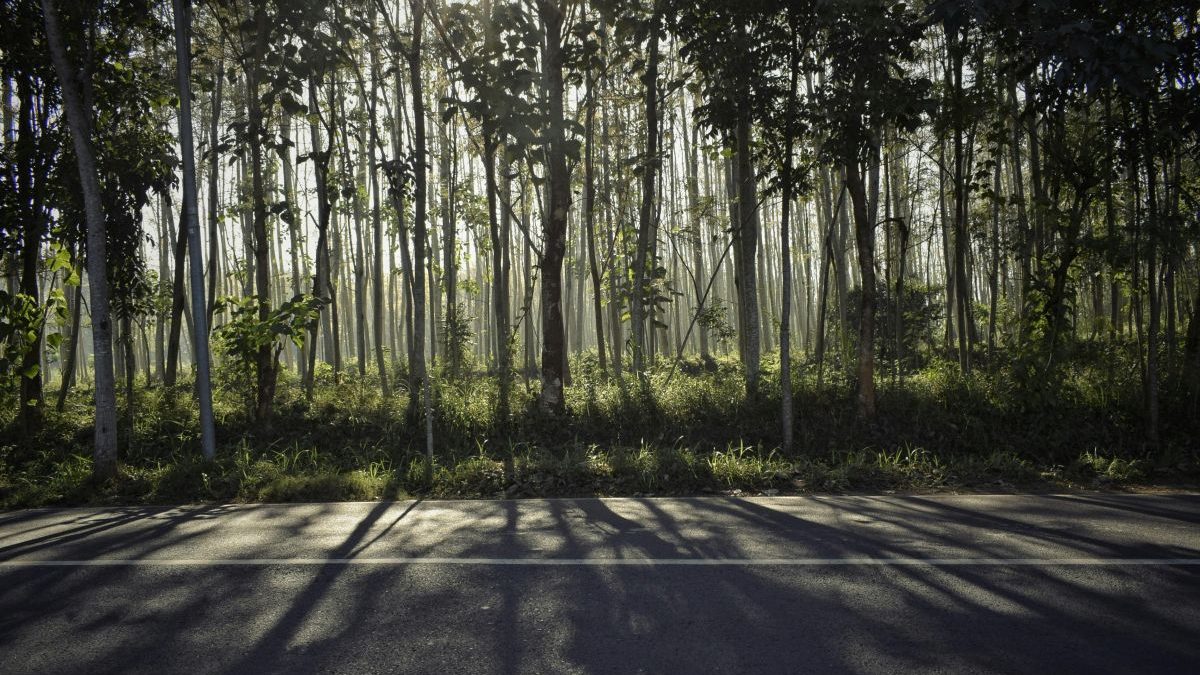
Representational Image. Image Courtesy/ Pexels

A comprehensive study spanning the years 1972 to 2020 has revealed that the reserve lost approximately 13% of its total forest cover over nearly five decades. This reduction, amounting to 391 square kilometers, represents more than just a loss of trees; it signifies a fundamental degradation of an ecosystem that supports some of India’s most iconic wildlife and regulates regional climate patterns.

The map of forest losses

Researchers from the Central University of Jharkhand and Banaras Hindu University utilised 50 years of climate data alongside high-resolution satellite imagery to trace this decline. Their findings suggest that the very composition of the forest is in flux. Many areas that were recorded as robust forest patches in the early 1970s have transitioned into scrub forests or have been entirely converted for alternative land uses.  

This transition is most visible in the canopy density. The study found that dry teak forests — a staple of the Central Indian landscape, suffered the most significant blow, with a 41.26% loss in canopy cover. Dry mixed deciduous forests followed with a loss of nearly 20%. These statistics highlight a vulnerability in dry-land ecosystems, which appear to be reaching a threshold where natural regeneration can no longer keep pace with external pressures.

STORY CONTINUES BELOW THIS AD
More from Lifestyle
2016 to 2026: How travel has changed in the last 10 years 2016 to 2026: How travel has changed in the last 10 years In video: Viral monkey baby Punch finds love; seen kissing, cuddling female macaque In video: Viral monkey baby Punch finds love; seen kissing, cuddling female macaque

The catalyst of climate change

While human activities such as grazing, timber extraction, and encroachment remain persistent challenges, the research underscores a more pervasive threat: a changing climate. Rising temperatures and erratic precipitation have become the primary drivers of forest degradation.

Since 1971, the PBR has experienced statistically significant temperature increases across all seasons, with the post-monsoon period seeing the sharpest rise. A critical discovery in the study is the link between heat and fire. When maximum temperatures exceed 32°C, the risk of forest fire occurrence spikes dramatically. These fires do not merely clear undergrowth; they damage the vitality of the standing timber and alter species niches, making it harder for native flora to maintain their historical dominance.

Shifting seasons and survival

The forest’s health is also being undermined by a disruption in its natural biological cycles. Tropical deciduous forests are defined by their seasonal rhythms, shedding leaves in the dry months and greening during the rains. However, precipitation patterns are shifting away from the post-monsoon period toward the pre-monsoon season. Combined with rising heat, this forces trees into a state of moisture stress.  

In some observed cases, species like the Semal tree have begun leaf development earlier than usual as a survival response to winter heat and rainfall deficits. When these biological windows shift or shorten, the period available for photosynthesis is reduced. Over the long term, this weakens the trees and diminishes the forest’s capacity to function as a reliable carbon sink.

Quick Reads

View All
Oxford Museum is returning a 500-year-old statue to India. Here's why

Oxford Museum is returning a 500-year-old statue to India. Here's why

‘When dragons ate the Sun’: The superstitions around a solar eclipse

‘When dragons ate the Sun’: The superstitions around a solar eclipse

The ripple effect on regional stability

The implications of this decline extend far beyond the borders of the biosphere reserve. The tropical forests of Central India are essential regulators of the monsoon. Large-scale forest loss in this region could potentially disrupt rainfall distributions across the country, which would have direct consequences for an economy still heavily reliant on agricultural productivity.

Furthermore, the PBR serves as a genetic reservoir for a vast array of plant life. A survey of the reserve identified 190 plant species, including 85 tree varieties, with roughly 37% of these species currently listed on the IUCN Red List. The loss of these forests represents a loss of biological heritage that may be irreplaceable.

STORY CONTINUES BELOW THIS AD

Pathways to resilience

Despite the downward trend, there are signs that the forest can recover if managed with precision. The study noted a slight “greening” trend between 2006 and 2021, attributed to restoration efforts like REDD+. these gains are fragile. Experts argue that the key to long-term resilience lies in biodiversity.  

A diverse forest is more likely to contain species capable of surviving structural changes and localized heat stress.  

Conservation strategies must evolve from passive protection to active, evidence-based management. This includes strengthening the support for local communities who depend on forest produce and ensuring that restoration projects prioritize ecological variety over simple monoculture plantations. Strengthening these central forests is not just an environmental goal set by the government, but a necessity for the ecological and economic integrity of the entire subcontinent.


Follow Firstpost on Google for the latest lifestyle updates including stories on travel and tourism, culture, health, and more. Stay informed with in-depth coverage of global developments, right from geopolitics and diplomacy to major world news with the latest perspectives, only on Firstpost.
  • Home
  • Lifestyle
  • Climate change and human pressure shrink India's natural forests
End of Article
Written by Treya Sinha

Treya Sinha is an Arts and Lifestyle writer. She loves literature and music and wants to have a Mary Oliver-esque affinity with the world. see more

Latest News
Find us on YouTube
Subscribe
  • Home
  • Lifestyle
  • Climate change and human pressure shrink India's natural forests
End of Article

Quick Reads

Oxford Museum is returning a 500-year-old statue to India. Here's why

Oxford Museum is returning a 500-year-old statue to India. Here's why

A 16th-century bronze statue of Saint Tirumankai Alvar, taken from a Tamil Nadu temple, was returned to India by Oxford's Ashmolean Museum after provenance was confirmed. The statue was identified using 1957 temple photos and repatriation efforts took nearly eight years. The Ashmolean Museum acquired the statue in 1967, unaware of its origins, and has committed to ethical collection practices.

More Quick Reads

Top Stories

US Iran War Live Updates: Israel targeted Iran national security chief Larijani in strike, army says

US Iran War Live Updates: Israel targeted Iran national security chief Larijani in strike, army says

How a timely walk saved Mojtaba Khamenei’s life in strikes that killed his father

How a timely walk saved Mojtaba Khamenei’s life in strikes that killed his father

Iran war refuels Ukraine conflict? Russian oil flow jumps, Ukrainian war tech crosses over to West Asia

Iran war refuels Ukraine conflict? Russian oil flow jumps, Ukrainian war tech crosses over to West Asia

‘Not our war’: Allies snub Trump on Hormuz, say conflict began without consultation

‘Not our war’: Allies snub Trump on Hormuz, say conflict began without consultation

US Iran War Live Updates: Israel targeted Iran national security chief Larijani in strike, army says

US Iran War Live Updates: Israel targeted Iran national security chief Larijani in strike, army says

How a timely walk saved Mojtaba Khamenei’s life in strikes that killed his father

How a timely walk saved Mojtaba Khamenei’s life in strikes that killed his father

Iran war refuels Ukraine conflict? Russian oil flow jumps, Ukrainian war tech crosses over to West Asia

Iran war refuels Ukraine conflict? Russian oil flow jumps, Ukrainian war tech crosses over to West Asia

‘Not our war’: Allies snub Trump on Hormuz, say conflict began without consultation

‘Not our war’: Allies snub Trump on Hormuz, say conflict began without consultation

advertisement

Top Shows

Vantage Firstpost America Firstpost Africa First Sports
Enjoying the news?

Get the latest stories delivered straight to your inbox.

Subscribe
advertisement
Latest News About Firstpost
Most Searched Categories
  • Web Stories
  • World
  • India
  • Explainers
  • Opinion
  • Sports
  • Cricket
  • Tech/Auto
  • Entertainment
  • Photostories
  • Lifestyle
NETWORK18 SITES
  • News18
  • Money Control
  • CNBC TV18
  • Forbes India
  • Advertise with us
  • Sitemap
Firstpost Logo

is on YouTube

Subscribe Now

Copyright @ 2024. Firstpost - All Rights Reserved

About Us Contact Us Privacy Policy Cookie Policy Terms Of Use
Home Video Quick Reads Shorts Live TV