 "Surprise: BSE, NSE kiss and make-up")
The National Stock Exchange and BSE Ltd (formerly Bombay Stock Exchange) have decided to bury their hatchets and become friends. Or so it seems, from the joint press release issued by the exchanges last week.
Under this agreement, stock price feeds coming from the BSE and NSE will shortly be available on a single trading platform. So brokers/traders will no longer have to use separate terminals to execute trades or view the price quotes coming from the two exchanges.
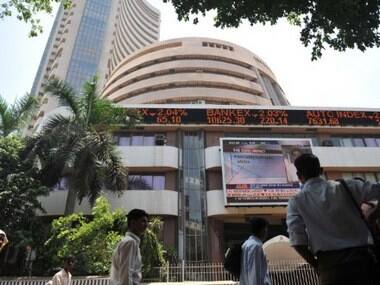
[caption id=“attachment_97692” align=“alignleft” width=“380” caption=“There could be a deeper reason for the new-found friendship between the two exchanges. Reuters”]
 [/caption]
Also, members of both exchanges will soon be able to use inter-exchange algorithmic trading, wherein brokers can run a trading software program that captures the price differential on two exchanges for the same stock (buy on the exchange where price is lower and sell it on the exchange it is dearer, or the same trade in reverse) or automatically route the trade to the exchange with the best price. The last point had been a bone of contention between the two exchanges for nearly two years now.
Till last week, NSE had denied permission for such programs to run on its servers, citing “certain security issues.” BSE had complained first to Sebi, and then to the finance ministry, accusing the NSE of restrictive trade practice.
So what could have caused this sudden change of heart? One theory is that the two exchanges have come together to protect their turf against MCX-SX, if and when Sebi gives the green signal for its equity trading platform. Profit margin in the stock exchange business is nearly 50%, the highest in any industry of this scale, and the incumbents would want to guard it at any cost . MCX-SX, the arm of commodity exchange MCX, is currently slugging it out with the market regulator in court, for the approval to launch its equities platform.
But there could be a deeper reason for the new-found friendship between the two exchanges, which have been bitter rivals for nearly 15 years.
Probably the NSE has realized that it makes sense to join hands if that helps grow the market. Trading volumes have gone nowhere since the market peaked in early January 2008. Look at the daily average traded turnover in the cash market on the NSE.
2007-08 - Rs 14,148 crore
2008-09 - Rs 11,325 crore
2009-10 - Rs 16,959 crore
2010-11 - Rs 14,048 crore
2011-12*- Rs 11,082 crore
(*till September 2011)
The BSE has not fared any better during this period, with the daily average traded turnover dropping from Rs 6290 crore to Rs 4333 crore between 2007-11. For the current financial year, the daily average was dropped further to Rs 2843 crore.
NSE appears to have done well in its derivatives segment. Daily average turnover has more than doubled from Rs 52,153 crore in 2007-08 to Rs 115,000 crore in 2010-11. It continues to rise and is averaging Rs 126,000 crore for the current financial year so far. Yet, this growth means little to brokers and the exchange as well, to an extent. That is because the rise in equity derivatives activity has been driven by increased trading in options segments. So the huge rise in turnover is nothing but the rise in notional value of the options contracts changing hands. For instance, the premium on an option contract of Rs 100 is Rs 5, the exchange will show the turnover as Rs 100. But the broker earns his commission on only the value of the premium (Rs 5), and the exchange can levy transaction charges on only Rs 5. This is unlike in futures trading, where if Rs 100 worth of a futures contract is traded, the broker charges commission on the entire value, and the exchange too collects transaction charges on the full amount.
The key to profitability for brokers, as well as stock exchanges, is the cash market, and that has been struggling for a long time now.
The move to encourage inter-exchange algorithmic trading will benefit the BSE more than the NSE, initially. Such strategies are used only by institutional investors and large broking firms trading on their own accounts. But NSE will be betting that this will help improve overall liquidity, which should lower volatility somewhat and improve depth in the market. Liquidity itself may not be a good reason for people to invest in stocks in a bad market. But less volatility could instill some confidence in retail investors who have been rattled by the sharp swing in stock prices over the past few months. And NSE has nothing to worry. It dominates the cash market turnover 3:1.
Besides, the NSE could do well some image makeover. The exchange was pulled up the Competition Commission for waiving transaction charges in its currency derivatives segment, terming it an unfair trade practice. NSE is contesting the decision, and maybe it could even win on appeal. Yet, it would be keen to be seen as contributing to the development of markets rather than as a bullying market leader.
Is the truce with BSE the first in a series of steps that will result in greater co-operation between the two exchanges? Or is it a one-off pact to thwart competition as well as protect its own self-interests? It is too early to say. In early 2009 when MCX-SX was preparing to launch, there was talk about an informal alliance between BSE and NSE. But nothing came out of it. MCX-SX did not get the Sebi approval and the two exchanges were back to their feuding ways.
In late 2009, when Sebi allowed stock exchanges to extend trading hours, BSE tried to steal a step on its arch rival by advancing timings by 10 minutes. NSE hit back with a heavy hand, advancing it by a full one hour to 9 am, leaving BSE no choice but to follow suit. The new timings came into effect from the beginning of 2010, despite loud protests from the investing community
Now that both exchanges have become friends again, maybe they could think about reverting to the earlier timings, 10 am to 3:30 pm. Longer trading hours have not really added to the bottomlines of exchanges, or of broking firms/stock traders. That is because neither traded turnover nor the number of trades have seen any meaningful improvement to justify the additional hours.Here are the stats.
In 2009-10, there were a total of 168 crore trades on the NSE (the new timings were applicable only for the last three months of the financial year). In 2010-11, despite the extended hours, the number of trades fell to 155 crore. And in the first half of 2011-12, there have been only around 70 crore trades. Ultimately, sentiment and outlook are bigger driving forces than longer trading hours, securities transactions tax or any other regulation for that matter. When there is money to be made, people will trade/invest no matter whatever the regulatory hurdles. And when sentiment sours, nothing will work: not extended hours, not favourable tax structures.
Santosh Nair is Editor, Moneycontrol.com. He writes on Banking & Financial Services, Market Outlook - Short Term, Cement & Construction.