 "Investor Alert: India, China far more exciting than developed world")
HSBC Global Asset Management (HSBC) has said emerging markets (EMs) including China, India and Indonesia will continue to outperform developed world economies in 2013 and 2014. This is because the developed markets are plagued by problems like on-going fiscal pressures, weak consumption and high unemployment rates.
This assessment is based on HSBC’s latest investment quarterly update for the second quarter of 2013.
HSBC expects EMs will continue to grow at a healthy differential relative to the developed world in 2013 and 2014 yet at a slower pace than in the 2000s as a number of the larger economies begin to mature and China, in particular, struggles to grow led by consumption rather than net exports and investment, a statement from HSBC said.
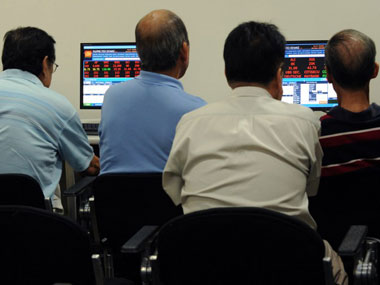
[caption id=“attachment_730235” align=“alignleft” width=“380”] Emerging market equities are poised to outperform bonds in the long term, supported by strong and sustainable corporate profitability and the appreciation potential of emerging markets currencies. AFP[/caption]
In this context, emerging market equities are poised to outperform bonds in the long term, supported by strong and sustainable corporate profitability and the appreciation potential of emerging markets currencies.
Herve Lievore, Senior Macro and Investment Strategist at HSBC Global Asset Management said, “As emerging markets have outgrown the developed world, their global influence has also increased, resulting in a shift in the centre of the global economy. Investors should be wary of caveats which include the on-going eurozone crisis, US fiscal adjustment, risks to China’s growth outlook and potentially asset price bubbles from excesses that will inevitably get in the way from time to time.”
Bill Maldonado, Regional Chief Investment Officer, Asia Pacific at HSBC Global Asset Management said, “The takeover by emerging markets as the global growth engine drives investors to focus on emerging markets and look for long term investment opportunities. We continue to favour emerging market equities especially those in Asia including China and India, due to low valuations and supportive corporate profitability. Corporate bonds, in particular high yield bonds look more attractive than government bonds as they offer higher yield.”
On Asia, HSBC says China is likely to achieve a soft landing. Economic reforms and liberalisation are expected to continue with a focus on boosting domestic consumption with the new leadership now in place. In the short term, the bias of monetary policy is probably slightly more restrictive than it was a few months ago given that inflation has ticked up, but is not, in HSBC’s view, enough to derail growth, the statement said.
On Japan, it says as long as investors continue to expect stepping up of monetary easing, the Japanese Yen will likely stay on a depreciation trajectory against currencies for which monetary policy shows more stability. In the near term, the Bank of Japan’s policy will likely keep rates at extremely low levels with limited volatility but risks will arise if consumer prices finally start to rise.
Looking at the US, the underlying fundamentals for the economy are gradually improving - the banking system has largely recapitalised and recovered from the credit crisis, the housing market is rebounding and jobs continue to be created at a decent pace, which should help offset various tax increases and government spending cuts this year worth around 1.5 per cent of GDP. HSBC expects the US economy to record at least 2 percent growth in 2013.
The report also indicates that post-crisis growth is likely to remain subdued for the next few years as there will be a structural overhang on growth from developed world leverage and population ageing. Compounding the problem, monetary policy has lost much of its power to stimulate in this balance-sheet constrained world and the need for fiscal consolidation will also limit the policy response, the statement added.