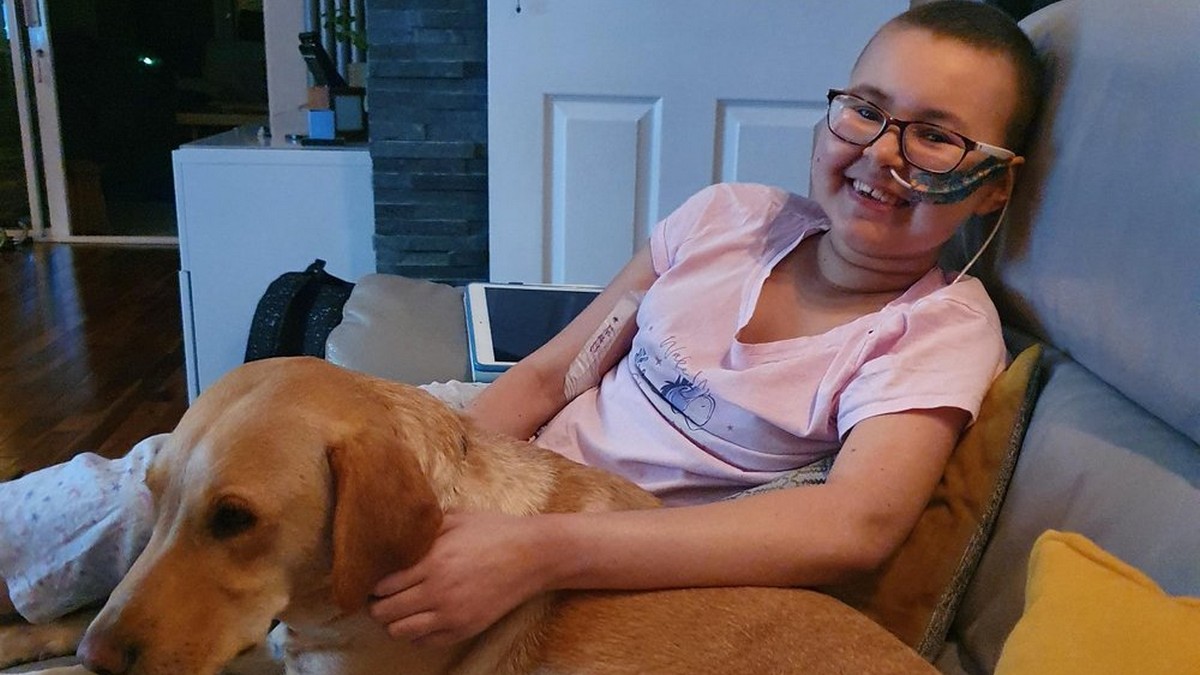
 "Hope was running out for Alyssa, who was part of the tests in 2022. But now doctors have given her a clean bill of health. Image courtesy: Gosh.NHS.UK")
For many, blood cancer has been a death sentence. Until now.
Scientists have used a new type of gene therapy to cure leukaemia patients.
The treatment, which uses edited immune cells from donors, is giving hope to millions of people around the world who have had to thus far live with incurable cancers.
But what happened? What do we know?
Let’s take a closer look
A brief look at leukaemia
First, let’s take a brief look at leukaemia.Leukaemia is a cancer of the body’s blood-forming tissues. The term itself is derived from the Greek words for “white” (leukos) and “blood” (haima).
It begins in the bone marrow when abnormal white blood cells rapidly grow in the body. White blood cells are important to your body because they fight infection. However, when one develops leukaemia, the white blood cells both grow abnormally and do not act properly.
Leukaemia impacts the bone marrow and the body’s lymphatic system . There are several types of leukaemia – some are common in children while others are most prevalent in adults. Unlike other cancers, leukaemia does not show up as a tumour on X-rays or CT scans.
India has the third most cases of blood cancer every year – after the US and China. A person is diagnosed with blood cancer every five minutes in India. It kills around 70,000 people per year. It is ranked the 6th most prevalent malignancy in India.
The breakthrough, how they did it
The breakthrough was achieved by scientists at University College London (UCL) and Great Ormond Street Hospital (GOSH). They did so by finding a new way to utilise gene-edited immune cells from a donor to treat T-cell acute lymphoblastic leukaemia (T-ALL), which is a rare, fast-growing blood cancer.
While traditional treatment for leukaemia uses the body’s own immune cells, this is not possible with T-ALL. The new therapy, known as BE-CAR7, is showing promising results when it comes to treating children and adults alike.
Scientists did so by taking immune cells from a donor and then used a new method called base-editing – a type of CRISPR technology – in order to alter them.
The method works by chemically altering single letters of the DNA code to change the donor T-cells. They essentially did so so that the donor T-cells would not be attacked by the patients’ immune system. Scientists then removed a ‘flag’ on the altered T-cells to ensure they don’t attack each other.
They then removed a second ‘flag’, making the cells invisible to other cancer treatments. They then created a way for the altered cells to now recognise and attack cancerous T-cells. The patients then have to have a bone marrow transplant in order to heal the immune system.
One girl, Alyssa, was part of the tests in 2022. Hope was running out for the then 13-year-old from Leicester who had received both chemotherapy and a bone marrow transplant but to no avail.
However, after receiving some of the altered immune cells, Alyssa has recovered and is now in remission. “We are in a strange cloud nine to be honest. It’s amazing,” her mother Kiona told The Telegraph.
“This is our most sophisticated cell engineering so far, and it paves the way for other new treatments and ultimately better futures for sick children,” immunologist Professor Waseem Qasim, one of the lead researchers, told the newspaper back then.
The aftermath and what experts say
Alyssa has since received a second bone marrow transplant and had her immune system restored.
“I really did think that I was going to die and I wouldn’t be able to grow up and do all the things that every child deserves to be able to do,” Alyssa told the BBC. She says she now wants to become a cancer doctor. “I’m looking into doing an apprenticeship in biomedical science, and hopefully one day I’ll go into blood cancer research as well,” she said.
Since Alyssa’s recovery, nearly a dozen other children and adults have undergone the treatment at GOSH and King’s College Hospital (KCH).
Today, two thirds (64%) of patients who have had the treatment are now in remission.
Those involved in the study have hailed the development.
“A few years ago, this would have been science fiction,” Qasim told BBC. “We have to basically dismantle the entire immune system. It’s a deep, intensive treatment, it’s very demanding on the patients, but when it works, it’s worked very well.”
Dr Rob Chiesa, study investigator and bone marrow transplant consultant at GOSH, told SciTechDaily, “Although most children with T-cell leukaemia will respond well to standard treatments, around 20 per cent may not. It’s these patients who desperately need better options and this research provides hope for a better prognosis for everyone diagnosed with this rare but aggressive form of blood cancer.
“Seeing Alyssa go from strength to strength is incredible and a testament to her tenacity and the dedication of an array of a small army of people at GOSH. Team working between bone marrow transplant, haematology, ward staff, teachers, play workers, physiotherapists, lab and research teams, among others, is essential for supporting our patients.”
Dr Deborah Yallop, consultant haematologist at KCH, added, “We’ve seen impressive responses in clearing leukaemia that seemed incurable – it’s a very powerful approach.”
With inputs from agencies