 "Most birthmarks can be harmless but some may need medical attention: Here's a guide to the various types of birthmarks")
Birthmarks aren’t just the stuff of melodramatic movies. Remember the movie Khoon Bhari Maang where the lead actress while undergoing surgery loses a prominent birthmark on her face. She’s transformed to such an extent that she can exact revenge on her murderous husband without being recognised. These innocuous, coloured patches on the skin can sometimes be harmful. Here’s a lowdown on what they are and when they may need treatment. [caption id=“attachment_7451481” align=“alignleft” width=“380”]
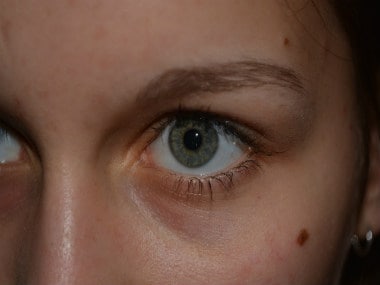 Representational image. Image by Anne Kroiß from Pixabay[/caption]
Types of birthmarks
Birthmarks fall under two main categories: vascular birthmarks and pigmented birthmarks. Vascular birthmarks are caused by abnormal blood vessels in or on the skin. They usually appear on the face. They are red, purple or pink. The common types of vascular birthmarks are:
- Salmon patch: The most common type of vascular birthmarks, these red or pink patches appear mostly on the neck, eyelids or forehead of the baby at the time of birth. While some of the patches vanish within a few months, those at the back of the neck may be permanent. The salmon patches take longer to disappear. These birthmarks don’t require any treatment.
- Infantile haemangioma: These raised red marks can appear anywhere on the skin. Sometimes they can be very deep in the skin and can be blue or purple. They are more common in girls. They mostly disappear by the time the child turns 7.
- Capillary malformation: Also known as port-wine stains, capillary malformation birthmarks are permanent. These rare, flat red or purple marks appear only on one side of either the face, chest or back. They can be as large as a few centimetres in diameter. Hormonal changes influence these birthmarks, and they can intensify around pregnancy, puberty or menopause.
Pigmented birthmarks are present at the time of birth. Their colour can vary from brown, black, blue to bluish-grey. Pigmented birthmarks are of the following types:
- Cafe-au-lait spots: Most children are born with one or two of these coffee-coloured birthmarks - they are harmless. However, more than five of these birthmarks may be a sign of neurofibromatosis - a genetic disorder in which patients develops tumours on the nerve tissue.
- Congenital melanocytic naevi: Also known as congenital moles, these birthmarks are very common and are present from birth. Their size can go up to 20cm. Their size reduces with time, but the colour may get darker as the child hits puberty. Though this is rare, large congenital moles can develop into skin cancer.
- Mongolian spots: These bluish-grey bruise-like birthmarks are harmless and they usually disappear by the age of four years. They appear mostly in dark-skinned people, at their lower back or buttocks.
Birthmarks that need attention
Most birthmarks are harmless. In some cases, though, they may need treatment. Here’s a look at some complications of birthmarks which should not be ignored:
- Hemangioma: In very rare cases, a hemangioma can become life-threatening - say, if it appears in the eyes, nose, mouth or genital area - as it can get infected. A hemangioma ulcer can also be painful. It should be treated in a timely and proper manner, and the wound should not be left open. More than five hemangiomas may be a sign of internal hemangioma, which can cause problems. For example, if the internal hemangioma affects the airways, it could lead to problems in breathing and coughing. Blood in the stools could be a sign of bowel hemangioma.
- Congenital Melanocytic Naevi: Though this is rare, large congenital melanocytic naevi may turn into skin cancer. If you notice any bleeding, itching, open sores, pain, swelling, change in colour, texture or size of the birthmark, visit your doctor as soon as possible.
- Port-wine stains: Port-wine stains or capillary malformation can lead to various complications like: a) Sturge Weber Syndrome: This condition hinders the development of certain blood vessels, which, in turn, leads to abnormalities in the brain, skin and eyes from birth. Port-wine stains that extend across the forehead or scalp are a major sign of this syndrome. b) Glaucoma: If the port-wine stain birthmark appears on the upper eyelid and lower eyelid as well, then it can create extra pressure on the optic nerve. This affects the vision to a great extent - any damage done to a person’s vision as a result of this cannot be reversed. Glaucoma is one of the major causes of blindness in adults. c) Klippel Trenaunay Syndrome: In this condition, the development of soft tissues and bones gets affected - there may be overgrowth. Most people with this syndrome are born with a port-wine stain birthmark. d) Soft Tissue Hypertrophy: This is a long-term problem associated with port-wine stains. The tissue beneath the birthmark can get enlarged. This problem is most common around the lip area.
Most of us accept our children’s birthmarks as part of them. Of course, some of them simply vanish over time. For others, you should keep an eye on them and consult your doctor if you see any of the above symptoms. Health articles in Firstpost are written by myUpchar.com, India’s first and biggest resource for verified medical information. At myUpchar, researchers and journalists work with doctors to bring you information on all things health. For more information, please watch our video on Hemangioma