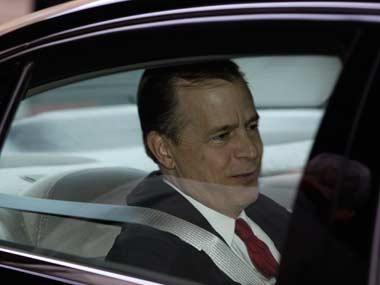
Beijing: Progress in fresh talks with Pyongyang could take “weeks and months”, the United States’ envoy for the North Korean nuclear dispute said on Friday, despite what he called productive discussions over the long-running standoff. US Special Representative for North Korea Policy Glyn Davies stressed the nuclear diplomacy would be painstaking as he entered a second day of discussions with his North Korean counterpart, Kim Kye-gwan. [caption id=“attachment_223798” align=“alignleft” width=“380” caption=“There are still great depths of distrust to overcome between North Korea and the United States and its allies.”]
 [/caption] Their talks are aimed at laying the groundwork for renewed six-party disarmament negotiations with North Korea, whose nuclear weapons programme has alarmed the region with two test blasts as well as a drumbeat of warnings against South Korea, Washington and their allies. Davies told reporters a dinner discussion with North Korean negotiators on Thursday had been “productive” but he stressed these talks were dealing with a backlog of unresolved issues that would take time to address. “There is a little bit of catching up to do and a little bit of ground that we have to cover again from our previous discussion, so it’s simply a lot of diplomatic work that we have to plough through … in order to try to get a result that can take this process forward,” Davies said. “Diplomacy is a difficult process that takes time, sometimes takes weeks and months, and we’ll see how far we can get, and if we cannot get far enough, then we can get something that we can then build on,” he said. Success at these talks could inch forward efforts to revive fully fledged nuclear disarmament negotiations, provided the two sides manage to narrow differences over what disarmament entails and what North Korea could get in return. But there are still great depths of distrust to overcome between North Korea and the United States and its allies. North Korea agreed to curtail its nuclear activities under a an aid-for-denuclearisation agreement reached in September 2005 at six-party talks bringing together North and South Korea, China, Japan, Russia and the United States. Under the agreement, the North agreed to abandon its nuclear programmes in exchange for economic and diplomatic incentives to be provided by the other parties involved in the negotiations. But the embryonic deal was never fully implemented. Instead, the North staged two nuclear test blasts – in 2006 and 2009 – and later disclosed a uranium enrichment programme, giving it a second path to obtaining fissile material for bombs in addition to its long-standing programme of producing plutonium. This week’s meeting is the third between Washington and Pyongyang officials in the last eight months and the first since the death last December of former North Korean leader Kim Jong-il, who has been succeeded by his son, Kim Jong-un. The United States, South Korea and their allies have been sceptical of North Korea’s assertions that it wants to return to the six-party talks. Analysts have said Davies’ talks in Beijing are unlikely to trigger breakthroughs. The major concession the North is likely to seek is US food aid for its chronically hungry population. Davies said on Thursday the issue was discussed. He said he would offer some details about any progress made only after the talks ended. Reuters
US envoy says North Korea talks no instant fix
FP Archives
• February 24, 2012, 09:24:11 IST
US Special Representative for North Korea Policy Glyn Davies stressed the nuclear diplomacy would be painstaking as he entered a second day of discussions with his North Korean counterpart, Kim Kye-gwan.
Advertisement
 "US envoy says North Korea talks no instant fix")