

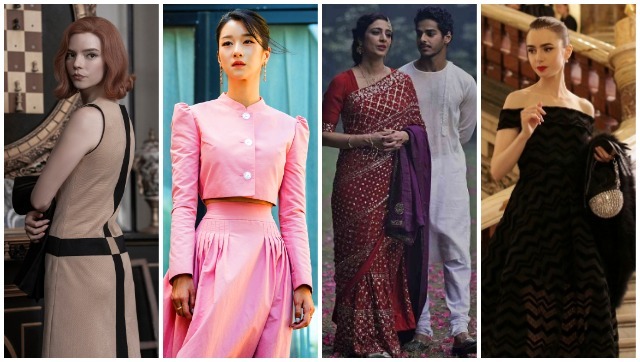
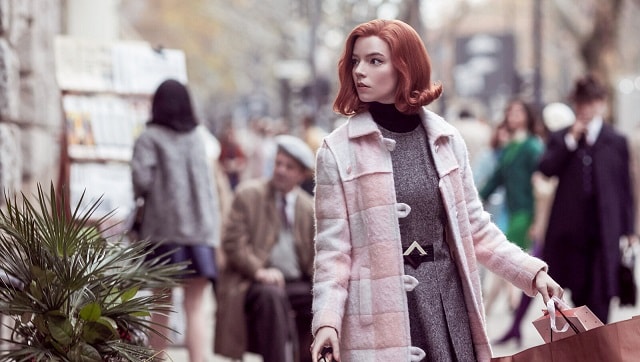
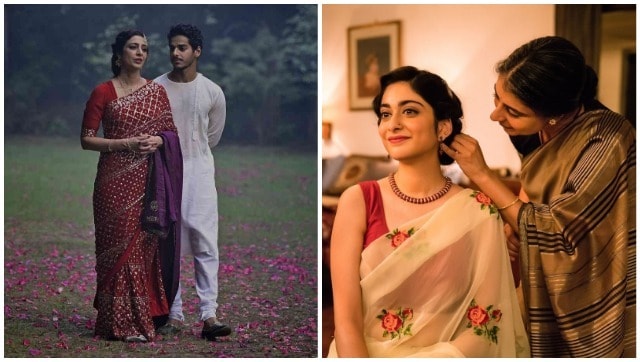
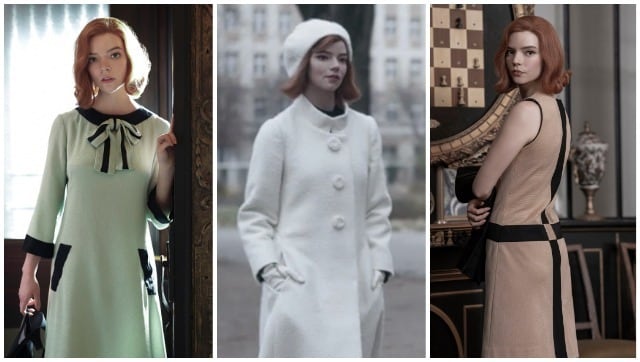
 "2020, the year of sumptuous TV style: From The Queen's Gambit to A Suitable Boy, small screen fashion made a statement")
Read more from our '2020, the year of...' series. It may seem implausible for Emily in Paris and Virginia Woolf to have something in common. However, the recent Netflix show that pivots its storytelling in large parts on the handiwork of its costumier, Patricia Fields, has a lot to thank the Modernist writer for. Woolf limned clothes as an extension of her characters. Writing in the early 20th century, she was certainly not the only one to do so. But through her sustained focus on clothes, she was the first writer to consider them as significant aspects of characters’ experiences; as legitimate narrative tropes. It was Woolf who coined the phrase ‘frock consciousness’, which to explain rather simplistically, refers to how dress illuminates the psychological experience of a character. In Emily in Paris, the gung-ho American who has been handed a job stint in Paris, attends her first day of work dressed like a French souvenir shop — wearing both an Eiffel Tower-themed shirt and booties emblazoned with “Paris” and airmail stickers. By the time she tells her French colleagues, “I am so excited to be here in Paris,” her remark is de trop. [caption id=“attachment_9120221” align=“alignnone” width=“640”]
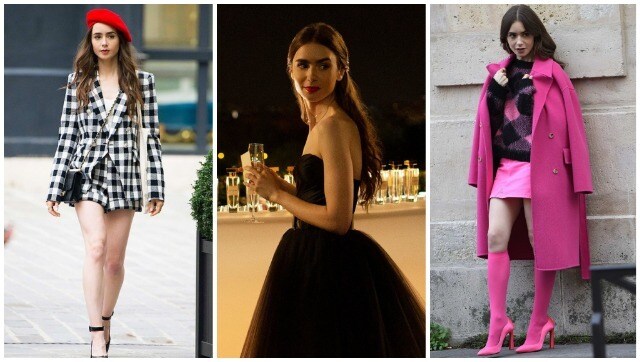 Lily Collins in Emily in Paris | Netflix[/caption] The purported ‘most fashionable show of the year’ is perhaps a lesser example. For there were other shows — many of which were not meant to be about fashion at all — that deployed clothing in more intelligent ways, reminding us of Woolf’s thoughts on the psychological relationship between clothing and character. For our fashion-starved eyes this year, the visual splendour and escapism proffered thereof were absolutely necessary. But what the following list tells us is that for a show to be truly fashionable, clothes have to move beyond visual delight, beyond just situating characters within their physical locales, to become guiding dots in the psychological contours of a character. Normal People (BBC Three, April 2020) Why exactly has a silver chain worn by Connell Waldron (Paul Mescal) — the show’s hunky, Classics reading male protagonist — influenced an Instagram account (
@connellschain) with over 179k followers? When Sally Rooney’s acclaimed book about teenage love and angst was adapted as a 12-part BBC series, the costumes turned out to be a surprising conversation-starter. Connell’s sartorial transition from popular school athlete to a University student in Dublin is slow. His basic t-shirts and shorts become an acute reminder of his class when he meets his richer, well-dressed peers at University. His inexpensive, now-legendary chain never leaves him. It was Mescal who insisted on wearing it throughout, almost as a totem of Connell’s working class, small-town identity. Since the show aired, searches for men’s chains increased by
56 percent on the Argos (a British catalogue retailer) website. [caption id=“attachment_9120241” align=“alignnone” width=“640”]
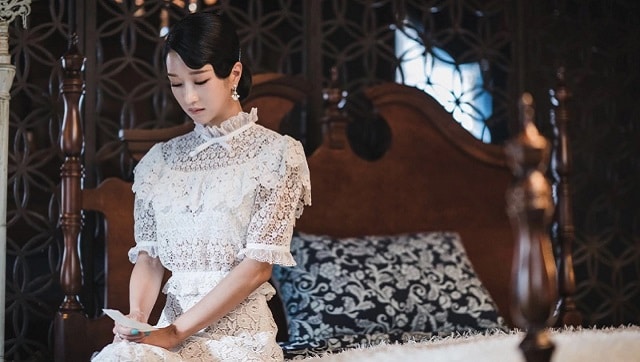
 Paul Mescal and Daisy Edgar Jones in Normal People | BBC Three[/caption] Mariam’s (Daisy Edgar Jones) dress identity is more dynamic; from the misfit, high-school student in her drab grey uniform to art student-chic at University. Jones carries off Mariam’s style evolution effortlessly, and there are stand-out moments that punctuate the show’s trajectory. The cream blouse worn with a silk scarf and smudged smoky eyes carries her into her new-found confidence at University, while her airy linen dresses and no make-up look during an Italy trip signal her comfort with Connell back in her life. Like Connell’s chain, Mariam’s fringe seems to have amassed a fan-following. It’s Okay to Not Be Okay (Netflix, June-August 2020) This Korean romance drama featuring Ko Moon-Young, an assertive children’s book author with potential Antisocial Personality Disorder (ASPD) and Moon Gang-Tae, a self-sacrificing medical worker, is an incisive commentary on mental health and cancel culture. Within the dark fairy-tale setting of the series, we see Ko Moon-Young (Seo Yea-Ji) in extremely feminine outfits — structured skirt-suits, billowy dresses, exaggerated sleeves, and towering heels; always heels. In the confines of her home, we see her in an array of delicate, flowing night-gowns. But to the outside world, Moon-Young is always buttoned up or belted in; never a hair out of place and usually with oversized sunglasses. At all times, she dresses to impress — she wants to be liked but doesn’t know how. In turn, her outfits become assertions of her compulsion to intimidate as a coping mechanism. [caption id=“attachment_9120251” align=“alignnone” width=“640”]
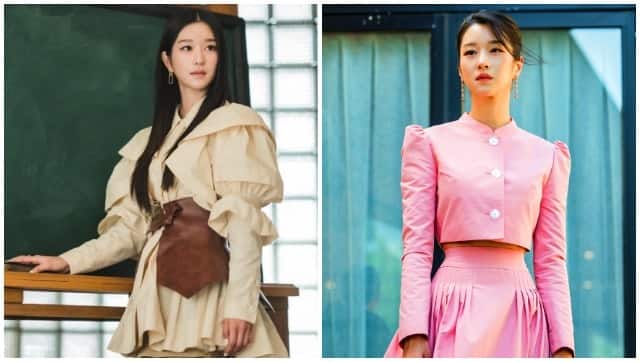 Seo Yea-Ji in It’s Okay to Not Be Okay | Netflix[/caption]
The TV series that offered the most compelling sartorial splendour this year also showed us that to be truly fashionable, clothes have to move beyond visual delight.
Advertisement
End of Article

 "Charlie Kirk, shot dead in Utah, once said gun deaths are 'worth it' to save Second Amendment")
 "From governance to tourism, how Gen-Z protests have damaged Nepal")
 "Did Russia deliberately send drones into Poland’s airspace?")
 "Netanyahu ‘killed any hope’ for Israeli hostages: Qatar PM after Doha strike")
 "Charlie Kirk, shot dead in Utah, once said gun deaths are 'worth it' to save Second Amendment")
 "From governance to tourism, how Gen-Z protests have damaged Nepal")
 "Did Russia deliberately send drones into Poland’s airspace?")
 "Netanyahu ‘killed any hope’ for Israeli hostages: Qatar PM after Doha strike")



](https://images.firstpost.com/wp-content/uploads/2020/12/emily-collage.jpg)
](https://images.firstpost.com/wp-content/uploads/2020/12/normal-people-min.jpg)
](https://images.firstpost.com/wp-content/uploads/2020/12/not-okay-collage2.jpg)
](https://images.firstpost.com/wp-content/uploads/2020/12/suitable-collage.jpg)
](https://images.firstpost.com/wp-content/uploads/2020/12/queen-collage.jpg)