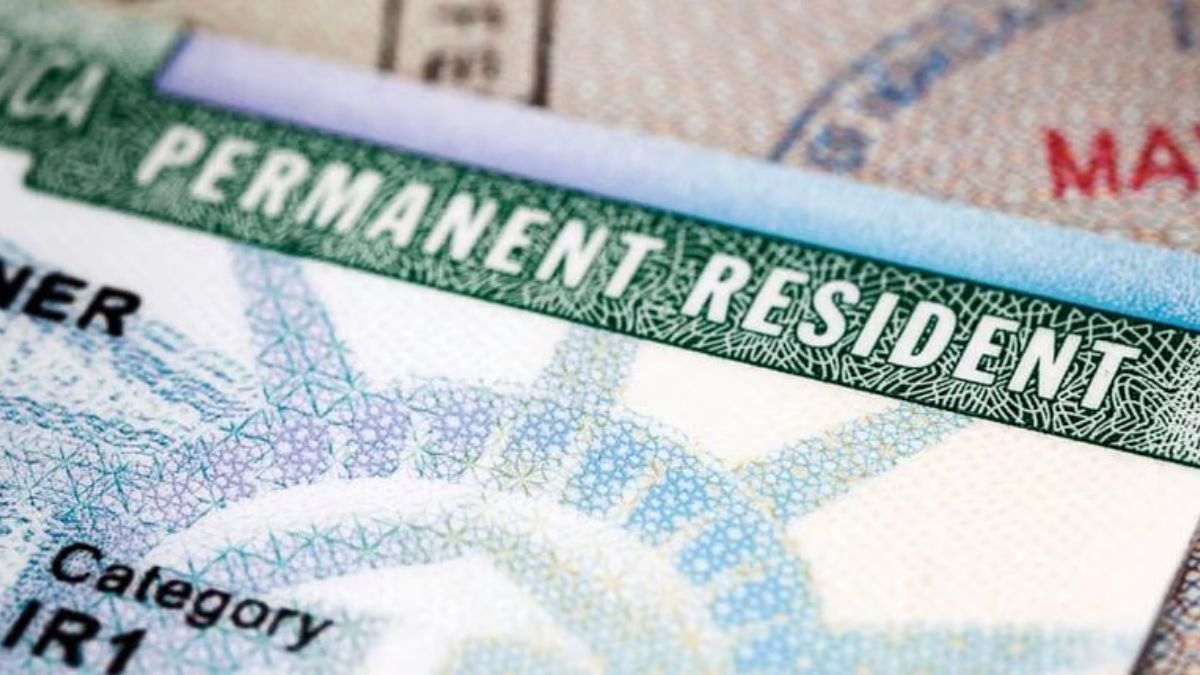
 "Officially known as the Permanent Resident Card, a Green Card grants a foreign national the right to live and work in the United States. AFP")
For many, the Green Card has long been seen as the holy grail. Officially known as the Permanent Resident Card, it grants a foreign national the right to live and work in the United States. It is also a pathway to US citizenship.
Some people can obtain a Green Card by marrying an American citizen. But an immigration attorney has now warned that this is no longer a guarantee.
So, what do we know? And what exactly is immediate relative status?
A brief look at Green Cards
Green Card holders are formally known as lawful permanent residents (LPRs ). They may usually apply for US citizenship after fulfilling certain requirements.
These include:
Living in the US continuously for a specified period
Demonstrating good moral character
Meeting residency and legal obligations
Immediate relative status
Now, let’s examine what immediate relative status means.According to the US Citizenship and Immigration Services (USCIS), a person may qualify for a Green Card if they fall under the “immediate relative” category.
This includes:
The spouse of a US citizen
The unmarried child of a US citizen under the age of 21
The parent of a US citizen (if the citizen is 21 or older)
Being classified as an immediate relative exempts an individual from annual visa limits. This means he or she does not have to wait for a visa number to become available. However, this does not automatically guarantee a Green Card. Applicants must still clear background checks, attend interviews and meet financial and legal eligibility requirements before approval is granted.
Marriage is not a guarantee
Many people assume that marrying a US citizen automatically leads to a Green Card . But immigration attorney Brad Bernstein of Spar & Bernstein says that is not the case.
“Marriage by itself does not get you a Green Card,” Bernstein has said. According to him, marriage-based Green Card applications are now examined far more closely, particularly following stricter enforcement during the Donald Trump administration. Even legal documents proving marriage are not always sufficient.
“If spouses do not share a home, then their Green Card case is already going down,” Bernstein said. “Being in a relationship does not get you a Green Card. Living together gets you a Green Card.”
According to Bernstein, cohabitation has become one of the key determining factors in whether a spouse is granted permanent residency. “Immigration officers do not care why you live apart, and they do not care if it’s for work, school, money or convenience,” he said.
“If you’re not living in the same house every day, immigration is going to start questioning the marriage. And once they question it, they’re investigating. And once they come knocking, they’re looking to deny you. So if you want a marriage green card, you live together. Period.”
How USCIS decides if a marriage is genuine
USCIS examines the “totality of circumstances” when reviewing marriage-based Green Card applications. This means officials do not rely on marriage certificates alone to determine whether a relationship is genuine.
Key factors immigration officers assess include:
Whether the couple shares a home on a daily basis
Joint financial arrangements, such as bank accounts or leases
Consistency in interviews and supporting documents
Evidence of a shared life, not merely a legal relationship
Under USCIS policy, even a legally valid marriage can be denied if officials believe it was entered into primarily for immigration benefits rather than in good faith.
In many cases, spouses initially receive a conditional Green Card valid for two years. Before it expires, the couple must apply to have the conditions removed by proving the marriage is ongoing and genuine. Failure to do so can result in the loss of permanent resident status.
Experts say the message from US immigration authorities is clear. That marriage to a US citizen may allow you to qualify, but it does not guarantee a Green Card. Immediate relative status does not mean you escape legal scrutiny. Approval ultimately depends on evidence of a genuine, shared life together.
With inputs from agencies