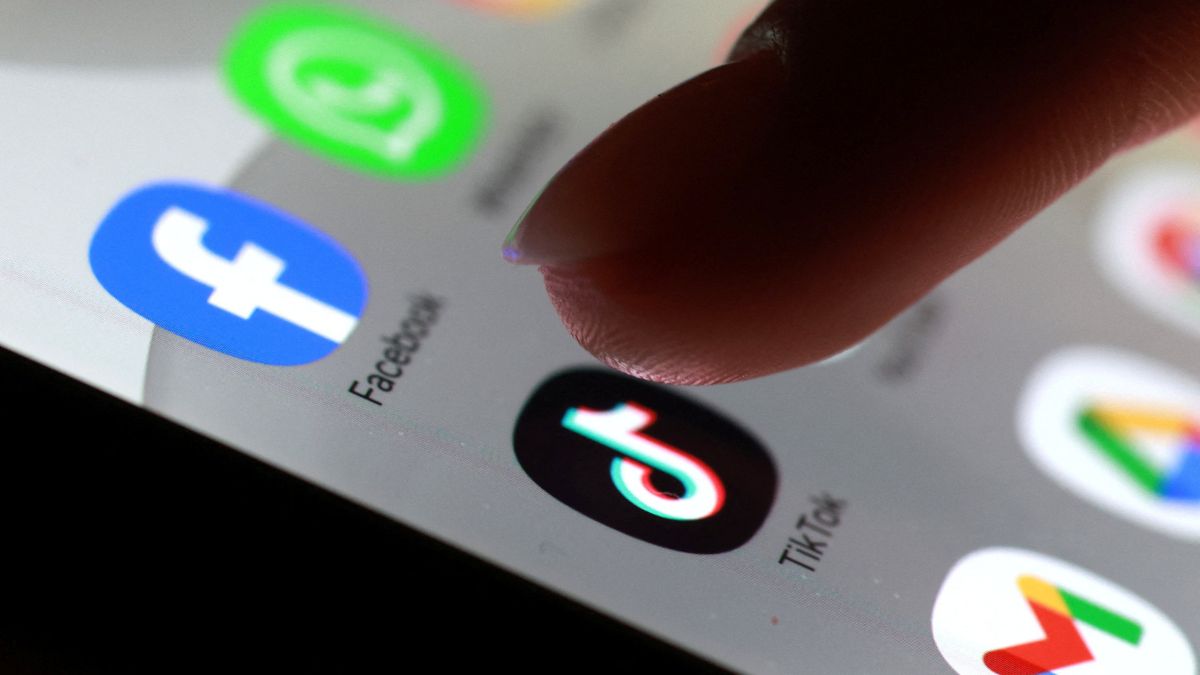
 "Why are Americans deleting TikTok now?")
TikTok, the popular short-video platform, used by more than 200 million Americans, is now facing a wave of user distrust following the creation of a new US-based joint venture, widespread technical disruptions, and allegations of censorship.
While TikTok and its new US partners insist that recent disruptions are purely technical and temporary, a sharp rise in app deletions suggests that a significant number of American users are no longer convinced.
According to market intelligence firm Sensor Tower, the average number of TikTok deletions per day in the United States surged dramatically in the days following the announcement of the new US operating structure last week.
Over a five-day period, daily uninstalls climbed by nearly 150 per cent compared with the average recorded over the preceding three months.
A separate Sensor Tower analysis found that daily average uninstalls between January 22 and January 26 rose by 130 per cent when measured against the prior 30-day baseline.
Despite the spike in deletions, the broader user base has remained largely intact.
Sensor Tower data shows that TikTok’s daily active user numbers in the United States have stayed relatively flat compared with the previous week, even increasing by about 2 per cent during the same window.
User engagement metrics also suggest that TikTok remains deeply embedded in American digital habits.
While TikTok trailed YouTube and Instagram in terms of recent user growth, users in the US continued to spend more time on TikTok than on rival platforms during the period under review.
How TikTok USDS Joint Venture LLC was created
The latest controversy traces back to TikTok’s effort to comply with a September 2025 executive order signed by US President Donald Trump.
The order required TikTok to sever its US operations from Chinese control or face a ban, citing long-standing national security and data privacy concerns that have persisted across both the Trump and Joe Biden administrations.
To meet the order’s requirements, TikTok announced on January 22 the formation of TikTok USDS Joint Venture LLC, a newly created entity designed to oversee the platform’s US operations.
The joint venture was structured so that American and global investors collectively hold an 80.1 er cent ownership stake, while TikTok’s Chinese parent company ByteDance retains a minority interest of 19.9 per cent.
The joint venture is governed by a seven-member board of directors. Its members include TikTok chief executive Shou Zi Chew, Timothy Dattels, Mark Dooley, Egon Durban, Raul Fernandez, Kenneth Glueck, and David Scott.
Adam Presser, who previously served as TikTok’s head of operations, was appointed chief executive officer of the new US entity. Will Farrell was named chief security officer.
Three managing investors — Oracle, private equity firm Silver Lake, and Abu Dhabi-based investment group MGX — each hold a 15 per cent stake in the joint venture.
The transaction was publicly praised by Trump, who has repeatedly pointed to the deal as a successful resolution to years of regulatory confrontation with the company.
Trump has also credited TikTok with helping him win the 2024 election and currently maintains a personal TikTok account with more than 16 million followers.
What we know about Oracle’s expanding role and Project Texas
A central element of TikTok’s new structure is the expanded role of Oracle, the US-based cloud computing giant founded by Larry Ellison.
TikTok confirmed that its powerful content recommendation system — known as the “For You Page” algorithm — has been licensed to Oracle. Oracle already manages TikTok’s US user data under a longstanding arrangement known as Project Texas.
Project Texas was created to address Washington’s concerns about the security of American user data, ensuring that information generated by US users is stored domestically and shielded from foreign access.
Under the joint venture agreement, Oracle’s role has grown beyond data storage into deeper infrastructure and operational oversight.
Ellison, who leads Oracle, is a prominent supporter of Trump. That political association has become a focal point of criticism from TikTok users who fear that the app’s moderation policies or content visibility could be influenced by political considerations.
In October 2025, Oracle released updated renderings of its planned corporate campus in Nashville. The designs include a pedestrian bridge connecting the East Bank with Germantown, riverfront features, and walking paths throughout the site.
Oracle executives have previously said Nashville’s strong health care sector was a key factor in the company’s expansion, as Oracle increasingly focuses on health care software and data management products.
Nashville is set to become Oracle’s third major home after its founding in the San Francisco area in 1977.
How ’terms of service’ changes sparked privacy concerns
Soon after the joint venture was announced, TikTok users were prompted to accept an updated privacy policy.
Several social media posts highlighted language in the policy describing categories of information TikTok may process, including sensitive personal data such as “your racial or ethnic origin” as well as “sexual life or sexual orientation, status as transgender or nonbinary, citizenship or immigration status, or financial information.”
Although these provisions triggered alarm online, archived versions of TikTok’s privacy policy indicate that similar language existed as far back as August 2024.
Nonetheless, the renewed visibility of these clauses, combined with the timing of the ownership shift, contributed to deteriorating sentiment around the platform.
The updated terms of service also introduced additional disclaimers. According to reporting cited by the BBC, the US entity clarified that it “does not endorse any content” hosted on the platform or reflect the views expressed by users.
The terms also acknowledge risks associated with TikTok’s generative artificial intelligence features, including the possibility that such tools may generate inaccurate or inappropriate material.
How allegations of censorship surfaced
Many users began reporting what they described as unexplained limitations on certain types of content.
Some users claimed that videos mentioning Immigration and Customs Enforcement (ICE) were being restricted, while others said the term “Epstein” was blocked in TikTok’s direct messaging feature.
While TikTok has denied altering its censorship practices, the perception that content was being suppressed became a major driver of user frustration.
TikTok creators with large followings were among the most vocal critics. Dre Ronayne, a creator who said she had nearly 400,000 followers on TikTok before deleting her account, urged others to follow suit.
“If I can delete my biggest platform because their terms of agreement and censorship have gotten out of control, so can you!” she wrote on Meta-owned Threads.
Other creators reported that their posts were failing to publish or that videos appeared to receive little to no visibility.
How technical failures contributed to the wave
TikTok also said that a power outage at one of its US data centre partner sites had disrupted services, triggering a range of glitches.
Creators reported slow load times, posting errors, timeout requests, and instances where videos appeared to have zero views despite being watched. Some users were unable to upload content for extended periods.
An X account associated with the TikTok joint venture addressed the situation publicly, attributing the disruption to infrastructure issues. “We’re working with our data center partner to stabilise our service. We’re sorry for this disruption and hope to resolve it soon,” the account said.
Oracle later confirmed that the outage was linked to severe weather conditions. “Over the weekend, an Oracle data center experienced a temporary weather-related power outage which impacted TikTok,” Oracle spokesperson Michael Egbert said in an email.
“The challenges US TikTok users may be experiencing are the result of technical issues that followed the power outage, which Oracle and TikTok are working to quickly resolve.”
A powerful winter storm had swept across much of the United States over the same weekend, contributing to infrastructure disruptions.
TikTok said on Tuesday that it had made “significant progress” in restoring services, though it warned that some users might continue to encounter issues while posting content.
How California stepped in
California Governor Gavin Newsom announced that his office had launched a review to determine whether TikTok’s content moderation practices violated state law.
“Following TikTok’s sale to a Trump-aligned business group, our office has received reports - and independently confirmed instances - of suppressed content critical of President Trump,” Newsom’s office said.
The review focuses on whether TikTok improperly restricted political speech during the period of technical disruptions and ownership changes.
TikTok’s new US joint venture strongly rejected the censorship claims. Jamie Favazza, a spokesperson for the venture, said it was inaccurate to suggest that user complaints were driven by anything other than technical failures that the company had openly acknowledged.
The joint venture reiterated that it had been transparent about the outage and its efforts to restore service.
Where TikTok users are going instead
Sensor Tower data shows that UpScrolled experienced a dramatic rise in US downloads, increasing more than tenfold compared with the previous week.
Skylight Social also recorded a sharp surge, with downloads jumping 919 per cent. RedNote, despite its limited long-term traction, saw a modest increase as well.
Whether these gains represent a durable shift or a temporary reaction remains unclear.
As more users choose to leave TikTok, instructions on how to delete accounts have circulated widely.
To remove an account, users must open the TikTok app, navigate to their profile, access the menu, select settings and privacy, choose the account option, and then follow the prompts to deactivate or permanently delete their account.
TikTok also allows users to deactivate accounts temporarily.
Also Watch:
With inputs from agencies


 "Economic Survey 2026 Live Updates: India records lowest inflation rate since CPI series began")
 "Economic Survey 2026 projects India’s FY27 GDP growth at 6.8–7.2%")
 "A nurse, a mother, a father… The heartbreaking stories of Americans killed in US immigration crackdown")
 "India-EU FTA: Will medicines become cheaper and medical bills finally fall?")
 "Economic Survey 2026 Live Updates: India records lowest inflation rate since CPI series began")
 "Economic Survey 2026 projects India’s FY27 GDP growth at 6.8–7.2%")
 "A nurse, a mother, a father… The heartbreaking stories of Americans killed in US immigration crackdown")
 "India-EU FTA: Will medicines become cheaper and medical bills finally fall?")