

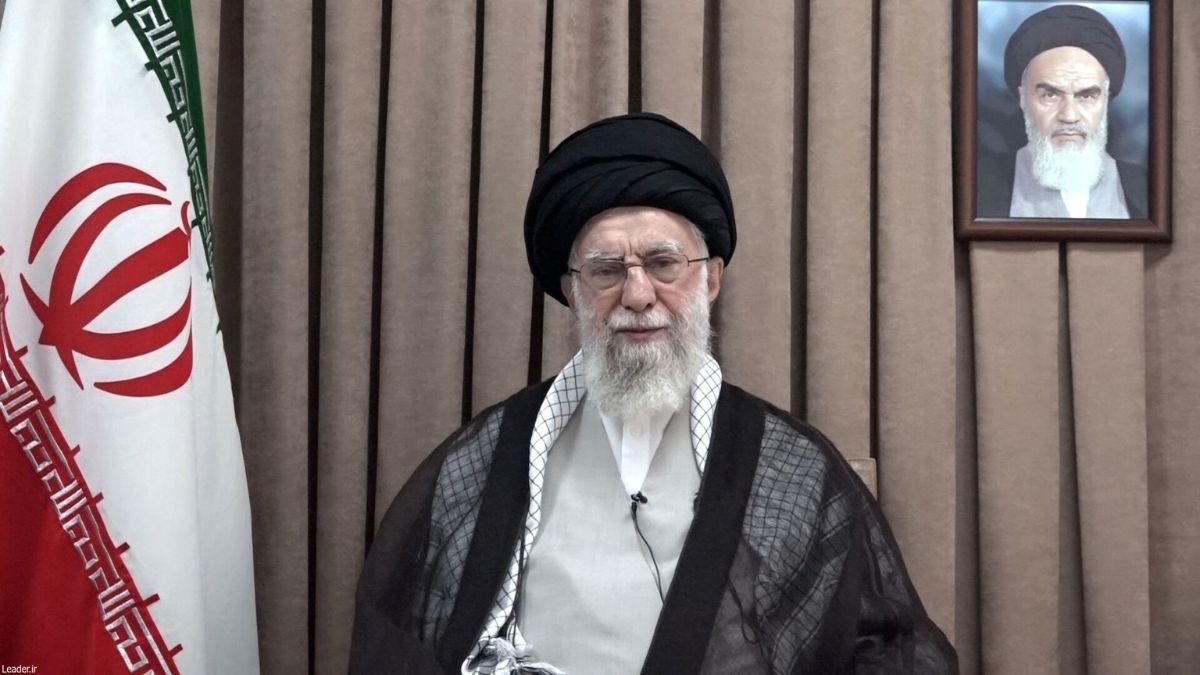
 "What happens if Iran attacks US bases in West Asia")
A day after the United States targeted nuclear sites in Iran, Tehran has vowed to hit back.
United States on Sunday attacked three nuclear sites in Iran – Fordow, Isfahan and Natanz.
US President Donald Trump claimed that the three sides were “completely and totally obliterated”.
Iran also on Monday said it would to continue its enrichment uranium program.
Read latest updates about America joining Israel-Iran war here.
“Iran will continue its uranium enrichment activities despite US and Israeli strikes,” Deputy Foreign Minister Majid Takht-Ravanchi said. “No one can tell us what we should or should not do”.
But what did Iran say? And what happens if it hits US bases in West Asia?
What did Iran say?
Iran vowed to respond to the US strikes on its nuclear bases with ‘powerful and targeted operations’.
ALSO READ | Did US use Indian airspace to launch strikes on Iran’s nuclear sites?
“The criminal America, continuing its all-out support for the aggression of the Zionist regime by blatantly violating the sovereignty of the Islamic Republic of Iran, directly entered the war with Iran and invaded the sacred soil of Iran. We assure you that with this aggression, the clock will not turn in your favour. The warriors of Islam, in response to this crime, will bring heavy, regrettable and unpredictable consequences for you with powerful and targeted operations. God willing,” Khatam Central Headquarters said.
Tehran said its military would decide the ‘timing, nature and scale’ of its reply to the US.
Iran on Sunday had accused the US of destroying diplomacy.
Iran’s UN Ambassador Amir Saeid Iravani on Sunday told the UN Security Council at an emergency meeting that “Iran had repeatedly warned the warmongering US regime to refrain from stumbling into this quagmire”.
“Last week, we were in negotiations with the US when Israel decided to blow up that diplomacy. This week, we held talks with the E3 (group of European ministers)/EU when the US decided to blow up that diplomacy,” Iran’s Foreign Minister Abbas Araghchi said on X.
Iran also said the US had ‘crossed a very big red line’.
It said “every American citizen or military personnel” in West Asia is now considered a target.
Experts think that Iran is likely to retaliate by likely hitting a US base somewhere in the region.
US presence in West Asia
First, let’s look at the US’ presence in West Asia.
The United States has a massive footprint in the region – and has had for decades.
This includes tens of thousands of troops – between 40,000 and 50 thousand – at least eight permanent bases in the region.
These eight permanent bases are located in Qatar, Kuwait, UAE, Iraq, Saudi Arabia, Bahrain, Egypt and Jordan.
Qatar is home to US Central Command (CENTCOM) and the Al Udeid AIr Base, the largest military base, in the region. The 379th Air Expeditionary Wing, which includes “airlift, aerial refuelling intelligence, surveillance, and reconnaissance, and aeromedical evacuation assets”, also operates out of this base.
In Kuwait, the US has Camp Arifjan – a major army base – and the Ali Al Salem Air Base, which is where the 386th Air Expeditionary Wing operates from.
The US also has several military bases in Iraq. This includes the Al-Harir and Al Asad air bases as well as a number of camps and outposts.
In the UAE, the US operates the Al-Dhafra airbase. This outpost, whose focus is on reconnaissance and intelligence gathering, is home to the US 380th Air Expeditionary Wing. The Gulf Air Warfare Centre for air and missile defence training is also at this airbase.
Saudi Arabia is home to the Prince Sultan Air Base, which is used by the US Air Force. US military personnel are also put up at the Eskan Village near Riyadh.
Bahrain hosts the Naval Support Activity Bahrain site. US Naval Forces Central Command and United States Fifth Fleet operate out of this location – previously a British naval command.
Egypt is home to a number of US facilities, while Jordan has the Muwaffaq Salti Air Base – which the US operates with its allies.
The US also has facilities in nearly two dozen nations in West Asia.
In short, there are many places that Iran could conceivably attack in retaliation.
It has done so on many occasions in the past.
What happens if it hits US bases in West Asia?
Experts say Iran is in a difficult situation.
“They’re really stuck,” HA Hellyer, a senior associate at the London-based Royal United Services Institute, told NBC News. “If they fight back by striking American targets, then the US is very likely to respond with a much more aggressive and continual campaign that could cause even more damage, not only to the regime, but to the country at large.”
“But if Iran doesn’t respond, the cohesion of its regime,” a ruling class weighed down by corruption, public discontent and growing disillusionment with its promises of resistance, “could really be challenged,” Hellyer added.
Jonathan Panikoff, who works at the Atlantic Council think-tank, added, “In the end, they are going to try to be calculated and narrow about how they respond”.
Fawaz Gerges, a professor of international relations at the London School of Economics, said the country will likely try not “being dragged into an all-out war with the United States.”
How did other nations react?
Many nations including some US allies have reacted with shock and dismay to Washington’s move.
British Prime Minister Keir Starmer warned of escalation beyond West Asia as he called for all sides to negotiate a diplomatic end to the crisis, saying stability was the priority in the volatile region.
Saudi Arabia, which previously condemned Israel’s strikes on Iran’s nuclear facilities and military leaders, expressed “deep concern” about the US airstrikes, but stopped short of condemning them.
“The Kingdom underscores the need to exert all possible efforts to exercise restraint, de-escalate tensions, and avoid further escalation,” the Foreign Ministry said in a statement.
Japanese Prime Minister Shigeru Ishiba told reporters it was crucial to calm the situation as soon as possible, adding that Iranian nuclear weapons development also must be prevented. He declined to comment on whether he supported the US attacks on Iran.
With inputs from agencies

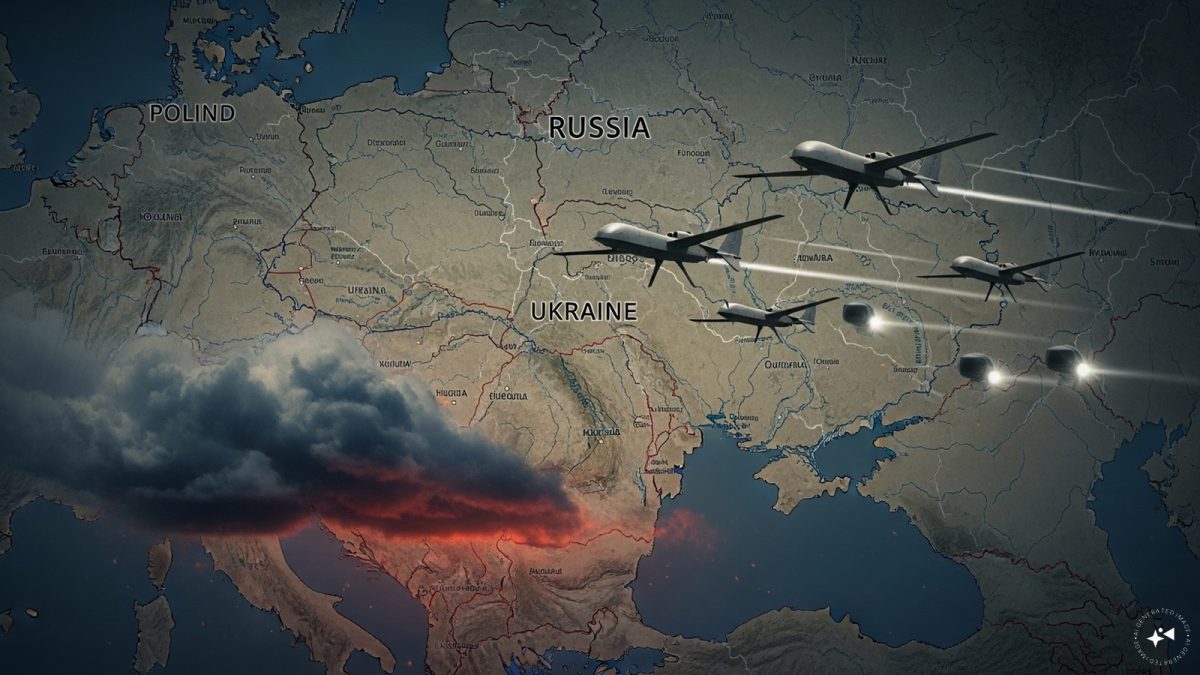 "Russian drones over Poland: Trump’s tepid reaction a wake-up call for Nato?")
 "As Russia pushes east, Ukraine faces mounting pressure to defend its heartland")
 "Why Mossad was not on board with Israel’s strike on Hamas in Qatar")
 "Turkey: Erdogan's police arrest opposition mayor Hasan Mutlu, dozens officials in corruption probe")
 "Russian drones over Poland: Trump’s tepid reaction a wake-up call for Nato?")
 "As Russia pushes east, Ukraine faces mounting pressure to defend its heartland")
 "Why Mossad was not on board with Israel’s strike on Hamas in Qatar")
 "Turkey: Erdogan's police arrest opposition mayor Hasan Mutlu, dozens officials in corruption probe")



