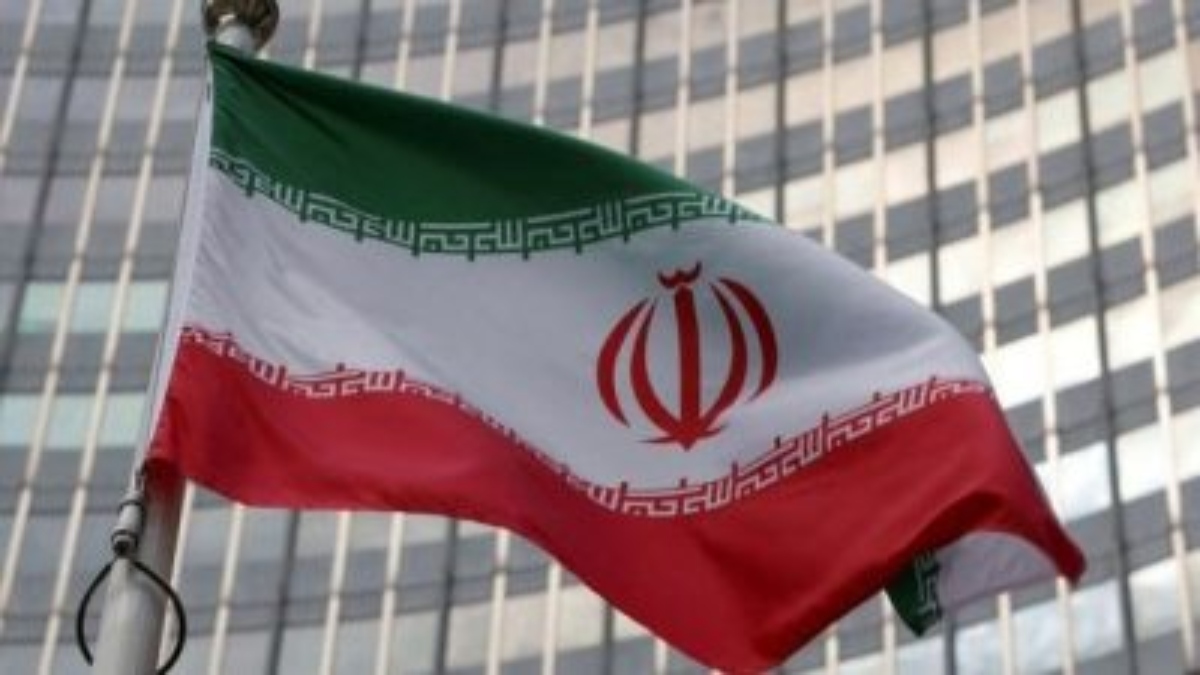
 "What are Iran president-elect Masoud Pezeshkian’s policies? Can the reformist bring changes to the country?")
Iran’s president-elect Masoud Pezeshkian is a reformer and a heart surgeon.
The 69-year-old is no stranger to Iranian politics either – having served first as deputy health minister and then as health minister under president Mohammad Khatami.
Pezeshkian was said to be the sole moderate of the field of four final candidates.
Voter turnout was round 50 per cent in a tight race between Pezeshkian and hardline former nuclear negotiator Saeed Jalili, a staunch advocate of deepening ties with Russia and China.
“Dear people of Iran, the elections are over and this is just the beginning of our cooperation,” Pezeshkian wrote on the social platform X, still banned in Iran.
“The difficult path ahead will not be smooth except with your companionship, empathy and trust. I extend my hand to you and I swear on my honor that I will not leave you alone on this path. Do not leave me alone.”
But what do we know about Pezeshkian’s policies? What do they mean for Iran?
Let’s take a closer look:
What are his policies?
Pezeshkian has vowed to reach out to the West.
He also promises to relax enforcement on the country’s mandatory headscarf law after years of sanctions and protests squeezing the Islamic Republic.
Quick Reads
View AllAs per BBC, Pezeshkian has promised “unity and cohesion.”
He has also vowed an end to Iran’s “isolation” from the world.
However, Pezeshkian promised no radical changes to Iran’s Shiite theocracy in his campaign.
He has long held Supreme Leader Ayatollah Ali Khamenei as the final arbiter of all matters of state in the country.
The stances by Pezeshkian, now Iran’s 69-year-old president-elect, highlight the dualities of being a reformist politician within Iran’s Shiite theocracy — always pushing for change but never radically challenging the system overseen by Khamenei.
Pezeshkian has offered comments suggesting he wants better relations with the West, a return to the atomic accord and less enforcement of the hijab law.
“We are losing our backing in the society, because of our behavior, high prices, our treatment of girls and because we censor the internet," Pezeshkian said at a televised debate Monday night. “People are discontent with us because of our behaviour.”
As per BBC, Pezeshkian has also taken aim at the country’s morality police.
He has vowed “fully” oppose police patrols enforcing the mandatory headscarf for women.
After the 2022 death of Mahsa Amini, Pezeshkian wrote that it was “unacceptable in the Islamic Republic to arrest a girl for her hijab and then hand over her dead body to her family.”
Days later, as nationwide protests and a bloody crackdown on all dissent took hold, he warned that those “insulting the supreme leader … will create nothing except long-lasting anger and hatred in the society."
As per Ynetnews, Pezeshkian also demanded a team be formed to review what happened to Amini.
“Our behavior is making Iranians hate Islam, we must reexamine our methods; You cannot implement faith with force,” he said in 2022.
Pezeshkian previously criticized the regime in the aftermath of the 2009 and 2018 presidential elections.
In this campaign, Pezeshkian’s advocates have sought to contrast him against the “Taliban” policies of Jalili.
His campaign slogan is “For Iran,” a possible play on the popular song by the Grammy Awarding-winning Iranian singer-songwriter Shervin Hajipour called “Baraye,” or “For” in English.
Hajipour has been sentenced to more than three years in prison over his anthem for the Amini protests.
“We will respect the hijab law, but there should never be any intrusive or inhumane behaviour toward women,” Pezeshkian said after casting his vote in the first round.
Yet Pezeshkian acknowledged the challenge ahead of him, particularly after the low turnout of the first round of voting.
“With all the noisy arguments between me and him, only 40% (of eligible voters) voted,” Pezeshkian said during his final televised debate with Jalili on Tuesday. “Sixty percent don’t accept us. So people have issues with us.”
Al Jazeera’s Resul Serdar noted that about 50 percent of Iranians didn’t vote as some didn’t “have faith that the election will bring any change, whether the winner is a conservative or a reformist”.
“This is a silent protest,” Serdar added.
Pezeshkian has vowed to revive the flagging economy, beset by mismanagement, state corruption and US sanctions.
As the powers of the elected president are circumscribed by those of Khamenei, many Iranians keen for political pluralism at home and an end to Iran’s isolation abroad doubt the country’s ruling theocracy would let Pezeshkian make major changes even if he tried.
“Pezeshkian might be able to bring some social freedoms. But he will be a weak president because Khamenei and his allies are much more powerful than the president,” said Sohrab Hosseini, a 45-year-old businessman in Iran’s Kish Island.
“I voted for him to prevent Jalili from winning.”
At a Tehran University meeting last month, responding to a question about students imprisoned on charges linked to 2022-23 unrest, Pezeshkian said “political prisoners are not within my scope, and if I want to do something, I have no authority”.
What does it mean for Iran?
While the election is expected to have little impact on the Islamic Republic’s policies, the president will be closely involved in selecting the successor to Ayatollah Ali Khamenei, Iran’s 85-year-old Supreme Leader, who calls all the shots on top matters of state.
The next president is not expected to produce any major policy shift on the nuclear programme or change in support for militia groups across West Asia, but he runs the government day-to-day and can influence the tone of Iran’s foreign and domestic policy.
Pezeshkian has aligned himself with other moderate and reformist figures during his campaign to replace the late President Ebrahim Raisi, a hard-line protégé of Khamenei killed in a helicopter crash in May.
His main advocate has been former Foreign Minister Mohammad Javad Zarif, who reached Iran’s 2015 nuclear deal with world powers that saw sanctions lifted in exchange for the atomic program being drastically curtailed.
But even Pezeshkian’s modest aims will be challenged by an Iranian government still largely held by hard-liners, the ongoing Israel-Hamas war in the Gaza Strip, and Western fears over Tehran enriching uranium to near-weapons-grade levels.
Serdar told Al Jazeera that Pezeshkian would “face resistance from the political establishment here – the unelected officials and bodies are significantly powerful in Iran and without their approval, it is going to be quite tough for him to implement his promised policies.”
Pezeshkian’s win still sees Iran at a delicate moment, with tensions high in the Mideast over the Israel-Hamas war, Iran’s advancing nuclear program, and a looming election in the United States that could put any chance of a detente between Tehran and Washington at risk.
Pezeshkian’s victory also wasn’t a rout of Jalili, meaning he’ll have to carefully navigate Iran’s internal politics as the doctor has never held a sensitive, high-level security post.
The first round of voting June 28 saw the lowest turnout in the history of the Islamic Republic since the 1979 Islamic Revolution. Iranian officials have long pointed to turnout as a sign of support for the country’s Shiite theocracy, which has been under strain after years of sanctions crushing Iran’s economy, mass demonstrations and intense crackdowns on all dissent.
Pezeshkian might promote a pragmatic foreign policy, ease tensions over now-stalled negotiations with major powers to revive a 2015 nuclear deal, and improve prospects for social liberalisation and political pluralism, analysts said.
However, many voters are sceptical about Pezeshkian’s ability to fulfil his campaign promises as the former health minister has publicly stated that he had no intention of confronting Iran’s power elite of clerics and security hawks.
“I did not vote last week but today I voted for Pezeshkian. I know Pezeshkian will be a lame duck president but still he is better than a hardliner,” said Afarin, 37, owner of a beauty salon in the central city of Isfahan.
“I don’t expect anything from him — I am happy that the vote put the brake on hard-liners,” said bank employee Fatemeh Babaei, who voted for Pezeshkian.
“I hope Pezeshkian can return administration to a way in which all people can feel there is a tomorrow.”
Taher Khalili, a Kurdish-origin Iranian who runs a small tailor shop in Tehran, offered another reason to be hopeful while handing out candy to passersby.
“In the end, someone from my hometown and the west of Iran came to power,” Khalili said. “I hope he will make economy better for small businesses.”
Pezeshkian, who speaks Azeri, Farsi and Kurdish, campaigned on outreach to Iran’s many ethnicities. He represents the first Iranian president from western Iran in decades — something people hope will aid the county as those in the West are considered more tolerant because of the ethnic and religious diversity in their area.
The election came amid heightened regional tensions.
In April, Iran launched its first-ever direct attack on Israel over the war in Gaza, while militia groups that Tehran arms in the region — such as the Lebanese Hezbollah and Yemen’s Houthi rebels — are engaged in the fighting and have escalated their attacks.
Iran is also enriching uranium at near weapons-grade levels and maintains a stockpile large enough to build several nuclear weapons, should it choose to do so. And while Khamenei remains the final decision-maker on matters of state, whichever man ends up winning the presidency could bend the country’s foreign policy toward either confrontation or collaboration with the West.
The campaign also repeatedly touched on what would happen if former President Donald Trump, who unilaterally withdrew America from the Iran nuclear deal in 2018, won the November election. Iran has held indirect talks with President Joe Biden’s administration, though there’s been no clear movement back toward constraining Tehran’s nuclear program for the lifting of economic sanctions.
Though identifying with reformists and relative moderates within Iran’s theocracy during the campaign, Pezeshkian at the same time has honored Iran’s paramilitary Revolutionary Guard, on one occasion wearing its uniform to parliament.
He repeatedly criticised the United States and praised the Guard for shooting down an American drone in 2019, saying it “delivered a strong punch in the mouth of the Americans and proved to them that our country will not surrender.”
With inputs from agencies

 "'Indian food, our pride': $200k settlement in Palak Paneer case a moral victory against racism in the west")
 "India’s air dominance in Operation Sindoor forced Pakistan to seek ceasefire, European report says")
 "How Pakistan’s support may have led Bangladesh towards a very costly mistake")
 "India vs New Zealand Live Score 3rd T20: Abhishek slams second fastest 50 by an Indian in T20Is")
 "'Indian food, our pride': $200k settlement in Palak Paneer case a moral victory against racism in the west")
 "India’s air dominance in Operation Sindoor forced Pakistan to seek ceasefire, European report says")
 "How Pakistan’s support may have led Bangladesh towards a very costly mistake")
 "India vs New Zealand Live Score 3rd T20: Abhishek slams second fastest 50 by an Indian in T20Is")