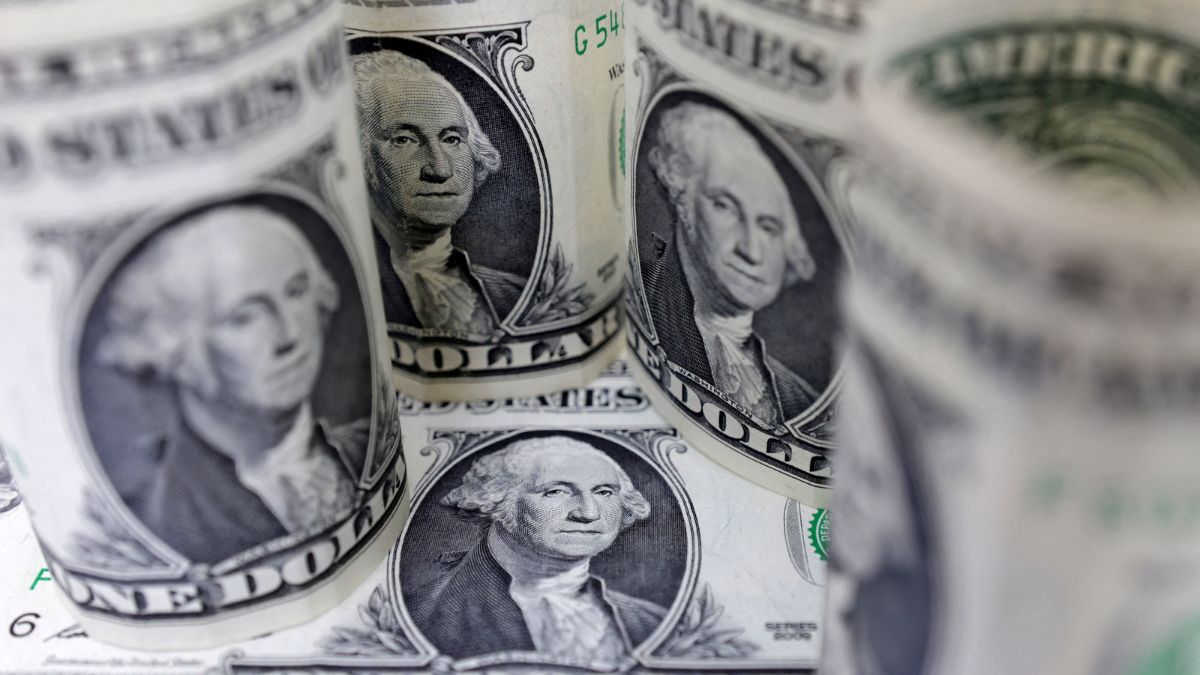
 "US dollar just had its worst start since 1973. What triggered this collapse?")
From January to June, the United States dollar index — which tracks the currency against a group of six major global counterparts including the euro, yen, and pound — plummeted by 10.8 per cent.
This marks its worst first-half performance since 1973, when the Bretton Woods system, which had pegged the dollar to gold, came to an end.
This year’s decline has taken the dollar to its weakest level against key international currencies in over three years, and analysts across financial institutions and governments are recalibrating their exposure to US assets.
The currency’s depreciation has created ripple effects for investors, governments, and consumers globally, complicating everything from capital flows to trade balances.
While the dollar retains its role as the world’s principal reserve currency, concerns have mounted about the scale and speed of its weakening.
These have been driven by a number of factors — most notably US President Donald Trump’s aggressive economic strategy, a sharp increase in US debt, changing Federal Reserve expectations, and shifting investor sentiment.
Behind the collapse of the US dollar
The dollar’s sharp fall came after a volatile series of trade policy announcements early in the year. On April 2, the Trump administration declared sweeping tariffs on goods from most countries, a move the president labelled “Liberation Day.”
The announcement far exceeded previous projections by economists and market analysts, triggering a sell-off in both equities and government bonds.
$5 trillion was erased from the value of the benchmark S&P 500 index of shares in the three days after Trump’s ‘Liberation Day’.
The immediate aftermath saw a broad market retreat. Investors, shocked by the scope of the trade measures, responded with a sharp pullback from riskier US assets.
Treasury prices dropped as bondholders exited en masse, which in turn pushed up yields and raised the government’s borrowing costs.
Despite a 90-day suspension of most tariffs (excluding China) declared on April 9, investor confidence remained shaken.
Initially, the dollar had risen following Trump’s re-election, buoyed by investor hopes for pro-business policies.
Trump’s “One Big Beautiful Bill Act”
A central cause of concern for financial markets has been the administration’s fiscal trajectory. The “One Big Beautiful Bill Act,” a major legislative package being advanced by Republican leaders, is designed to extend Trump’s 2017 tax cuts, reduce healthcare and social welfare spending, and significantly increase government borrowing.
Despite some delays, party leaders have set a target of passing the bill before July 4, though a final vote may not happen until August.
The nonpartisan Congressional Budget Office estimates that the legislation would add $3.3 trillion to federal debt by 2034. This would increase the national debt burden from 124 per cent to an even higher percentage of GDP, placing additional strain on the Treasury market.
Meanwhile, annual budget deficits are expected to widen, reaching 6.9 per cent of GDP — up from 6.4 per cent in 2024.
The legislation is expected to add $3.2 trillion to the US debt pile in the next decade.
As foreign and institutional investors become more hesitant about holding dollar-denominated assets, questions are being raised about the long-term viability of US fiscal management.
Even as Trump has claimed success in reducing costs through the Department of Government Efficiency (Doge), the anticipated savings have not materialized at a scale sufficient to offset increased expenditures.
Tariff revenue, though rising, has ultimately translated into higher consumer prices rather than budgetary relief.
Moody’s downgraded the United States’ credit rating in May, citing governance risks and worsening debt dynamics, further undercutting market perceptions of US fiscal stability.
Fed rate cut expectations
Compounding the economic uncertainty are shifting expectations around US monetary policy. Amid rising signs of economic deceleration, Trump has publicly urged the Federal Reserve to lower interest rates. Futures markets now anticipate two to five rate cuts by the end of 2025.
While equity markets have rallied on the prospect of looser monetary policy — with the S&P 500 reaching a new record high — the weaker dollar has diluted returns for global investors.
For example, when measured in euros, the 24 per cent rise in the S&P 500 this year is effectively reduced to around 15 per cent.
In contrast, the Stoxx 600 — an index tracking European stocks — has risen roughly 15 per cent in its native currency, but the return climbs to 23 per cent once converted into dollars.
Safe-haven status of US dollar in jeopardy
International investors and central banks have responded by re-evaluating their US dollar exposure. From sovereign wealth funds to pension boards, asset managers are actively shifting capital toward European markets and alternative stores of value.
This movement reflects both concern over the dollar’s trajectory and a broader reassessment of the United States’ central role in the global financial system.
Notably, gold has become an increasingly attractive asset class, hitting new highs this year due to heightened central bank purchases and fear of dollar devaluation.
In contrast to past periods of geopolitical stress — when the dollar and Treasuries were seen as ultimate safe havens — investors this year have increasingly diversified away from US-centric assets.
The Organisation for Economic Co-operation and Development also revised its outlook for the US economy in June, cutting its growth forecast from 2.2 per cent to 1.6 per cent.
What this means for Americans
For American consumers, international travel becomes more expensive, while inflation pressures persist due to higher import costs. For exporters, however, the weaker currency makes US goods more competitive abroad — although trade effects remain uncertain amid volatile tariff rules.
Moreover, as the dollar weakens, fewer US dollars are exchanged in global trade, reducing the reinvestment of those dollars into US assets, including Treasuries.
Though the dollar’s decline is significant, some analysts note that it had started the year from historically high levels, which partially cushions its fall.
Still, the convergence of policy instability, high debt levels, and softening macroeconomic indicators signals that the dollar may not regain its earlier strength without substantial structural adjustments.
Also Watch:
With inputs from agencies


 "'PM Modi a fantastic man... we're going to have a good deal': Trump tells Moneycontrol | Watch")
 "Is Canada preparing for a US invasion as Trump unsettles allies? Report says...")
 "‘Rules-based order is fading’: When Carney responded to Trump challenge in Davos | Full text")
 "Davos 2026 Live Updates: Trump says he won’t use force to take Greenland, warns Europe is ‘not heading in the right direction’")
 "'PM Modi a fantastic man... we're going to have a good deal': Trump tells Moneycontrol | Watch")
 "Is Canada preparing for a US invasion as Trump unsettles allies? Report says...")
 "‘Rules-based order is fading’: When Carney responded to Trump challenge in Davos | Full text")
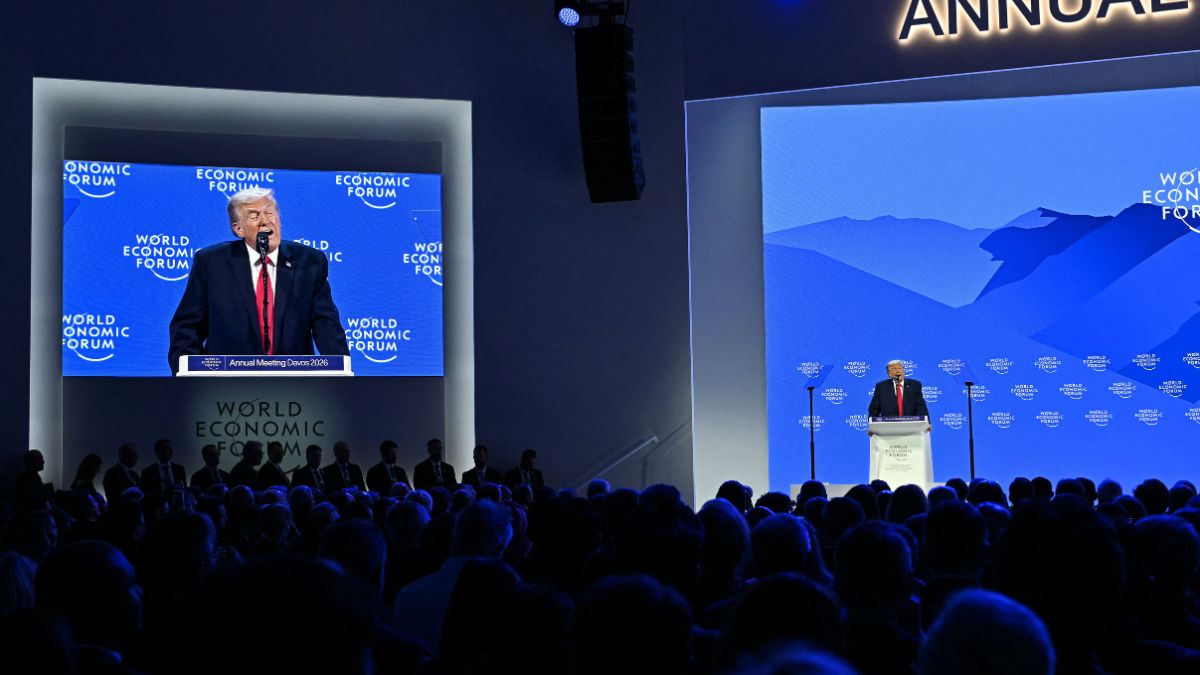 "Davos 2026 Live Updates: Trump says he won’t use force to take Greenland, warns Europe is ‘not heading in the right direction’")