 "This Week in Explainers: Is Iran expanding the war to the Indian Ocean?")
As the war continues across West Asia — it’s been 23 days of fighting — Donald Trump has indicated that he is considering “winding down” the war with Iran without solving the crisis over the closure of the Strait of Hormuz.
“We are getting very close to meeting our objectives as we consider winding down our great military efforts in the Middle East with respect to the terrorist regime of Iran,” wrote the US president on Truth Social on Friday (March 20).
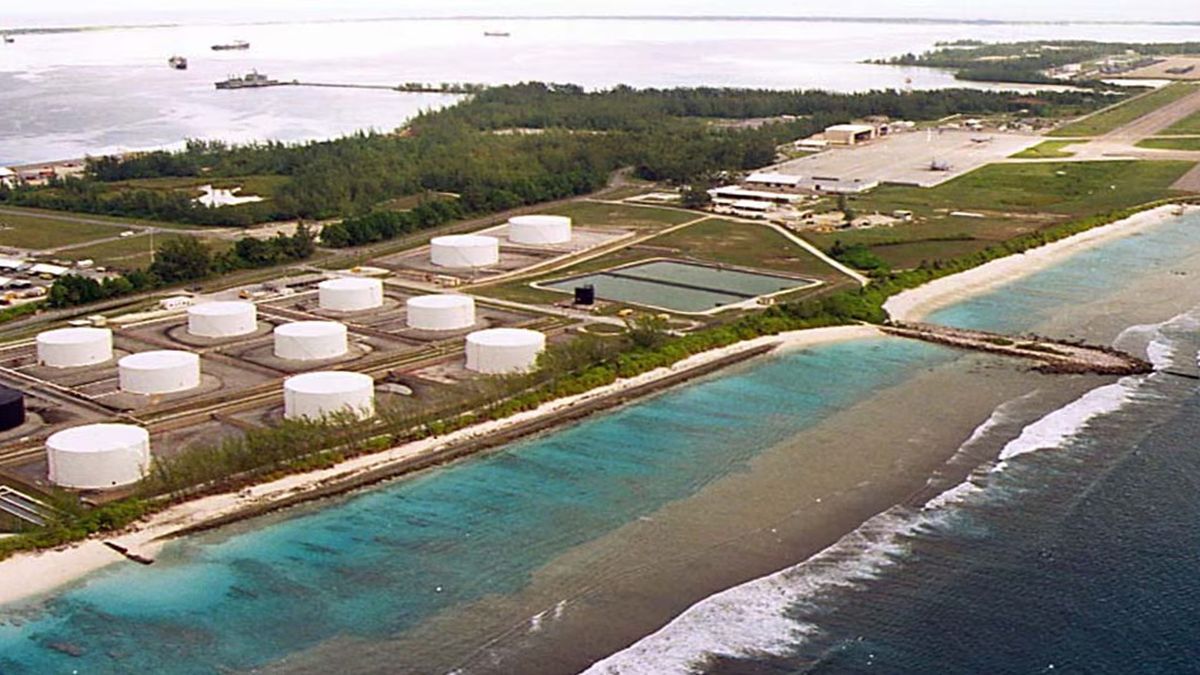
The remarks come even though the war doesn’t seem to be winding down. Iran continues to hammer down on Israel and across the Gulf countries, even targeting crucial energy infrastructure sites, such as oil and gas fields. Additionally, on Friday, the war potentially expanded into Indian Ocean with Tehran firing two ballistic missiles at the joint US-UK military base at Diego Garcia in the Chagos Islands. Neither missile struck the target. One failed mid-flight; a second was engaged by an interceptor launched from a US warship, though whether it was hit remains unclear.
The intense fighting has also seen Iran’s leadership being decimated. After the death of Supreme Leader Ayatollah Ali Khamenei on the first day of the strikes, the country’s security chief, Ali Larijani, along with the intelligence minister, Esmail Khatib, and a senior official of the Islamic Revolutionary Guards Corps (IRGC), Ali Mohammad Naini, have been killed in airstrikes.
Now, as the war enters the fourth week, here’s a look back at some of our must-reads from the fighting in West Asia and beyond.
1. The war in West Asia has expanded decisively with Iran deploying two ballistic missiles towards the joint US-UK military base at Diego Garcia in the Indian Ocean. According to a Wall Street Journal report, neither of the missiles struck the base as they were intercepted. However, one missile failed mid-flight, and the other was engaged by an interceptor launched from a US warship. It is unclear if there were any damages caused to the flights stationed at the base or whether the warship was hit.
Quick Reads
View AllLocated 4,000 km from Iran’s borders, this new operational range represents a formidable leap in Tehran’s military reach. It suggests that the Islamic Republic now possesses the capability to target European bases, a development that fundamentally alters the security calculus for the continent.
In our explainer, we take a closer look at Iran’s missile capabilities and how far they can travel.
2. Along with military infrastructure being targeted, the fighting in West Asia has seen energy sites — oil and gas fields — being struck. This week, the war escalated when Israel struck Iran’s South Pars gas field and the Asaluyeh processing hub on March 18, triggering a wave of retaliatory attacks across the Gulf that hit refineries, gas plants and export terminals in Saudi Arabia, Kuwait, Qatar, the United Arab Emirates and Bahrain.
According to QatarEnergy, the country’s state-owned petroleum company, the damage from Iran’s strike on the Ras Laffan liquefied natural gas facility has reduced its processing capacity by about 17 per cent and will potentially cut its revenue by $20 billion. It will likely take between three and five years for the site to become fully operational again.
Here’s a closer look at the energy infrastructure that has been hit so far.
3. After the war began on February 28, Iran has weaponised the Strait of Hormuz, a vital route to ship oil and gas, blocking ships from passing through the waterway. This has rapidly caused global crude prices to skyrocket, sparking concern across the globe.
Faced with an unprecedented crisis, Saudi Arabia has tried to sidestep the standstill at the Strait of Hormuz by redirecting increasing volumes of oil through its east-west pipeline system, effectively bypassing the strait. At present, this infrastructure has become the most important strategic asset in the region. The question is can this route offer a viable alternative to the Strait of Hormuz. Read more on it here.
4. When the US and Israel launched strikes at Tehran on February 28, regime change was listed as one of the objectives. To attain this, the two allies have been taking aim at the leadership of Tehran, killing Supreme Leader Ayatollah Ali Khamenei. This week, Israel also successfully killed Ali Larijani, Iran’s security chief.
Israel’s Prime Minister Benjamin Netanyahu appeared on television to announce the death, and to argue that Larijani’s downfall could give the Iranian people an opening to rise up and overthrow their clerical rulers.
The death of Larijani is a huge blow; not just to Iran but also in attempts to end this fighting. Wondering why, read more.
5. Speaking about the leadership in Iran, since his elevation to Supreme Leader, Mojtaba Khamenei has remained out of the limelight, fuelling many rumours about his health. Even US President Donald Trump cast aspersions on the Iranian leader’s death, saying: “I think he is damaged, but I think he’s probably alive in some form, you know.”
There have been reports that Mojtaba is in a coma; others suggest that he’s receiving treatment in Russia. Read more about these rumours.
6. The US and Israel attacked Iran together at the same time. But as the war drags into its fourth week, it is becoming clear the two countries have some differences in how they see the war proceeding.
Even US intelligence chief Tulsi Gabbard has said that the objectives of America and Israel during the military campaign in Iran are not the same as Tehran struck Qatar’s Ras Laffan, world’s largest LNG hub.
We discuss these emerging differences between Donald Trump and Benjamin Netanyahu and what it means for the outcome of the war.
Beyond the war…
The war in West Asia dominates the news and our minds. But here’s some more stories that you may be interested in.
1. While Iran has been fighting the war against the US and Israel, it has executed three men accused of killing police officers during anti-government protests in January, the first hangings to be carried out in relation to the demonstrations.
Among the men was teenager Saleh Mohammadi, a member of Iran’s national wrestling team.
According to Tasnim, the semi-official news agency, Mohammadi was convicted of “ moharebeh” - waging war against God- one of the charges Iran uses to issue death sentences for protesters and opponents of the Islamic Republic.
But who was Mohammadi?
2. As the US continues its war against Iran, Joesph Kent, the director of the United States’ National Counterterrorism Centre, resigned, saying he could not support the Trump administration’s military campaign against Iran and that the war was started not out of genuine necessity, but due to pressure from Israel.
Here’s a deep dive into Kent’s career and why he chose to become the first in the Trump administration to quit amid the war.
3. This week also saw a US mom, Kouri Richins, being found guilty for murdering her husband. The 35-year-old faced multiple felony charges for allegedly poisoning Eric Richins, her late husband, in March 2022. Prosecutors said she mixed and served him a Moscow Mule cocktail she had allegedly spiked with a lethal dose of fentanyl at their home just outside of Park City. The drink contained nearly five times what is considered a deadly amount of the opioid, court filings showed.
What made the case especially notable was that Richins had garnered attention for a children’s picture book she authored called Are You with Me? that centred on ways to cope with the loss of a loved one. While promoting the book, she described the challenges that she and her three sons confronted while navigating their own personal grief. In that appearance, Richins said their father’s passing was unexpected.
That’s its from us this week. If you liked what you read, bookmark this page for the future.

 "Israel-Iran war live: Netanyahu vows continued strikes after a 'very difficult evening' as Iranian missile attacks leave over 100 injured")
 "Trump threatens to ‘obliterate’ Iran’s power plants if Strait of Hormuz not opened in 48 hours")
 "Iran hits Israeli town housing key nuclear site after Natanz strikes; over 40 injured")
 "Eid diplomacy: PM Modi, Bangladesh’s Rahman exchange greetings amid push to strengthen ties")
 "Israel-Iran war live: Netanyahu vows continued strikes after a 'very difficult evening' as Iranian missile attacks leave over 100 injured")
 "Trump threatens to ‘obliterate’ Iran’s power plants if Strait of Hormuz not opened in 48 hours")
 "Iran hits Israeli town housing key nuclear site after Natanz strikes; over 40 injured")
 "Eid diplomacy: PM Modi, Bangladesh’s Rahman exchange greetings amid push to strengthen ties")