

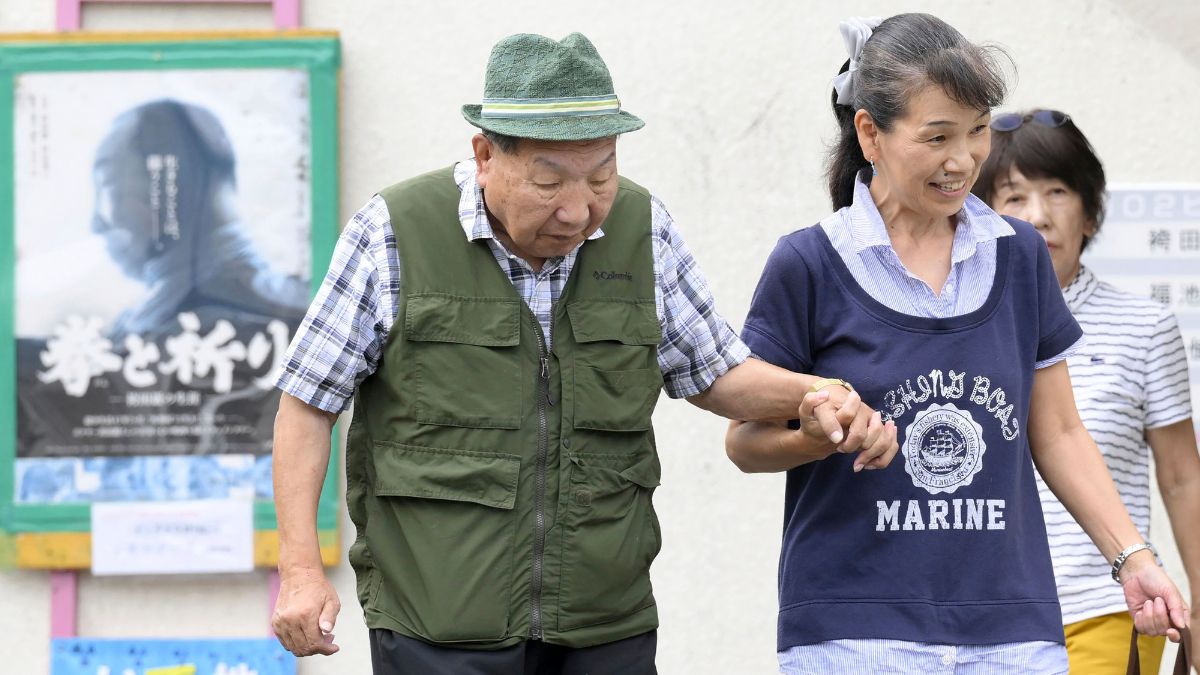
 "The case of Iwao Hakamata: World’s longest-serving death row prisoner, acquitted after 50 years in Japan")
At 88 years old, Iwao Hakamata, once the world’s longest-serving death row prisoner, has been acquitted by a Japanese court, bringing an end to a legal saga that spanned more than half a century.
Convicted in 1968 for the murder of his employer and the employer’s family, Hakamata, a former boxer, spent 48 years behind bars, much of it on death row.
His story has exposed the deep flaws within Japan’s criminal justice system and has fuelled renewed debate over the use of capital punishment.
The case of Iwao Hakamata
Hakamata’s ordeal began in June 1966, when his employer, a factory manager, along with his wife and two children, were found murdered in their home in Shizuoka, Japan. The crime shocked the country, as the family had been stabbed to death, and their house set on fire.
Hakamata, who worked at the family’s soybean processing plant, was arrested shortly afterward, becoming the prime suspect.
After 20 days of relentless police interrogation, Hakamata confessed to the murders, only to retract the confession during his trial, claiming that it had been coerced under extreme duress. He later alleged that police had beaten him and threatened his life to extract the admission of guilt.
Despite his claims, in 1968, the Shizuoka District Court found him guilty of quadruple murder and arson. Two of the three judges sentenced him to death, while one judge, who believed in his innocence, dissented — a fact that would haunt Hakamata’s supporters for decades.
45 Years too many on death row
Hakamata spent more than 45 years on death row, the majority of his time in solitary confinement, living under constant threat of execution. In Japan, prisoners sentenced to death are typically not informed of their execution date until the morning they are hanged, adding an unimaginable layer of psychological torment to their imprisonment.
Hakamata’s frail health and mental well-being suffered greatly during his time in prison. According to his sister, Hideko Hakamata, now 91, he became disconnected from reality, living “in his own world” as the years dragged on.
Despite his incarceration, Hakamata maintained his innocence throughout, aided by his dedicated sister, who campaigned tirelessly for his release. His first appeal for a retrial was filed in the 1980s, but it was denied in 1994 after 27 years of legal battles.
His second appeal, submitted in 2008, would eventually pave the way for a retrial and his eventual release.
New evidence brings hope
The case against Hakamata rested on two main pillars: his confession and physical evidence in the form of five bloodstained articles of clothing that police claimed he wore during the murders.
These clothes were discovered in a tank of fermented soybean paste, or miso, more than a year after his arrest. However, scientific tests conducted decades later revealed troubling inconsistencies.
In 2014, defence lawyers presented DNA evidence showing that the blood on the clothing did not match Hakamata’s DNA. This raised serious doubts about the validity of the original conviction.
Additionally, experiments conducted during the retrial showed that clothing soaked in miso for over a year would have turned so dark that bloodstains would have been impossible to detect, further suggesting that the evidence may have been fabricated.
Moreover, the trousers presented by the prosecution did not fit Hakamata when he tried them on in court, casting further doubt on the authenticity of the evidence used to convict him.
After years of legal battles, the Shizuoka District Court ordered a retrial in 2014, and Hakamata was released from prison, although he was not yet acquitted. His release followed 48 years of imprisonment — 45 of which were spent on death row.
The case continued for another decade, with the Tokyo High Court initially rejecting the retrial request in 2018 before Japan’s Supreme Court ordered it to reconsider. In 2023, the high court finally agreed to proceed with the retrial, setting the stage for the historic acquittal.
The acquittal exposes Japan’s broken justice system
On September 26, 2024, the Shizuoka District Court acquitted Hakamata, officially overturning his conviction after more than 50 years of legal struggles.
Judge Koshi Kunii, who presided over the case, ruled that there had been “multiple fabrications of evidence” and acknowledged that Hakamata had been wrongfully convicted. With this verdict, Hakamata became the fifth death row inmate in post-war Japan to be acquitted following a retrial.
As the verdict was announced, Hakamata’s supporters, who had gathered in large numbers outside the courthouse, erupted into cheers, chanting “Banzai!” in celebration of his long-awaited freedom.
Despite the joyous occasion, Hakamata’s mental health remains fragile. His sister, Hideko, expressed relief at his release but acknowledged that her brother is unlikely to comprehend the significance of his acquittal after so many years in isolation.
“Sometimes he smiles happily, but that’s when he’s in his delusion,” she said. “We have not even discussed the trial with Iwao because of his inability to recognise reality.”
Japan’s death penalty comes under scutiny
Hakamata’s case has once again spotlighted Japan’s death penalty system, particularly the country’s reliance on confessions to secure convictions.
Human rights groups and legal experts have long criticised the Japanese criminal justice system for its high conviction rate — reportedly over 99 per cent — which is often secured through confessions obtained under intense pressure.
Hiroshi Ichikawa, a former prosecutor, who spoke to CNN, explained that Japanese prosecutors have historically been incentivised to extract confessions before gathering substantial evidence, often resorting to coercive tactics.
“Investigative agencies in Japan, especially during the 1960s, were able to commit investigative crimes under a veil of secrecy,” explained Hakamata’s lawyer, Hideyo Ogawa.
Amnesty International’s death penalty advisor, Chiara Sangiorgio, described the case as “emblematic of the many issues with the criminal justice system in Japan.”
Despite international pressure, Japan continues to carry out executions in relative secrecy, with prisoners receiving no prior notice of their execution date.
In 2023, the country had 115 people on death row, 107 of whom had exhausted their appeals and faced imminent execution. Executions are rare but continue to be carried out, often without transparency.
In July 2022, the last execution in Japan took place, continuing the country’s use of capital punishment despite mounting criticism.
Iwao Hakamata: A free man
While Hakamata’s legal ordeal is finally over, the impact of his prolonged imprisonment lingers. After his release in 2014, he has lived under the care of his sister Hideko, who has devoted much of her life to proving his innocence.
News reports reveal he leads a quiet life, isolated from the wider world due to his fragile mental state, and finds solace in the companionship of two cats, which he adopted after his release.
Despite his mental health challenges, Hakamata enjoys occasional outings with his supporters, who take him on drives where he delights in simple pleasures like purchasing pastries and juice. “I hope he will continue to live a long and free life,” said Hideko, who remains his most ardent advocate.
Hakamata’s case has not only drawn attention to the flaws in the country’s justice system but has also sparked fresh debate about the future of the death penalty in Japan.
While Hakamata is now a free man, it is safe to say the scars of his half-century-long battle for justice will never fully heal.
With inputs from agencies

 "Russian drones over Poland: Trump’s tepid reaction a wake-up call for Nato?")
 "As Russia pushes east, Ukraine faces mounting pressure to defend its heartland")
 "Why Mossad was not on board with Israel’s strike on Hamas in Qatar")
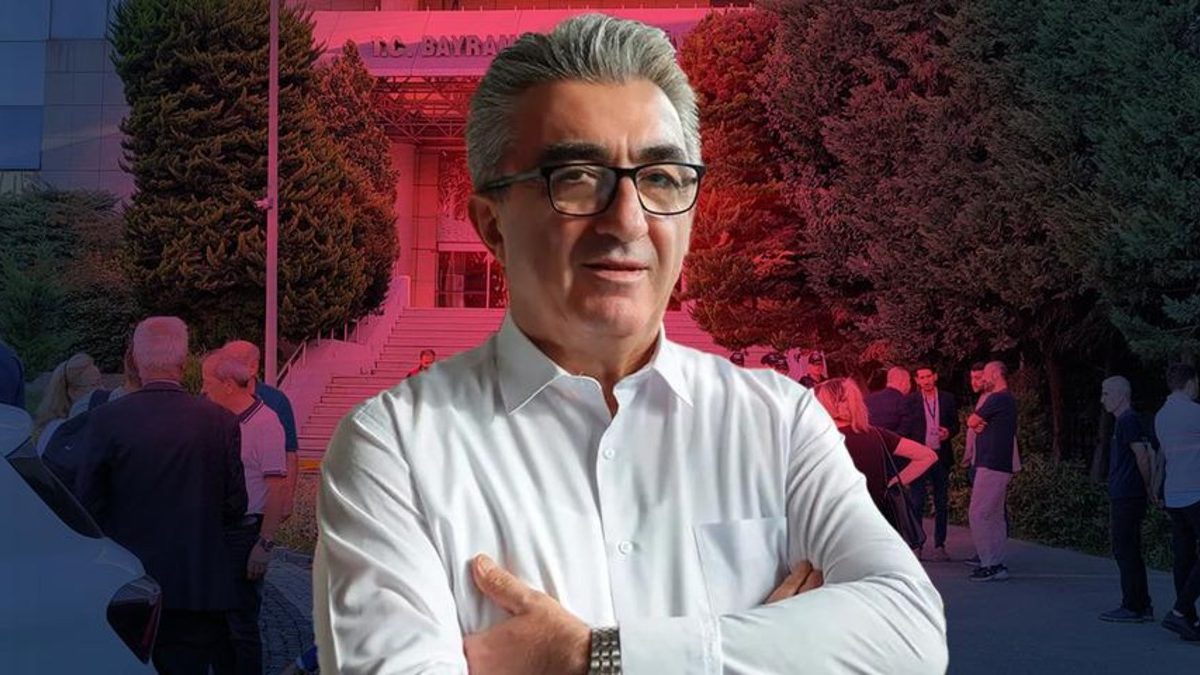 "Turkey: Erdogan's police arrest opposition mayor Hasan Mutlu, dozens officials in corruption probe")
 "Russian drones over Poland: Trump’s tepid reaction a wake-up call for Nato?")
 "As Russia pushes east, Ukraine faces mounting pressure to defend its heartland")
 "Why Mossad was not on board with Israel’s strike on Hamas in Qatar")
 "Turkey: Erdogan's police arrest opposition mayor Hasan Mutlu, dozens officials in corruption probe")



