

 "Taiwan to begin mass production of Tien Kung IV missiles from 2026: How deadly are they?")
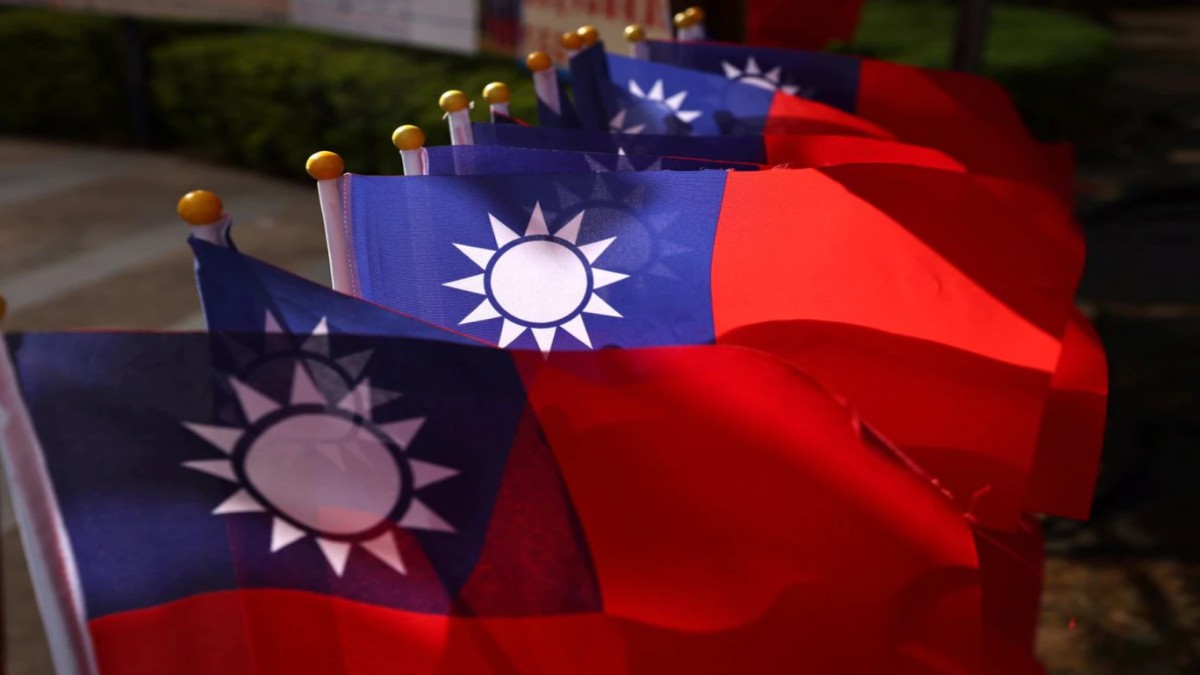
Taiwan has announced that it will begin mass producing Tien King IV missiles.
The self-governed island known officially as Republic of China (ROC) has said it will begin mass-producing these surface-to-air missiles from 2026.
Taiwan lives under constant threat of invasion from the People’s Republic of China.
Beijing has vowed that reunification with Taiwan will be carried out some day even if it has to use force.
But what do we know about these missiles? Why does this matter?
Let’s take a closer look
What do we know?
Tien King IV missile system was developed by Taiwan’s Chungshan Institute of Science and Technology.
It falls under the “Chiang Kung” (Strong Bow) program.
It is a successor to the Tien Kung III system, which gives Taiwan coverage against medium-to-long range missiles from China.
It is designed to intercept cruise missiles and ballistic missiles at an altitude of 70 kilometers.
This compares favourably with the Tien Kung III and the PAC-3 Missile Segment Enhancement systems which respectively have a maximum altitude of just 45 kilometers and 60 kilometers respectively.
Taiwan is set to order 122 pods , according to the Ministry of National Defence.
While 46 pods of the air defence missiles would be provided in 2026, another 76 pods would be provided in 2027.
Each pod contains one projectile, as per defence sources.
Not much other information is out about the missile.
The Tien-Kung III had its first test flight in 2001.
It was unveiled in 2007 and underwent test firings in 2008.
It underwent operational testing and evaluation till 2011.
The Tien Kung III comprises an active radar guidance system and an inertial midcourse guidance.
A microwave seeker in the missile’s nose allows it to navigate in the terminal phase.
The missile has a higher effective range and rate of acceleration because of its solid propellants and single-stage propulsion system.
The missile can fly at hypersonic speed and can intercept highly-maneuverable targets.
The Tien Kung III is being mass produced at a cost of $908.1 million.
Its launcher can support the previous Tien-Kung II which are also launched vertically.
Its phased array radar features a multiple target-tracking capability, Identification, Friend or Foe (IFF) capabilities, target identification and electronic counter-countermeasures (ECCM).
The Tien Kung III launcher can uplink target information to the missile while in its mid-course phase.
It was brought in to replace the MIM-23 HAWK system.
However, it does not have the capability of shooting down ballistic missiles.
Another classified system in development?
Sources said that Taiwan’s defence program also features another classified system.
This comprises two missile variants – Variant “A,” an air defense missile reportedly offering capabilities comparable to the US THAAD system, and Variant “B,” a long-range ground-attack missile.
In a separate report, the Ministry of National Defense (MND) outlined plans for a new eight-wheeled armoured fighting vehicle built on the CM-33 Clouded Leopard platform.
This new vehicle, armed with a 105 millimeter rifled cannon, successfully completed initial operational capability testing in late 2023, the Taipei Times noted.
Research, development, and testing are scheduled to be completed by June 2026, with mass production of 500 units planned to begin in 2028. The project includes 20 different systems designed for the main combat vehicle and its variants, including a reconnaissance version that uses the same chassis.
In addition to its primary 105 millimeter cannon—which is capable of firing armour-piercing fin-stabilised discarding sabot (APFSDS) rounds and anti-personnel shells—the vehicle will also be outfitted with a coaxial 7.62 millimeter machine gun and a 12.7 millimeter heavy machine gun mounted in a remote weapon station.
Why is this significant?
Because Taiwan faces mounting missile threats from China. Beijing has been enhancing its air and missile capabilities, putting Taiwan’s air defences under severe strain.
Taiwan has in turn been picking up advanced missile defence systems from abroad like the US’ Patriot system. It has also been focussed on developing its indigenous Tien Kung ‘Sky Bow’ missiles.
Despite having a geographic advantage due to the Taiwan Strait, Taiwan’s fixed Surface-to-Air Missile (SAMs) remain vulnerable to China’s precision air-to-ground weapons and anti-radiation missiles, which can easily disable radar-dependent defences.
Taiwan’s strategy is to increase the survivability and mobility of its SAM systems, rather than solely focus on increasing its sheer numbers. Taiwan in short is focussing on modernisation, survivability, and deterrence in its effort to counter China’s missile dominance.
Taiwan, officially the Republic of China (ROC), operates as a self-governing democracy with its own political and economic systems. However, the People’s Republic of China (PRC) continues to claim Taiwan as part of its territory under the “One China” principle, which asserts that there is only one China with its capital in Beijing.
This long-standing dispute dates back to the end of the Chinese Civil War in 1949, when the ROC government retreated to Taiwan after the Chinese Communist Party, led by Mao Zedong, gained control of the mainland.
Despite continuous diplomatic, economic, and military pressure from Beijing, Taiwan remains de facto independent, with strong domestic support for its sovereignty.
The MND regularly monitors and discloses military activity to maintain public awareness and reinforce national security.
With inputs from agencies

 "Russian drones over Poland: Trump’s tepid reaction a wake-up call for Nato?")
 "As Russia pushes east, Ukraine faces mounting pressure to defend its heartland")
 "Why Mossad was not on board with Israel’s strike on Hamas in Qatar")
 "Turkey: Erdogan's police arrest opposition mayor Hasan Mutlu, dozens officials in corruption probe")
 "Russian drones over Poland: Trump’s tepid reaction a wake-up call for Nato?")
 "As Russia pushes east, Ukraine faces mounting pressure to defend its heartland")
 "Why Mossad was not on board with Israel’s strike on Hamas in Qatar")
 "Turkey: Erdogan's police arrest opposition mayor Hasan Mutlu, dozens officials in corruption probe")



