

 "Russia, US and more… Why countries are paying women to have more babies")
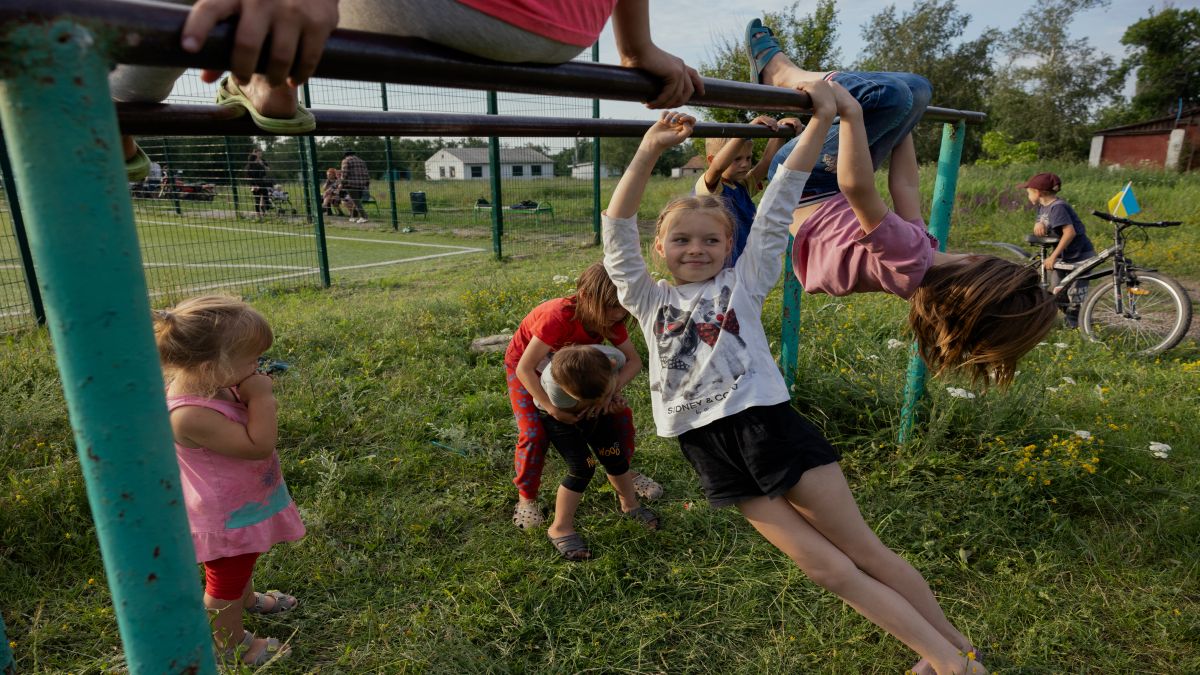
In some parts of Russia, schoolgirls who become pregnant are being paid more than 100,000 roubles (Rs 1 lakh) for giving birth and raising their babies.
This new measure, introduced in the past few months across 10 regions, is part of Russia’s new demographic strategy, widening the policy adopted in March 2025 which only applied to adult women. It is designed to address the dramatic decline in the country’s birthrate.
In 2023 the number of births in Russia per woman was 1.41 – substantially below 2.05, which is the level required to maintain a population at its current size.
Paying teenage girls to have babies while they are still in school is controversial in Russia. According to a recent survey by the Russian Public Opinion Research Centre, 43 per cent of Russians approve of the policy, while 40 per cent are opposed to it. But it indicates the high priority that the state places on increasing the number of children being born.
Russia’s President, Vladimir Putin, regards a large population as one of the markers of a flourishing great power, along with control over a vast (and growing) territory and a powerful military. Paradoxically, though, his efforts to increase the physical size of Russia by attacking Ukraine and illegally annexing its territory have also been disastrous in terms of shrinking Russia’s population.
The number of Russian soldiers killed in the war has reached 250,000 by some estimates, while the war sparked an exodus of hundreds of thousands of some of the most highly educated Russians. Many of them are young men fleeing military service who could have been fathers to the next generation of Russian citizens.
But while Russia’s demographic situation is extreme, declining birth rates are now a global trend. It is estimated that by 2050 more than three quarters of the world’s countries will have such low fertility rates that they will not be able to sustain their populations.
It’s not only Russia
Putin is not the only world leader to introduce policies designed to encourage women to have more babies. Viktor Orban’s government in Hungary is offering a range of incentives, such as generous tax breaks and subsidised mortgages, to those who have three or more children.
Poland makes a monthly payment of 500 złoty (Rs 11,857) per child to families with two or more children. But there’s some evidence this has not prompted higher-income Polish women to have more children, as they might have to sacrifice higher earnings and career advancement to have another child.
In the United States, Donald Trump is proposing to pay women $5,000 (Rs 4.2 lakh) to have a baby, tied to a wider Maga movement push, supported by Elon Musk and others, to encourage women to have larger families.
Reversing demographic trends is complex, because the reasons that individuals and couples have for becoming parents are also complex. Personal preferences and aspirations, beliefs about their ability to provide for children, as well as societal norms and cultural and religious values all play a part in these decisions.
As a result, the impact of “pronatalist” policies has been mixed. No country has found an easy way to reverse declining birth rates.
One country seeking to address population decline with policies, other than encouraging women to have more babies is Spain, which now allows an easier pathway to citizenship for migrants, including those who entered the country illegally. Madrid’s embrace of immigrants is being credited for its current economic boom.
Looking for particular types of families
But governments that adopt pronatalist policies tend to be concerned, not simply with increasing the total number of people living and working in their countries, but with encouraging certain kinds of people to reproduce. In other words, there is often an ideological dimension to these practices.
Incentives for pregnancy, childbirth and large families are typically targeted at those whom the state regards as its most desirable citizens. These people may be desirable citizens due to their race, ethnicity, language, religion, sexual orientation or some other identity or combination of identities.
For instance, the Spanish bid to increase the population by increasing immigration offers mostly Spanish speakers from Catholic countries in Latin America jobs while opportunities to remain in, or move to, the country does appear to be extended to migrants from Africa. Meanwhile, Hungary’s incentives to families are only available to heterosexual couples who earn high incomes.
The emphasis on increasing the proportion of the most desirable citizens is why the Trump administration sees no contradiction in calling for more babies to be born in the US, while ordering the arrest and deportation of hundreds of alleged illegal migrants, attempting to reverse the constitutional guarantee of US citizenship for anyone born in the country and even attempting to withdraw citizenship from some Americans.
Types of mother they want
The success or failure of governments and societies that promote pronatalism hinges on their ability to persuade people – and especially women – to embrace parenthood. Along with financial incentives and other tangible rewards for having babies, some states offer praise and recognition for the mothers of large families.
Putin’s reintroduction of the Stalin-era motherhood medal for women with ten or more children is one example. Sometimes the recognition comes from society, such as the current American fascination with “trad wives” – women who become social media influencers by turning their backs on careers in favour of raising large numbers of children and living socially conservative lifestyles.
The mirror image of this celebration of motherhood is the implicit or explicit criticism of women who delay childbirth or reject it altogether. Russia’s parliament passed a law in 2024 to ban the promotion of childlessness, or “child-free propaganda”. This legislation joins other measures such as restrictions on abortions in private clinics, together with public condemnation of women who choose to study at university and pursue careers rather than prioritise marriage and child-rearing.
The world’s most prosperous states would be embracing immigration if pronatalist policies were driven solely by the need to ensure a sufficient workforce to support the economy and society. Instead, these attempts are often bound up with efforts to restrict or dictate the choices that citizens – and especially women – make about their personal lives, and to create a population dominated by the types of the people they favour.
Jennifer Mathers, Senior Lecturer in International Politics, Aberystwyth University
This article is republished from The Conversation under a Creative Commons license. Read the original article.

 "Russian drones over Poland: Trump’s tepid reaction a wake-up call for Nato?")
 "As Russia pushes east, Ukraine faces mounting pressure to defend its heartland")
 "Why Mossad was not on board with Israel’s strike on Hamas in Qatar")
 "Turkey: Erdogan's police arrest opposition mayor Hasan Mutlu, dozens officials in corruption probe")
 "Russian drones over Poland: Trump’s tepid reaction a wake-up call for Nato?")
 "As Russia pushes east, Ukraine faces mounting pressure to defend its heartland")
 "Why Mossad was not on board with Israel’s strike on Hamas in Qatar")
 "Turkey: Erdogan's police arrest opposition mayor Hasan Mutlu, dozens officials in corruption probe")



