

 "Why the Oval Office map of Ukraine matters")
When United States President Donald Trump met Ukrainian President Volodymyr Zelenskyy on Monday, a large map dominated the Oval Office.
The map, which highlighted areas of Ukraine under Russian occupation in vivid red, quickly became one of the most talked-about elements of the high-level talks.
To some, it was a blunt reminder of Moscow’s hold on Ukrainian land.
To others, particularly Kyiv, it was a misleading portrayal that distorted battlefield realities and fed into the narrative of inevitable Russian dominance.
What Trump’s Ukraine map showed
The Oval Office map presented Ukraine in sections, shading out areas that US officials said were controlled or influenced by Russia.
According to that version, Moscow had consolidated control over nearly 20 per cent of Ukraine’s territory.
It displayed region-by-region breakdowns, including 99 per cent of Luhansk, 76 per cent of Donetsk, and 73 per cent of Zaporizhzhia and Kherson.
Smaller but symbolically important percentages were also marked in other areas, including 4 per cent of Kharkiv in the northeast, and 1 per cent in Sumy and Mykolaiv.
Trump pointed to this visualisation as evidence of Russia’s growing strength. Speaking to Fox News the following day, he remarked, “I assume you’ve all seen the map. A big chunk of territory is taken and that territory has been taken.”
To the White House, the message appeared straightforward — significant parts of Ukraine were already lost, and a settlement might require territorial concessions or “land swaps” with Moscow.
For Trump, the map was not just a briefing tool but a statement of reality. “It was clear,” he said, “that Russia’s force was so clearly much more powerful, and you know, it’s not like they’ve stopped.”
How Zelenskyy’s challenged Trump’s Ukraine map
Zelenskyy, however, strongly disputed the accuracy of the Oval Office chart. He came to the meeting with his own map and contested the figures presented by Washington.
“People think 20 per cent or 18 per cent, but it was up to 1 per cent,” he argued, suggesting that since November 2022, Russia had only managed to gain about 5,842 square kilometres of Ukrainian land.
He explained that “this slightly changes the balance of how strong Russia’s army is and how strong Ukraine’s army is.”
The Ukrainian leader pointed out that it was not enough to rely on broad estimates or headlines; the specifics of who controlled what territory and when it was seized mattered for an accurate understanding of the conflict.
“We’ll leave the question of territories between me and Putin,” he insisted.
Following the Oval Office discussions, Zelenskyy described the exchange as a “slight disagreement” but still “warm, good, and substantive.”
He added that Trump “heard and saw” the Ukrainian perspective during their talks.
What the numbers are at the front lines
The discrepancy between the US and Ukrainian maps lies partly in how territorial control is measured. Analysts at the Institute for the Study of War (ISW) have produced assessments similar to the White House figures, though differences may reflect variations in methodology.
In regions such as Sumy or Mykolaiv, for example, Russia’s presence might be limited to isolated positions or claimed land rather than sustained control.
Despite the numbers presented in Washington, Ukrainian officials note that large areas of Donbas remain under Kyiv’s authority.
Around 242,000 people still live in Ukrainian-held parts of Donetsk, including the strategically important fortress cities of Kramatorsk and Slovyansk.
Ukrainian leaders argue that no president could simply hand over these territories to Moscow without betraying both the constitution and the population that continues to resist occupation.
Moreover, Ukrainian experts such as those at DeepStateUA highlight that Russia’s territorial gains since late 2022 amount to less than 1 per cent of Ukraine’s overall landmass.
While Moscow has achieved some localised advances in recent months, the frontline has remained largely unchanged since the early stages of the full-scale invasion.
What Russia wants from Ukraine territorially
Russian President Vladimir Putin is reported to have told Trump that he wants the entire Donbas region included in any peace deal.
The eastern Donbas — comprising Donetsk and Luhansk—has been at the centre of heavy fighting since 2014, when pro-Russian separatists, supported by Moscow, declared independence from Kyiv.
At the start of the 2022 invasion, Putin recognised these breakaway territories and used their supposed plea for protection as justification for military intervention.
Despite these claims, military analysts warn that capturing the entirety of Donetsk and Luhansk would be a long and difficult process.
According to the UK’s Defence Intelligence reported by BBC, at Russia’s current pace of incremental gains, it would take more than four years to fully seize Donetsk, Luhansk, Zaporizhzhia, and Kherson.
Even with recent increases in recruitment — Russia is said to be enlisting 30,000 to 35,000 soldiers a month — its forces continue to suffer heavy losses.
Ukraine’s military, meanwhile, has successfully repelled Russian offensives in places like Dobropillya, in Donetsk, where Moscow’s troops attempted to push 10-15 kilometres into Ukrainian-controlled territory.
What about previous occupations like Crimea
Zelenskyy has pointed out that Russia’s takeover of Crimea in 2014 was not the result of a conventional battle.
“There were no military operations, for example, in Crimea — no large-scale ones,” he said. For him, conflating those earlier annexations with later a full-scale war creates a false impression of Russian military superiority.
By linking Crimea and the Donbas to today’s battle lines, Kyiv argues, Western allies risk overlooking the distinctions between different phases of Russian aggression.
Understanding when and how each area was taken is, in Zelenskyy’s words, “essential for helping allies like the US understand battlefield shifts.”
How Ukraine may achieve peace
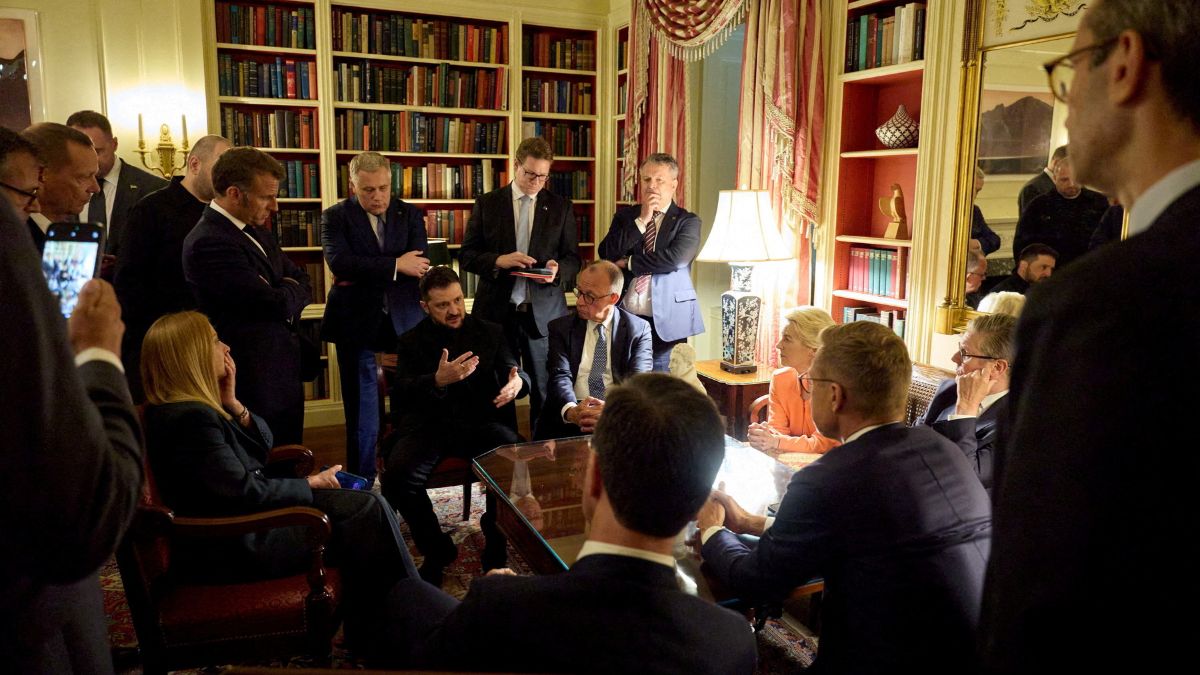
The Oval Office summit included not only Trump and Zelenskyy but also key European leaders: UK Prime Minister Keir Starmer, French President Emmanuel Macron, German Chancellor Friedrich Merz, Italian Prime Minister Giorgia Meloni, Finnish President Alexander Stubb, and Nato Secretary General Mark Rutte.
Their presence highlighted Europe’s central role in supporting Ukraine while grappling with Russia’s continued threats.
Yesterday, important talks took place in Washington with the President of the United States and European leaders. This was truly a significant step toward ending the war and ensuring the security of Ukraine and our people. We are already working on the concrete content of the… pic.twitter.com/FXGnQfcdzz
— Volodymyr Zelenskyy / Володимир Зеленський (@ZelenskyyUa) August 19, 2025
Discussions revolved around security guarantees, military aid, and future diplomatic arrangements. Macron urged that “peace talks could not be delayed for weeks or months,” while Merz drew a sharp analogy, likening Moscow’s demands to forcing the United States to “surrender Florida.”
Ursula von der Leyen, the European Commission president, repeated calls for Russia to return abducted Ukrainian children, an issue that remains a moral flashpoint.
Rutte clarified afterward that ceding territory was not on the table during the discussions, stressing that such matters were “an issue for Zelenskyy and Putin to consider.”
For Ukraine, any peace deal must include assurances strong enough to deter future Russian aggression. Zelenskyy has said this means a powerful, well-armed Ukrainian military backed by Western support.
Some in Europe have floated the idea of guarantees similar to Nato’s collective defence clause, under which an attack on one member is treated as an attack on all.
A coalition of 30 nations, including European states, Japan, and Australia, has pledged to support a stabilisation force for Ukraine in the event of a settlement.
However, Trump reiterated during the talks and later on Fox News that US troops “would not be sent” to defend Ukraine directly.
Moscow, for its part, has made clear it would not accept Nato or Western forces operating inside Ukraine.
Will Zelenskyy, Trump and Putin meet in trilateral talks
Following the Oval Office meeting, Trump placed a call to Putin and indicated that the US was preparing for the possibility of a trilateral summit involving Washington, Kyiv, and Moscow.
Zelenskyy has repeatedly underlined that Ukraine’s constitution forbids the surrender of national territory. Any concession, he warns, would serve as a precedent for Moscow to press forward with new demands in the future.
While Russia currently occupies parts of Luhansk, Donetsk, Zaporizhzhia, Kherson, and Crimea, Ukrainian officials point out that formal recognition of these losses would undermine both sovereignty and security.
As the Ukrainian president told his US counterpart at the end of their talks, “Thank you for the map, by the way, it was great. I’m thinking how to take it back.”
With inputs from agencies

 "Russian drones over Poland: Trump’s tepid reaction a wake-up call for Nato?")
 "As Russia pushes east, Ukraine faces mounting pressure to defend its heartland")
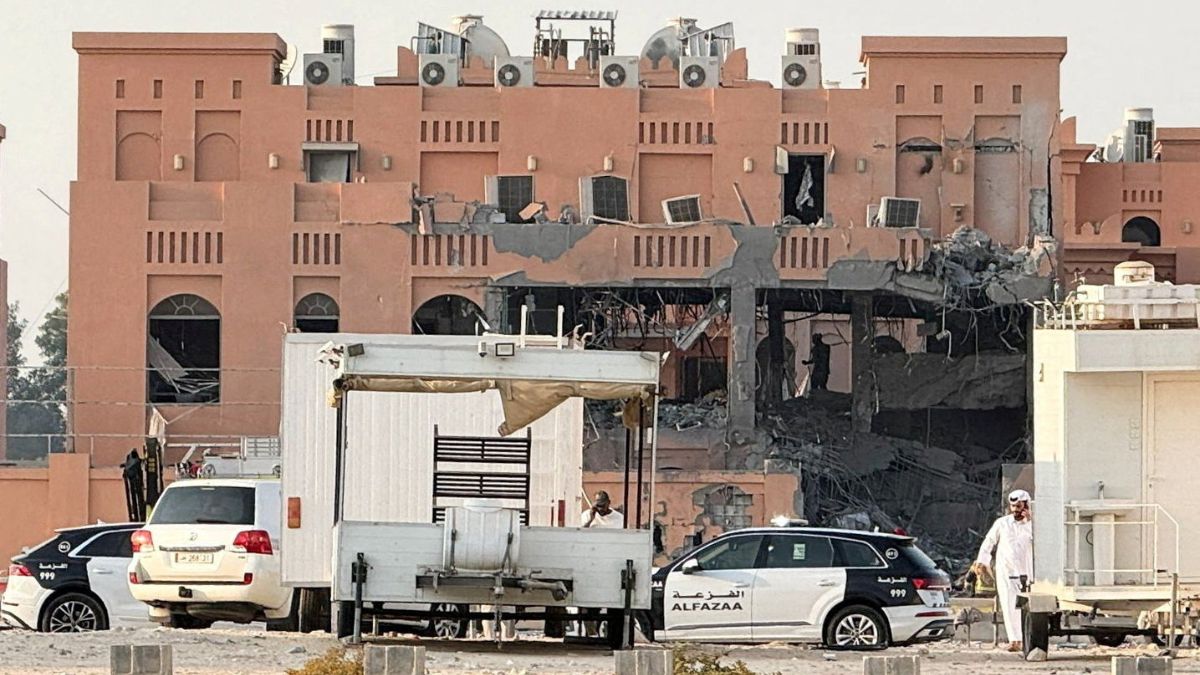
 "Why Mossad was not on board with Israel’s strike on Hamas in Qatar")
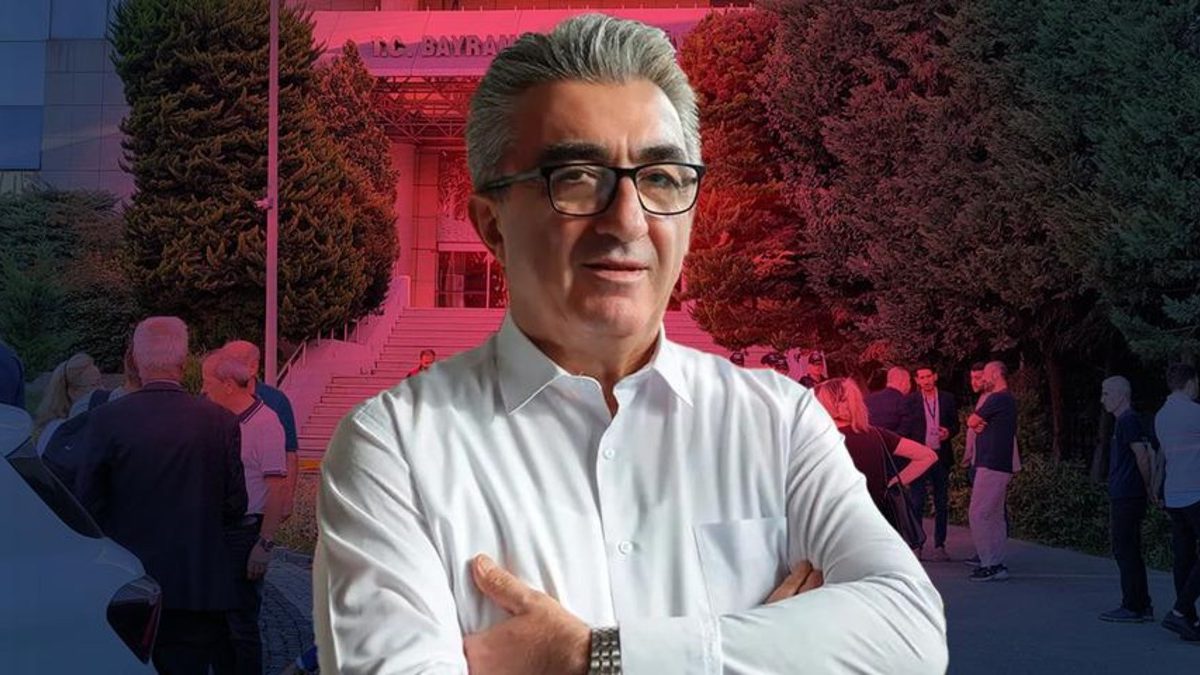
 "Turkey: Erdogan's police arrest opposition mayor Hasan Mutlu, dozens officials in corruption probe")
 "Russian drones over Poland: Trump’s tepid reaction a wake-up call for Nato?")
 "As Russia pushes east, Ukraine faces mounting pressure to defend its heartland")
 "Why Mossad was not on board with Israel’s strike on Hamas in Qatar")
 "Turkey: Erdogan's police arrest opposition mayor Hasan Mutlu, dozens officials in corruption probe")



