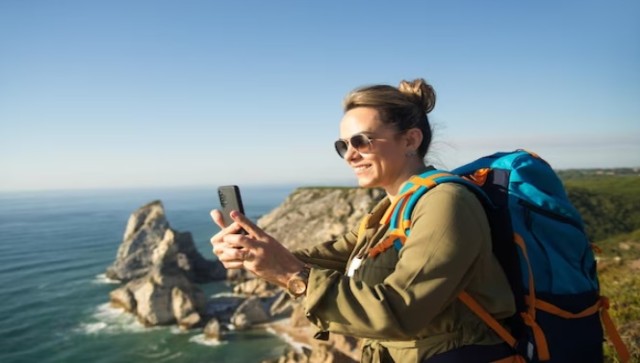
Standing at the edge of a cliff or on top of a waterfall can make you capture the moment in a picture. However, that tiny temptation can cost you your life. Selfies may potentially present a “public health problem,” per the University of New South Wales’ most recent review. The review, which was published in September this year in the Journal of Medical Internet Research, cited data from several peer-reviewed research conducted in Australia and the United States since 2008. Also, the researchers searched for news reports on incidents involving selfie-related fatalities or injuries since 2011. Let’s take a closer look. How taking selfies can be dangerous The analysis revealed that the most alarming incidents involved selfie-related deaths at aquatic locales, including taking pictures in picturesque and appealing settings. While the research noted that using cellphones and apps in normally is risky, the two most common causes of injury and death among the five peer-reviewed studies were falling from heights and drowning while snapping pictures. Over the 13-year study period, the researchers discovered that roughly 400 had been reported, with 77 of those occurring in the US. The majority of victims were most likely female tourists in their early 20s. With an estimated 92 million selfies taken every day worldwide, researchers said the public needs to be made aware of the risks associated with taking them. They also advised social networking platforms to incorporate software that alerts users to potential risks when they are about to take a photo. Dr Sam Cornell, the lead study author and research officer at the University of Sydney’s Sydney School of Public Health, expressed particular interest in environmental and aquatic factors that contribute to selfie-related fatalities and injuries. [caption id=“attachment_13441642” align=“alignnone” width=“640”]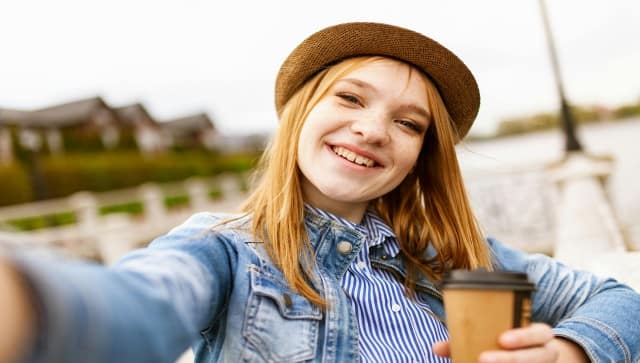 The researchers noted that the dangers associated with selfie danger vary by nation. Pexels[/caption] “I wasn’t looking at people getting injured from taking selfies on man-made structure or train lines, for instance,” he told Fox News, adding, “I was surprised that when I drilled down in this way, young females were implicated the most.” The study found that the number of injuries or fatalities caused by selfies had increased over time, with three reported in 2013 and 68 in 2019, according to Dailymail. Following that, there was a brief decline in 2020 due to the COVID-19 pandemic, with just 37 deaths recorded. However, in just the first half of 2021, there were 31 deaths recorded. The countries with most number of selfie deaths The researchers noted that the dangers associated with selfie danger vary by nation. According to the study, India had the highest number of documented selfie deaths and injuries (100 instances), followed by the US (39 cases) and Russia (33 cases). People are getting hurt or losing their lives in the US and Australia when they are alone; typically, this is due to going down a cliff, as per Fox News. One of the most recent self-inflicted deaths was that of Fernanda Morella, a 33-year-old Brazilian lady who died in 2021 in Brisbane, Australia, while celebrating her birthday at the Kangaroo Point cliffs. In 2020, Madalyn Davis, a British tourist, died after falling down a cliff at Sydney’s Diamond Bay Reserve when she was 21 years old. In 2019, while snapping a selfie, 21-year-old Andrea Norton, a student, slipped and fell 100 feet to her death off an Arkansas cliff. A hiker named Richard Jacobson, 21, also perished in January of last year when he stumbled while taking a picture atop an Arizona mountain. Instagram sensation Sofia Cheung is another victim; in 2021, she fell to her death while trying to take a selfie near a waterfall in Hong Kong. A public health problem Dr Cornell and others wrote in the paper, “The selfie-related incident phenomenon should be viewed as a public health problem that requires a public health response. To date, little attention has been paid to averting selfie-related incidents through behaviour change methodologies or direct messaging to users through apps. “Although previous research has recommended “no selfie zones,” physical barriers, signage, and as ways to prevent selfie incidents, our results suggest this may not be enough. It may be prudent to also engage in direct safety messaging to social media users.” Dr Marc Siegel, a medical contributor for Fox News from NYU Langone, was not engaged in the review of the study. However, he acknowledged that mishaps with selfies represent a public health emergency. “This involves an emotional cost as well, and is an unhealthy extension of our celebrity culture and social media pressures.” The issues doesn’t just lie in physical injury, he said via email to Fox News; it also introduces the “unhealthy psychological aspects of taking a pause from actually living life to take a freeze-frame of it.” Authorities have previously had to issue cautions over selfies in several nations. For example, early this year in the UK, coastguards issued a warning to citizens not to take selfies with storm waves after they captured a woman being carried off her feet while posing in front of a storm surge on camera. Tips to stay safe Think about weather and water conditions – Weather and coastal conditions can change rapidly. Just because the weather and waves don’t appear dangerous when you start your selfie journey, they might be when you get there. Check before you go, avoid bad weather, and keep a close eye on tidal and wave conditions. Don’t walk past safety signs and physical barriers – Warning signs are there to provide life-saving information. Pay attention to signs and heed their advice. Don’t jump or go around any physical barriers blocking access. They are likely there for a good reason. Stay on the designated path – Staying Staying on paths and trails is safest and also does fragile ecosystems a big favour. Don’t get too close to the edge. Be aware of crumbling edges – Don’t trust cliff edges and be aware of unstable ground. Cliff edges are naturally eroding and your extra weight doesn’t help. People have died from cliff edges crumbling away while standing on them. No amount of likes’ is worth your life – Consider your motivations for taking selfies and using social media. Studies show spending time in nature is good for our health. But the world looks better when not viewed through a screen. With inputs from The Conversation
No More Click, Click: How taking selfies has become a ‘public health problem’
FP Explainers
• November 28, 2023, 18:33:29 IST
Selfies are potentially dangerous. According to a new study, the most alarming incidents involved selfie-related deaths at aquatic locales, including taking pictures in picturesque and appealing settings. The number of such deaths has increased over time
Advertisement
 "No More Click, Click: How taking selfies has become a ‘public health problem’")
End of Article