

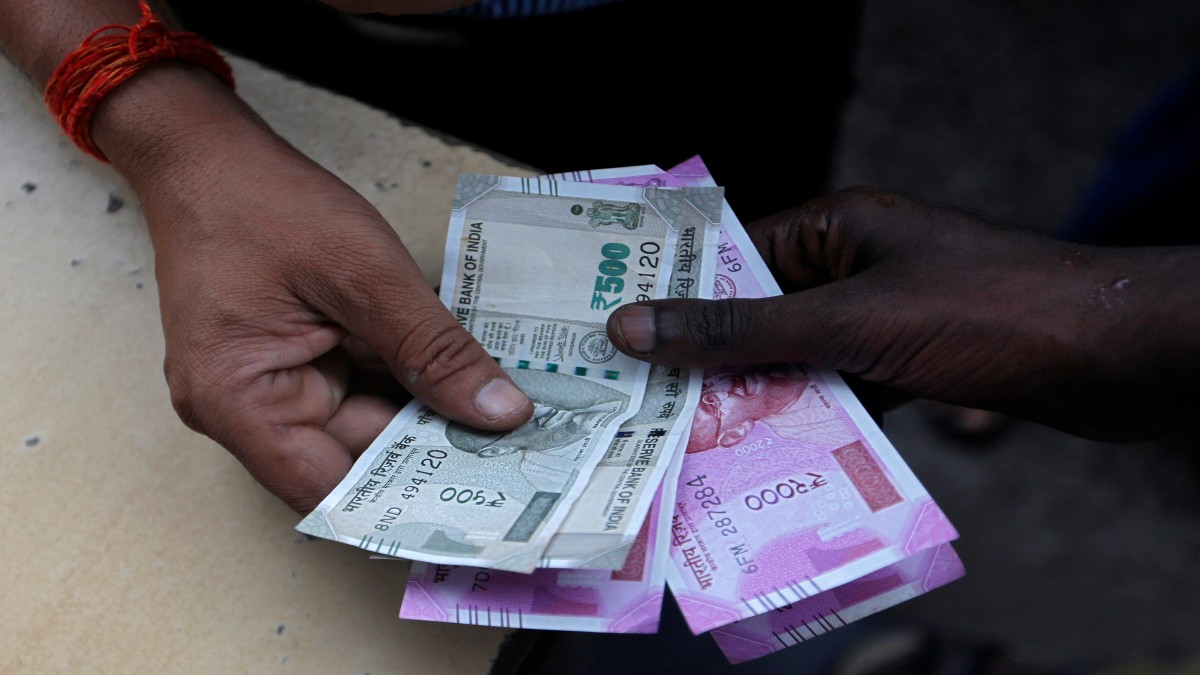
 "Maharashtra becomes first state to offer Unified Pension Scheme. How is it different from National Pension Scheme?")
Maharashtra has become the first state to offer its employees the Unified Pension Scheme (UPS).
The move by the Eknath Shinde-led government came a day after the Centre announced the UPS for employees who joined the service after January 1, 2004.
An official said the Maharashtra cabinet has decided that the UPS will take effect from March and will benefit all state government employees.
The decision also comes ahead of the state Assembly polls which are likely to be held at the end of the year.
Union minister Ashwini Vaishnaw said the decision will benefit 23 lakh government employees.
But how is UPS different from National Pension Scheme (NPS) – also known as the New Pension Scheme?
Let’s take a closer look:
What is UPS?
First, let’s briefly examine the UPS.
The UPS will provide Central government employees pension after retirement.
The scheme is set to take effect on April 1, 2025.
As per Indian Express, the UPS gives employees a fixed pension after retirement.
For those who served 25 years, this comes to around half the employee’s average basic pay drawn over the last year before retirement.
This amount would become lower for employees serving fewer years – with a decade as the minimum period of service.
Employees who worked for the Centre for 10 years would get a minimum of Rs 10,000 per month.
Impact Shorts
More ShortsIf the employee passes away, their family could avail 60 per cent of the pension drawn by him or her.
The UPS also provides for inflation indexation – which takes into account the All India Consumer Price Index for Industrial Workers.
The UPS also gives retiring employees a lumpsum payment when they retire.
This comes to 1/10th of their basic pay plus dearness allowance on retirement for every six months of service completed, as per Indian Express.
Under the UPS, the employee contributes 10 per cent of their basic pay and dearness allowance, while the government contributes 18.5 per cent.
What is NPS?
The NPS, meanwhile was introduced two decades ago, on January 1, 2004, by the then Atal Bihari Vajpayee government, according to News18.
The NPS, which replaced the Old Pension Scheme (OPS), is jointly administered by the Centre and the Pension Fund Regulatory and Development Authority (PFRDA).
It is meant to provide a safety net for government employees after retirement.
The NPS was brought in as a replacement for the OPS – which like the UPS, capped its pension at 50 per cent of the final basic pay.
The OPS, like the UPS, also had dearness relief to account for inflation.
As per India Today, the OPS, like the NPS, also gave employees a lumpsum payment of up to Rs 20 lakh upon retirement.
Employees were not called upon to make a contribution to make a contribution in case of OPS.
Even better for employees, when they passed away, their kin continued to receive their pension.
The basic problem with the OPS is that it was busting the government’s coffers and unsustainable in the long run due to increased life expectancy.
As per Indian Express, the data show how much the Centre and states’ pension outlays have increased over the years.
In 1990-91, that figure was Rs 3,272 crore for the Centre and Rs 3,131 crore for states.
Three decades later, in 2020-2021, the figure was at 1,90,886 crore for the Centre and 3,86,001 crore for states – an increase of 58 and 125 times respectively.
According to News18, the NPS too offers a pension upon retirement.
However, this is far different than what UPS offers.
According to Financial Express, NPS is also linked to the stock market.
Thus the amount the subscriber gets upon retirement depends on how the stock market does.
The employee under the NPS contributes 10 per cent of the basic salary while the government contributes 14 per cent.
Under NPS, subscribers can withdraw only part of their corpus, while the rest is paid out in monthly installments.
The NPS also has different types of accounts – Tier 1 and Tier 2.
Those who subscribe to Tier 1 accounts can only withdraw their corpus after they retire, while those subscribed to Tier 2 accounts have access to withdraw their funds.
As per India Today, NPS subscribers can also select the amount of risk they are comfortable with.
The choices range from low-risk to extremely aggressive.
Subscribers to the NPS can also avail of tax benefits – up to Rs 1.5 lakh under Section 80 CCD of the Income Tax Act.
They can also claim another Rs 50,000 under Section 80 CCD(1B) over and above the Rs 1.5 lakh, as per Financial Express.
Sixty per cent of the NPS corpus can be withdrawn tax-free at the time of retirement.
The remaining 40 per cent is given back to the subscriber in chunks – which could give a pension of an estimated 35 per cent of their final salary, as per News18.
Government employees who have taken NPS can switch to the UPS, as per India Today.
Unlike UPS and OP, anyone can subscribe to the NPS.
Any citizen of India between the age of 18 and 70 can enroll in the scheme, as per the newspaper.
It is also a portable scheme – that is employees who switch jobs can continue to avail it.
With inputs from agencies


 "Russian drones over Poland: Trump’s tepid reaction a wake-up call for Nato?")
 "As Russia pushes east, Ukraine faces mounting pressure to defend its heartland")
 "Why Mossad was not on board with Israel’s strike on Hamas in Qatar")
 "Turkey: Erdogan's police arrest opposition mayor Hasan Mutlu, dozens officials in corruption probe")
 "Russian drones over Poland: Trump’s tepid reaction a wake-up call for Nato?")
 "As Russia pushes east, Ukraine faces mounting pressure to defend its heartland")
 "Why Mossad was not on board with Israel’s strike on Hamas in Qatar")
 "Turkey: Erdogan's police arrest opposition mayor Hasan Mutlu, dozens officials in corruption probe")



