

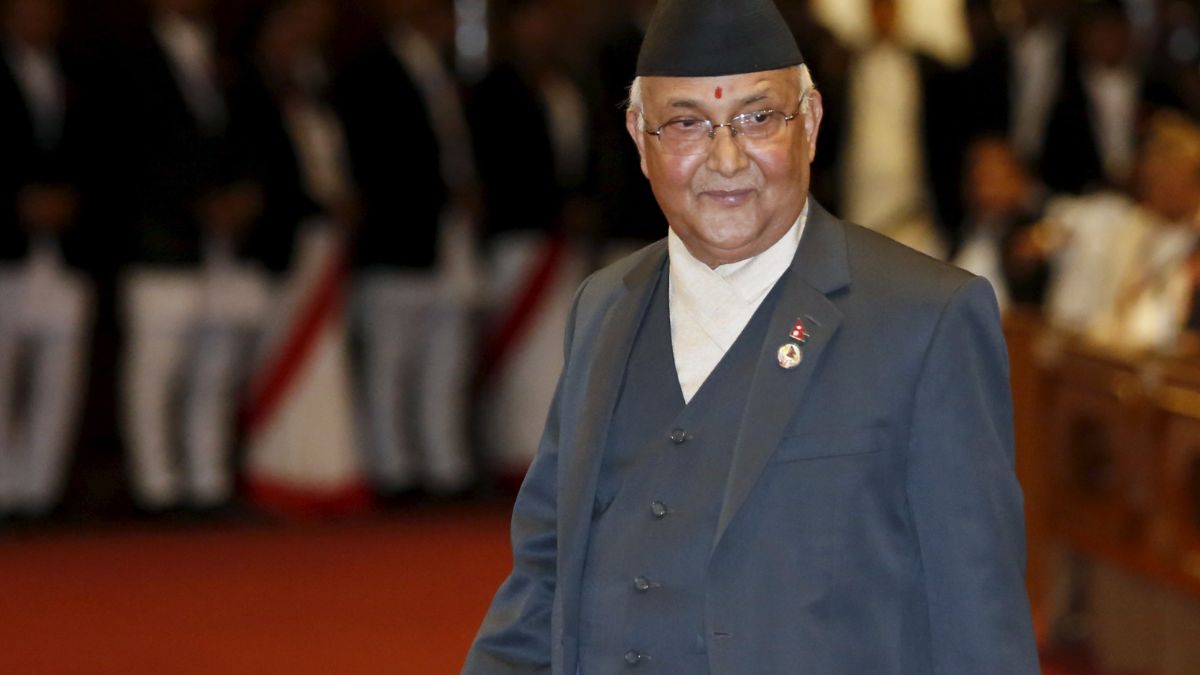
 "KP Sharma Oli to return as Nepal PM: Who is the Communist leader? Can he bring political stability?")
Khadga Prasad Sharma Oli is set to return as Nepal’s prime minister after Pushpa Kamal Dahal ‘Prachanda’ lost the vote of confidence in Parliament on Friday (July 12). The Himalayan nation has seen 13 governments since centuries-old monarchy was abolished in 2008.
Backed by the Nepali Congress (NC), the Communist Party of Nepal (Unified Marxist-Leninist) chairman Oli has staked a claim to form the new government in the country. He will return as the premier for a third time.
Who is KP Sharma Oli and can he bring political stability to Nepal?
Meet KP Sharma Oli
KP Sharma Oli, 72, is a Communist politician who ruled Nepal twice – from 2015-2016 and 2018-2021.
Born in 1952 in eastern Nepal, Oli was viewed as a pro-China leader and for his hardened stance towards India during his prime ministerial stints.
Oli’s foray into politics began at the young age of 12. Inspired by Karl Marx and Lenin, Oli entered Communist politics in 1966, reported Indian Express. Four years later, he joined the Communist Party.
Oli has been behind bars multiple times. He was jailed for the first time in 1970 by the Panchayat government, according to a PTI report.
A school dropout, Oli was imprisoned in his early 20s for the murder of Dharma Prasad Dhakal, a farmer in eastern Nepal, reported Indian Express.
Impact Shorts
More ShortsHe was arrested again for involvement in Nepal’s democracy movement, spending 14 years in prison from 1973 to 1987, as per PTI.
Oli got out of jail after receiving a royal pardon. He took leadership of the Jhapa rebellion in 1971, which marked a shift in the Communist movement in the country to armed revolt, according to the Indian Express report.
Oli shot to fame for his role in the democratic movement in the 1990s that brought down the Panchayat regime.
He was first elected to the House of Representatives from Jhapa district in 1991. Over the years, Oli emerged as a key player in Nepal’s politics. The Communist leader served as deputy PM in the interim government led by Girija Prasad Koirala in 2006.
In 2008, Nepal abolished its 239-year-old monarchy and became a Republic.
Oli became prime minister for the first time in 2015 after securing 338 out of 597 votes. However, he was forced to resign in July 2016 after his ally Communist Party of Nepal (Maoist-Centre) withdrew support, leading to Oli losing a no-confidence motion in Parliament.
When Oli was PM, tensions gripped India and Nepal, especially during the 134-day-long economic blockade in 2015. Kathmandu refused to defer the promulgation of the Constitution without taking into consideration the concerns of people in the Terai region, as per the Indian Express report.
Oli also grew close to China and further strained ties with New Delhi by updating Nepal’s map to include disputed territories with India.
Oli cultivated the image of a nationalist, becoming the face of “Nepali nationalism”. He capitalised on India’s concerns about the Constitution and fought the 2017 general elections on a nationalism plank, reported The Hindu.
His second tenure as Nepal’s PM came in 2018 when his Communist Party of Nepal-Unified Marxist Leninist (CPN-UML) and its ally the Communist Party of Nepal (Maoist-Centre) under Pushpa Kamal Dahal secured a two-thirds majority in the elections.
The two parties eventually merged into the Nepal Communist Party, with Oli and Dahal agreeing to co-chair the party organisation. The two leaders also decided to share the prime ministerial term.
The government failed to bring economic prosperity or political stability to Nepal despite the historic mandate. Oli also brought all investigating agencies under the Prime Minister’s Office, triggering fears among his political opponents.
When the time came to pass the baton to Dahal, Oli took a U-turn. The then Nepal PM’s favourable treatment of loyalists created internal party rifts, leading to Dahal’s withdrawal of support and the split in the alliance.
Oli dissolved Parliament twice – in 2020 and 2021 – which cost him his job in July 2022. At the time, the Supreme Court not only set aside the dissolution of the House of Representatives but also ordered the appointment of NC’s Sher Bahadur Deuba as the prime minister, humiliating Oli.
Will Nepal finally get political stability?
Oli is again returning as Nepal’s PM. This time, he has struck a power-sharing deal with the NC chairman and his old rival Deuba.
Under the agreement inked earlier this month, Oli will reportedly make way for Deuba to take over as the head of the coalition government after 22 months.
No government in Nepal has completed a full five-year term since democracy was restored in 1990. Dahal was the 13th PM to come to power in the past 16 years.
With the Nepali Congress and the CPN-UML – the two largest parties in Parliament with 88 and 78 seats, respectively – forging an alliance, there are hopes of some political stability.
Speaking to Associated Press (AP), Dhruba Adhikary, an independent analyst, said, “This change could be good for the country now that the two largest parties will be running the government as it could bring the much-needed political stability.”
Given Nepal’s political history, it is hard to gauge how long this alliance between Oli and Deuba will last.
“However, going by our history, we just can’t be sure if they can keep up their partnership for long which could again bring further confusion and chaos,” the analyst told AP.
There are also worries about how Oli will govern.
Chandrakishore, a political commentator, told The Hindu, “Government change has been the only constant in Nepal, what’s missing is governance. The new government inspires little hope when it comes to basic governance issues.”
“Under Oli, or the UML-NC government for that matter, stability and issues of social justice, service delivery, development or people’s concerns are unlikely to be the priority,” he said. “Rather, the danger is that the NC and the UML might take some regressive steps in the name of constitutional amendments.”
KP Oli has defended his party’s alliance with NC, saying it was needed for “maintaining political stability and development of the country.”
However, Jhalak Subedi, a left-leaning commentator, doubts this, calling it a “ruse” for the two parties to assume power, The Hindu reported. “Did not Oli have a majority a few years ago? Why wasn’t there stability then?,” he asked.
With inputs from agencies

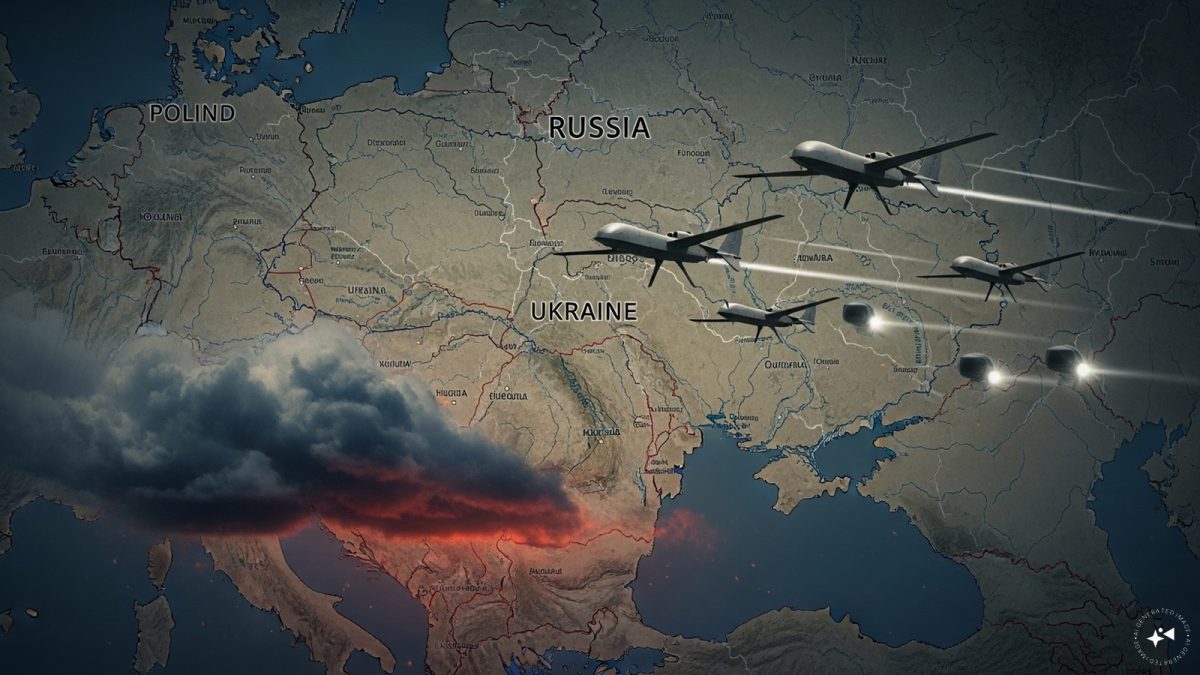 "Russian drones over Poland: Trump’s tepid reaction a wake-up call for Nato?")
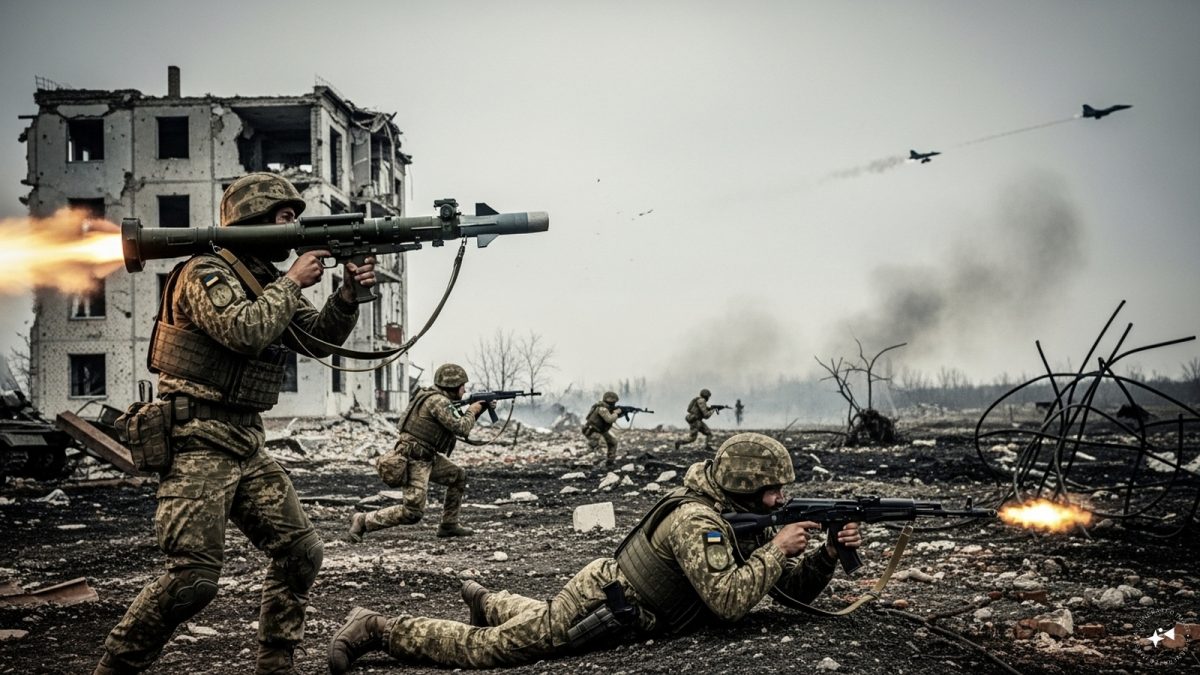 "As Russia pushes east, Ukraine faces mounting pressure to defend its heartland")
 "Why Mossad was not on board with Israel’s strike on Hamas in Qatar")
 "Turkey: Erdogan's police arrest opposition mayor Hasan Mutlu, dozens officials in corruption probe")
 "Russian drones over Poland: Trump’s tepid reaction a wake-up call for Nato?")
 "As Russia pushes east, Ukraine faces mounting pressure to defend its heartland")
 "Why Mossad was not on board with Israel’s strike on Hamas in Qatar")
 "Turkey: Erdogan's police arrest opposition mayor Hasan Mutlu, dozens officials in corruption probe")



