

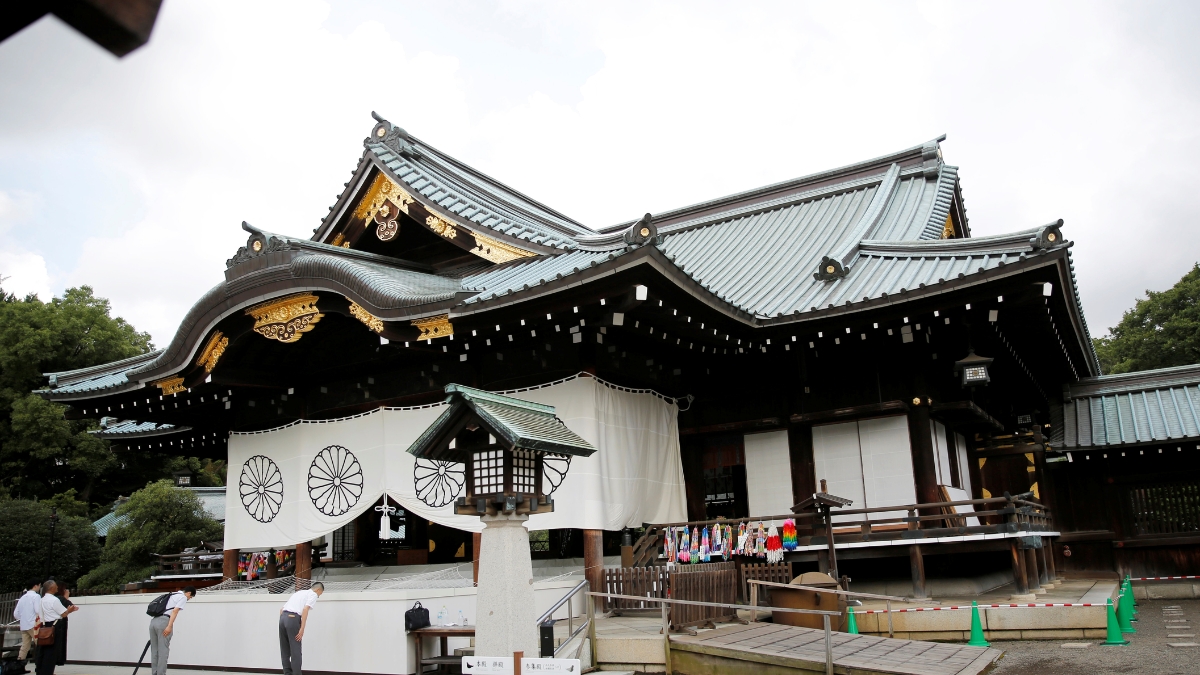
 "Why has Japan PM Kishida's offerings at Yasukuni Shrine outraged South Korea, China?")
Japanese Prime Minister Fumio Kishida recently made religious offerings at a controversial shrine in Tokyo. The act has evoked outrage from South Korea and China. It has also brought Japanese war crimes from the World War II era in the limelight.
This incident revolves around the infamous Yasukuni Shrine.
Here’s a look at the latest development, and why the shrine is so controversial.
Why is Yasukuni Shrine in the news?
On Sunday, Prime Minister Kishida’s office sent a potted “sacred Masakaki flower” to the Yasukuni Shrine to mark the beginning of the spring festival.
Seoul protested this move, expressing “deep disappointment” about the same. South Korea urged Japanese leaders to show repentance for the country’s wartime past.
China’s foreign ministry spokesperson Wang Wenbin said that “The Chinese side firmly opposes Japan’s negative moves about the Yasukuni shrine.”
How is Yasukuni Shrine related to Japan’s wartime past?
Yasukuni is a Shintō shrine. Typically, in such shrines in Japan, rituals are performed to honour the principal deities. However, Yasukuni is not dedicated to usual Shintō deities. It honours the spirits of Japanese people who died fighting for the Emperor since 1853.
About 2.5 million people are named at the Shrine. The problem lies with 14 of these people, who are convicted “Class A” war criminals from the World War II era.
Impact Shorts
More ShortsFor the unversed, Class A war criminals are those charged with “crimes against peace”. These charges are for planning, initiating, and waging war.
It has long been a source of diplomatic friction between Japan and its neighbours, especially those who were subjected to atrocities by the Imperial Japanese Army.
South Korea, China, Singapore, Myanmar (Burma) are just a few of these countries.
From slavery to human experimentation: What were Japan’s war crimes?
The Japanese Imperial Army’s most heinous war crimes during World War II include maltreatment and killing of prisoners of war (PoWs), forced prostitution, rape, cannibalism by Japanese soldiers, human experimentation for biological warfare, and civilian massacres.
Slave labour: During the war, the Japanese government forcibly shipped workers from Korea, China, the Philippines, Indonesia and elsewhere in Asia to Japan as unpaid labour, for construction and dangerous work in coal mines. American PoWs were also subjected to back-breaking labour.
Forced prostitution, rape: The Japanese Imperial Military coerced an estimated 200,000 women from Japan, Korea, Taiwan, China, Dutch Indonesia and Southeast Asia to serve as “comfort women”. This was, in essence, forced prostitution and sexual slavery. Rapes throughout the Japanese colonies in Asia were common.
Cannibalism: In extreme cases where their supply lines were cut off, Japanese soldiers resorted to cannibalism. The troops cannibalised both enemy soldiers, local people, and even their own comrades.
Human experimentation: During World War II, Japanese doctors were also involved in barbarous human experimentation. These doctors intentionally infected healthy men and women with diseases such as anthrax, cholera, and typhoid.
During these experiments forcing people to endure freezing and subfreezing conditions for long periods. People would be defrosted later on to investigate human physiological and pathological reactions to low temperatures. They also performed tests on living humans to check the body’s tolerance to conditions like airtight chambers and high-voltage electric shocks. These were aimed at developing effective biological warfare weapons. These experiments were aimed at developing effective biological warfare weapons.
Apart from this, Imperial Japan also massacred hundreds of thousands of people during the war.
The infamous 14 of Yasukuni Shrine: What was their role?
The names of the 14 Class A war criminals were secretly added to the Yasukuni Shrine by the priest in 1978. These people included:
1. Hideki Tojo, the Prime Minister of Japan during most of the War. Tojo was convicted of waging wars of aggression and ordering inhumane treatment of prisoners of war, according to the International Military Tribunal For The Far East.
2. Kenji Doihara, a major figure in the Japanese invasion of China. He was responsible for the brutal treatment of PoWs and internees, and involved in the narcotics trade in Manchuria.
3. Seishirō Itagaki, who was responsible for planning Japanese Aggression into China that marked the dawn of Japanese military aggression in East Asia. During the war, he primarily focused on Japan’s expansion in China, Korea, and Singapore. In the prison camps under his direction, troops subjected prisoners and civilians to numerous atrocities.
4. Akira Mutō, the Chief of staff of Japan’s Kwantung Army in Manchuria. He was responsible for many brutalities in China, including the Rape of Nanking.
5. Iwane Matsui, the Commander of the Shanghai Expeditionary Force. During his tenure, he led troops to commit the Rape of Nanking and other atrocities.
6. Kōki Hirota, who served as the Foreign Minister during the tenure of Prime Minister Saitō Makoto and the following cabinet under Admiral Okada Keisuke. He, too, was implicated in the Rape of Nanking. He was also the Prime Minister of Japan during the early stages of World War II.
7. Kuniaki Koiso, who succeeded Hirota as Prime Minister of Japan, had admitted during the trial to knowing of the widespread atrocities that Japanese soldiers committed against PoWs and civilians. He was also convicted of plotting against China.
8. Toshio Shiratori, the Japanese ambassador to Italy from 1938-1940. He was an advocate of military expansionism, counseling an alliance between Nazi Germany, Italy and Japan to facilitate world domination. Shiratori was found guilty of conspiring to wage aggressive war.
9. Heitarō Kimura, who served as Chief of Staff for the Kwantung Army in Manchukuo, and later became the Vice Minister of War for Tōjō. Under his command, Burma PoWs were forced into slave labour.
10. Kōtoku Satō, who was involved in the Japanese invasion of China.
11. Hiroshi Ōshima, the Japanese ambassador to Nazi Germany and a key figure in Japanese-German relations during World War II.
12. Yoshijirō Umezu, the Chief of the Army General Staff and later Supreme Commander of the Imperial Japanese Army.
13. Toshinari Shōji, the Chief of the Military Affairs Bureau.
14. Osami Nagano, the Chief of the Naval General Staff.
Can these names be removed from Yasukuni Shrine?
Neither the Emperor nor the government can actually compel Yasukuni, a private religious institution, from acknowledging the 14 Class A criminals nor force it to disinter their spirits. Despite years of opposition by China, South Korea, and other nations, the Yasakuni Shrine continues to stand tall.
With inputs from agencies

 "Russian drones over Poland: Trump’s tepid reaction a wake-up call for Nato?")
 "As Russia pushes east, Ukraine faces mounting pressure to defend its heartland")
 "Why Mossad was not on board with Israel’s strike on Hamas in Qatar")
 "Turkey: Erdogan's police arrest opposition mayor Hasan Mutlu, dozens officials in corruption probe")
 "Russian drones over Poland: Trump’s tepid reaction a wake-up call for Nato?")
 "As Russia pushes east, Ukraine faces mounting pressure to defend its heartland")
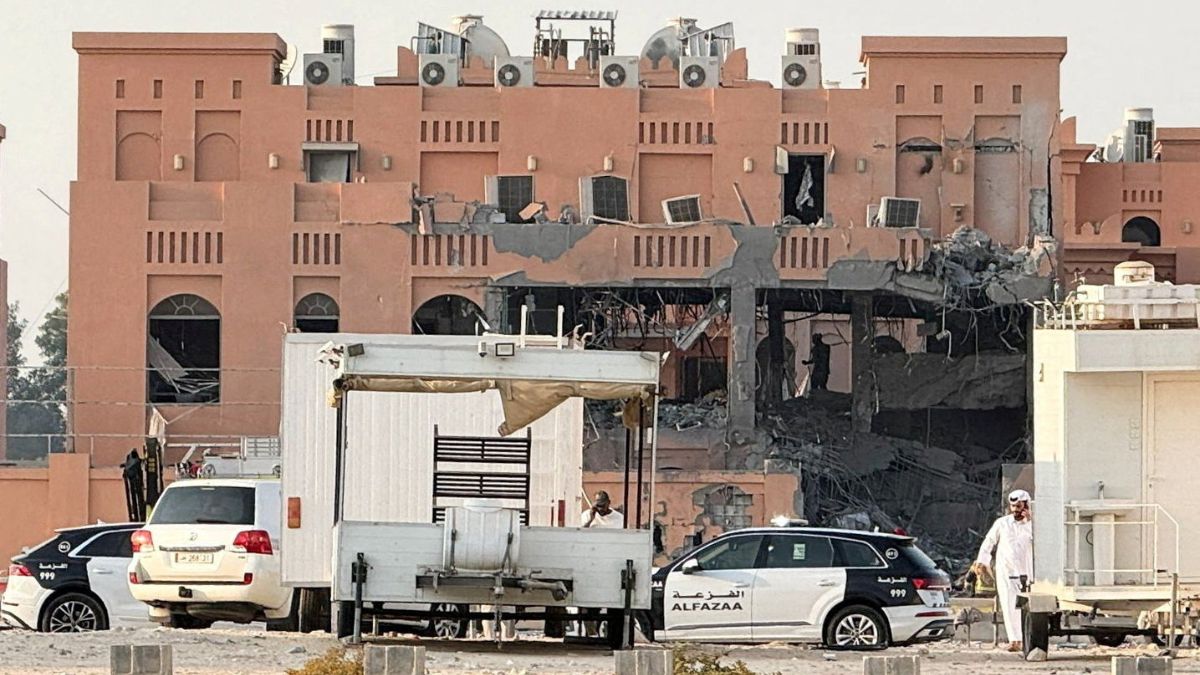 "Why Mossad was not on board with Israel’s strike on Hamas in Qatar")
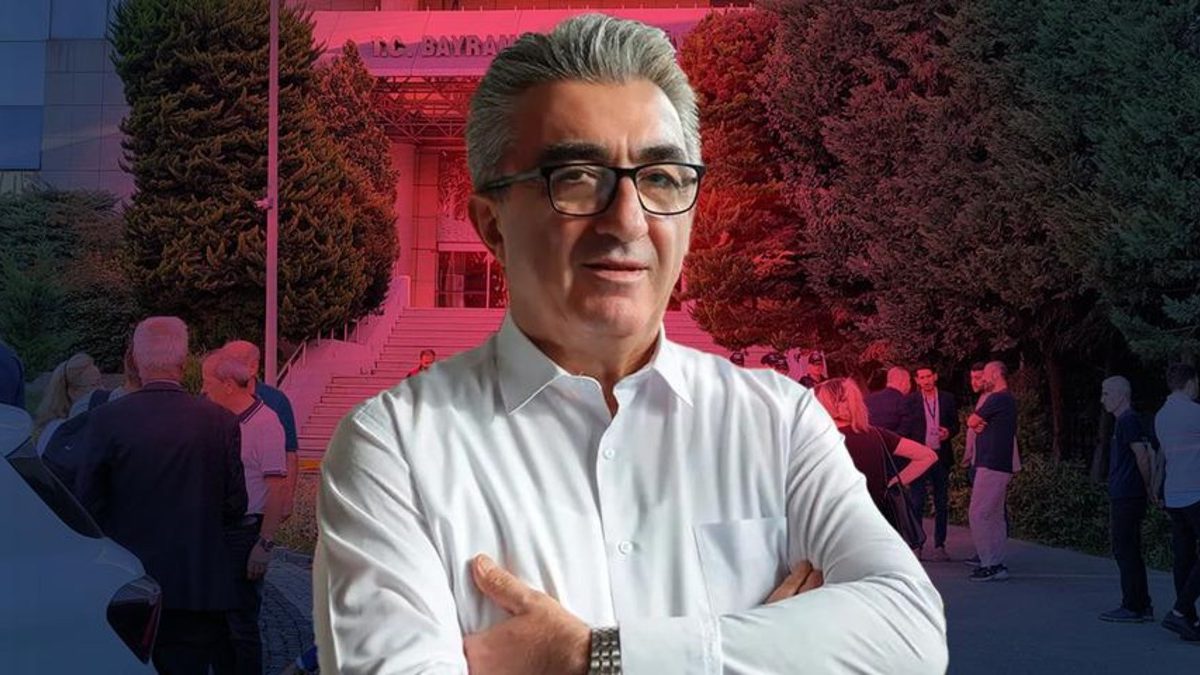 "Turkey: Erdogan's police arrest opposition mayor Hasan Mutlu, dozens officials in corruption probe")



