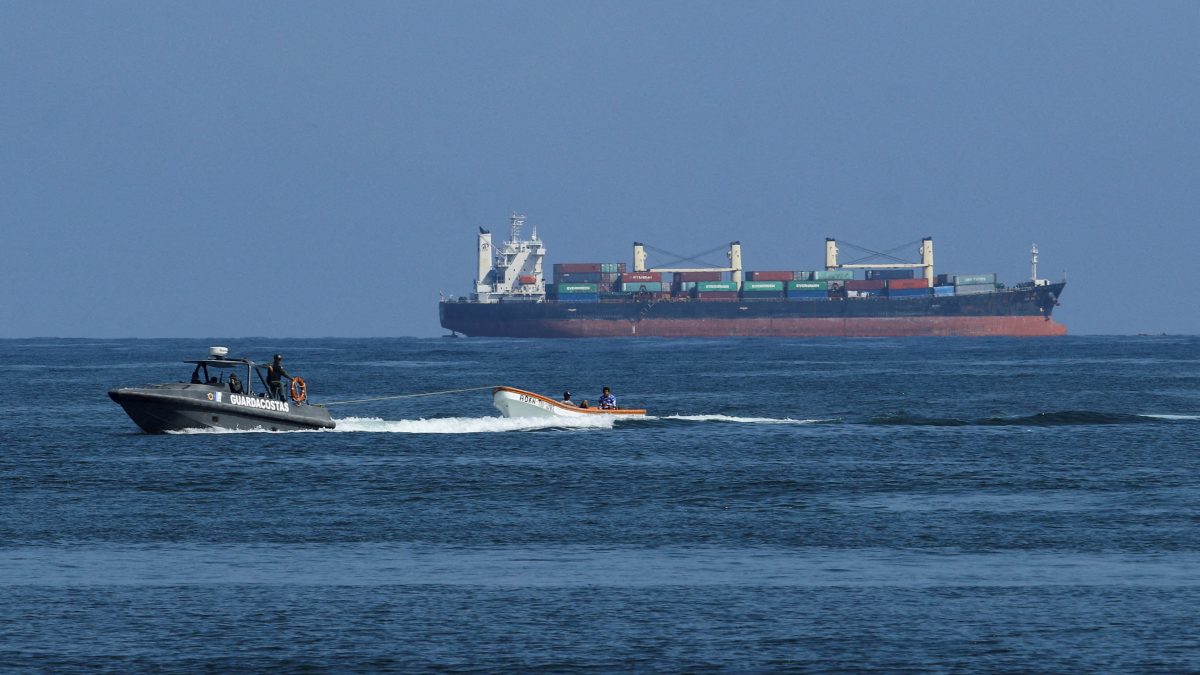
 "A coast guard boat of the Venezuelan Navy operates off the Caribbean coast in Puerto Cabello, Venezuela. File photo/Reuters")
US President Donald Trump said on Saturday that the airspace above and surrounding Venezuela should be considered “closed in its entirety”, without giving details, as Washington continues to ramp up pressure on President Nicolas Maduro’s government.
Trump has repeatedly said US strikes on alleged drug boats in the Caribbean and Pacific, which have killed more than 80 people, could develop into land action in the South American country , although he has also reportedly held a call with Maduro and discussed a possible US visit by the Venezuelan president.
What are Venezuela’s military capabilities?
The US military dwarfs Venezuela’s, which is debilitated by a lack of training, low wages and deteriorating equipment, six sources familiar with Venezuelan military capabilities said.
Although Maduro, in power since 2013, has enjoyed military loyalty by placing officers in government roles, rank-and-file soldiers earn just $100 a month in local currency, about a fifth of what studies say an average family needs to meet its basic needs.
Sources say desertions, which already occur in many units, could increase in the event of an US military attack.
The primary experience of Venezuelan troops in recent years has been confronting unarmed civilians during street protests.
Maduro has said there are 8 million civilians training in militias, but one source estimated that only thousands of intelligence personnel, armed ruling-party supporters and militia members would really participate in defensive actions.
The military’s equipment - much of it Russian-made and decades-old - is lacking. Caracas bought some 20 Sukhoi fighter jets in the 2000s, but they are considered lacking in comparison to US B-2s, and Venezuela’s Russian-made helicopters, tanks and shoulder-fired missiles are also outdated.
How could Venezuela respond to an attack?
Venezuela plans to mount a guerrilla-style resistance or sow chaos in the event of a US air or ground attack, sources and planning documents seen by Reuters show.
The response has been referenced publicly, though without details, by high-ranking officials, who refer to it as “prolonged resistance”, and would involve small military units at more than 280 locations carrying out acts of sabotage and other guerrilla tactics.
Venezuela’s 5,000 Russian-made Igla missiles, praised by Maduro recently on state television, have already been deployed. Military orders are for units to disperse and hide at various locations if there is an attack, one source said.
The second strategy, called “anarchisation” and which officials have not acknowledged, would use intelligence services and armed ruling-party supporters to create disorder in the capital Caracas and make Venezuela ungovernable, sources say.
Are there other armed actors in Venezuela?
Colombian guerrilla forces like the National Liberation Army operate in the west of Venezuela, which is also a hub for the cultivation of coca, the base ingredient in cocaine.
Ruling party supporters called colectivos, or collectives, often mobilise in motorcycle convoys to confront protesters. They are sometimes armed.
Venezuelan opposition groups, NGOs, Washington and some Latin American governments have accused Maduro and the Venezuelan military of ties to drug trafficking groups, who are also accused of violence.
The government has consistently denied such links and says the US is seeking regime change to take control of Venezuela’s vast oil reserves.