

 "Is it time to redefine obesity? How will it help?")
The stigma that surrounds people living in larger bodies is pervasive and deeply affects the people it’s directed at. It’s been described as one of the last acceptable
forms of
discrimination. Some researchers think the term “obesity” itself is part of the problem, and are calling for a
name change to reduce stigma. They’re
proposing “adipose-based chronic disease” instead. We study the stigma that surrounds obesity — around the time of
pregnancy, among
health professionals and health
students, and in
public health more widely. Here’s what’s really needed to reduce weight stigma. Weight stigma is common Up to
42 per cent of adults living in larger bodies experience weight stigma. This is when others have negative beliefs, attitudes, assumptions and judgements towards them, unfairly viewing them as lazy, and lacking in willpower or self-discipline. People in larger bodies experience
discrimination in many areas, including in the workplace, intimate and family relationships, education, health care and the media. Weight stigma is associated with
harms including increased cortisol levels (the main stress hormone in the body), negative body image, increased weight gain, and poor mental health. It leads to decreased uptake of, and quality of, health care. Weight stigma may even pose a
greater threat to someone’s health than increasing body size. Should we rename obesity? Calls to remove or rename health conditions or identifications to reduce stigma are not new. For example, in the 1950s homosexuality was classed as a “
sociopathic personality disturbance”. Following many years of protests and activism, the term and condition
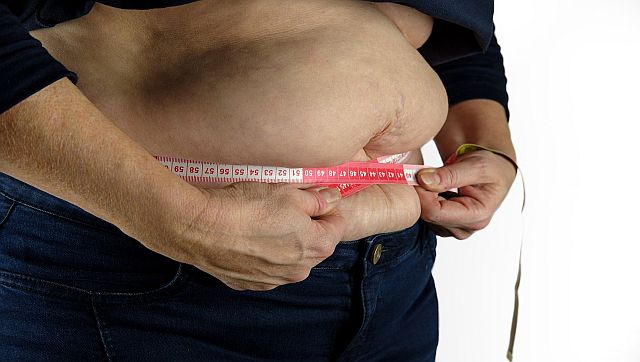
were removed from the globally recognised classification of mental health disorders. [caption id=“attachment_12939382” align=“alignnone” width=“640”] Weight stigma may even pose a greater threat to someone’s health than increasing body size. Pixabay[/caption] In recent weeks, European researchers have renamed non-alcoholic fatty liver disease “metabolic dysfunction-associated steatotic liver disease”. This occurred after
up to 66 per cent of health-care professionals surveyed felt the terms “non-alcoholic” and “fatty” to be stigmatising. Perhaps it is finally time to follow suit and rename obesity. But is “adiposity-based chronic disease” the answer? A new name needs to go beyond BMI There are two common ways people view obesity. First, most people use the term for people with a body-mass index (BMI) of 30kg/m² or above. Most, if not all, public health organisations also use BMI to categorise obesity and
make assumptions about health. However, BMI alone is not enough to accurately summarise someone’s health. It does not account for muscle mass and
does not provide information about the distribution of body weight or adipose tissue (body fat). A high BMI can occur
without biological indicators of poor health. Second, obesity is sometimes used to describe the condition of excess weight when mainly
accompanied by metabolic abnormalities. To simplify, this reflects how the body has adapted to the environment in a way that makes it more susceptible to health risks, with excess weight a by-product of this. Renaming obesity “adiposity-based chronic disease” acknowledges the chronic metabolic dysfunction associated with what we currently term obesity. It also avoids labelling people purely on body size. Is obesity a disease anyway? “Adiposity-based chronic disease” is an acknowledgement of a disease state. Yet there is still no universal consensus on whether obesity is a disease. Nor is there clear agreement on the definition of “disease”. [caption id=“attachment_12939392” align=“alignnone” width=“640”]
Renaming obesity may improve public understanding that while obesity is often associated with an increase in BMI, the increased BMI itself is not the disease. Pixabay[/caption] People who take a biological-dysfunction approach to disease
argue dysfunction occurs when physiological or psychological systems don’t do what they’re supposed to. By this definition, obesity may
not be classified as a disease until after harm from the additional weight occurs. That’s because the excess weight itself may not initially be harmful. Even if we do categorise obesity as a disease, there may still be value in renaming it. Renaming obesity may improve public understanding that while obesity is often associated with an increase in BMI, the increased BMI itself is not the disease. This change could move the focus from obesity and body size, to a more nuanced understanding and discussion of the biological, environmental, and lifestyle factors
associated with it. Workshopping alternatives Before deciding to rename obesity, we need discussions between obesity and stigma experts, health-care professionals, members of the public, and crucially,
people living with obesity. Such discussions can ensure robust evidence informs any future decisions, and proposed new terms are not also stigmatising. What else can we do? Even then, renaming obesity may not be enough to reduce the stigma. Our constant exposure to the socially defined and acceptable idealisation of smaller bodies (the “thin ideal”) and the pervasiveness of weight stigma means this stigma is deeply ingrained at a societal level. Perhaps true reductions in obesity stigma may only come from a societal shift — away from the focus of the “thin ideal” to one that acknowledges health and wellbeing can occur at a range of body sizes.
This article is republished from
The Conversation under a Creative Commons license. Read the
original article.
Renaming obesity could move the focus from obesity and body size, to a more nuanced understanding and discussion of the biological, environmental, and lifestyle factors associated with it. However, just renaming may not be enough to reduce the stigma
Advertisement
End of Article


 "Russian drones over Poland: Trump’s tepid reaction a wake-up call for Nato?")
 "As Russia pushes east, Ukraine faces mounting pressure to defend its heartland")
 "Why Mossad was not on board with Israel’s strike on Hamas in Qatar")
 "Turkey: Erdogan's police arrest opposition mayor Hasan Mutlu, dozens officials in corruption probe")
 "Russian drones over Poland: Trump’s tepid reaction a wake-up call for Nato?")
 "As Russia pushes east, Ukraine faces mounting pressure to defend its heartland")
 "Why Mossad was not on board with Israel’s strike on Hamas in Qatar")
 "Turkey: Erdogan's police arrest opposition mayor Hasan Mutlu, dozens officials in corruption probe")



