 "Iran war: Why are wealthy Indians moving their money to Singapore?")
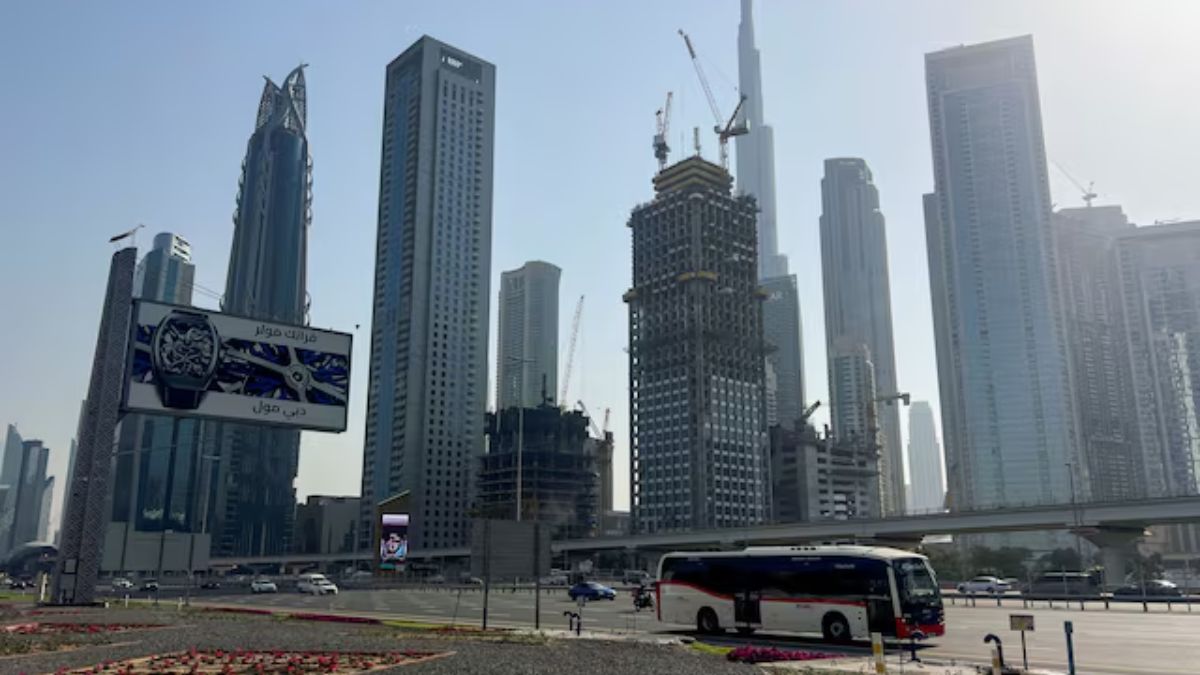
Soon after the first Iranian missile and drone attacks on Dubai last week, two Indian entrepreneurs based there tried to move more than $100,000 (around Rs 91 lakh) each from their local bank accounts to Singapore to hedge risk.
Technological glitches in the aftermath of the Iranian attacks initially scuppered those plans, the entrepreneurs, who did not wish to be identified due to the sensitivity of the matter, told Reuters.
One of them said he managed to subsequently transfer the sum to his Singapore bank account via another Emirates-based bank.
Scores of other wealthy Asians are making enquiries or taking similar steps to move their Dubai-parked assets to the regional financial hubs of Singapore and Hong Kong, industry advisers and lawyers said, as the US-Israel war on Iran clouds the Gulf’s safe-haven aura and rattles investors.
While the rich typically diversify their investments across regions and asset classes, they choose where to be based depending on tax, regulatory, privacy and operational considerations.
Towards that end, Dubai has emerged in recent years as a preferred wealth hub for entrepreneurs and wealthy families in Asia, mainly from China, as they seek to take advantage of its favourable policies.
Moreover, with a property and infrastructure boom, the Gulf region has also become an investment destination. Total assets of the United Arab Emirates (UAE) banking and financial sector exceeded 5.42 trillion dirhams, according to its central bank.
The trend is now under sharp scrutiny, as the attacks on Dubai and Abu Dhabi have thrown into doubt the UAE’s reputation for stability.
Singapore-based private wealth lawyer Ryan Lin said six or seven of his 20 Dubai-based clients, each holding an average of $50 million (around Rs 415 crore to Rs 420 crore) in assets, contacted him this week, with three planning immediate asset transfers to the city-state.
One client is “checking how quickly they can transfer everything to Singapore”, Lin said.
Iris Xu, principal at global corporate and fund services provider Anderson Global, said 10 to 20 family offices have enquired this week about moving assets back to Singapore from the Middle East, citing worries the conflict might drag on.
Family offices are one-stop firms that manage the portfolios of the wealthy.
“Dubai was always about tax benefits, but now I think the tax benefits may not be the top priority for them,” she said.
A wealth management adviser in Singapore, who did not wish to be identified because they were not authorised to speak to the media, said they had spoken to 13 UAE-based clients so far, with more than half of them serious about moving assets to Singapore.
“Flying back and forth will be a challenge even if the conflict ends tomorrow. It is a confidence thing,” said the adviser.
Grace Tang, CEO of Phillip Private Equity, said her predominantly Asian clients are skittish, with 10 to 20 asking about moving their wealth to Singapore and looking to preserve their capital.
Waiting and Watching
Not all wealth managers, however, view the ongoing Middle East conflict as prompting immediate capital flight.
Dhruba Jyoti Sengupta, CEO of Dubai-based WRISE Private Middle East, a wealth management group, said the firm has not seen “serious capital flight discussions” because clients are confident in the UAE’s long-term resilience.
“They are sophisticated global investors, already diversified internationally, but deeply invested … in the UAE’s growth story,” he said. “Despite the broader geopolitical turmoil in the region, clients are feeling safe and secure.”
The UAE’s banking and financial sector was resilient, strong, stable, and well-positioned to navigate regional developments, its central bank governor, Khaled Mohamed Balama, said on Thursday, adding that banks, financial firms, and insurers were operating normally and without disruption.
Leading Singapore-based wealth managers, Bank of Singapore and DBS Group (DBSM.SI), opened a new tab and said their clients were closely observing developments in the region and taking a wait-and-watch approach for now.
As the UAE scrambled to maintain its safe-haven status, some were going ahead with their expansion plans in the Emirates.
Jeremy Lim, co-founder of GrandWay Family Office, is in the process of opening a family office in Abu Dhabi and said his plans have not changed, as long as the UAE does not become directly involved in the conflict and barring any further escalation from Iran.
“The real deal-breaker for businesses would be if the UAE were to…become directly involved alongside one side in a conflict,” said Lim.


 "Iran War News Live: Israel bombs bunker in Tehran used by Iranian officials, strikes Lebanon")
 "Torpedoing neutrality: US submarine attack on Iranian warship brings West Asia conflict to Asian waters")
 "‘Asian economies could end up paying the cost of Iran war’: West Asia expert to Firstpost")
 "Trump warns of possible Iranian retaliation on US soil, says 'some people will die'")
 "Iran War News Live: Israel bombs bunker in Tehran used by Iranian officials, strikes Lebanon")
 "Torpedoing neutrality: US submarine attack on Iranian warship brings West Asia conflict to Asian waters")
 "‘Asian economies could end up paying the cost of Iran war’: West Asia expert to Firstpost")
 "Trump warns of possible Iranian retaliation on US soil, says 'some people will die'")