

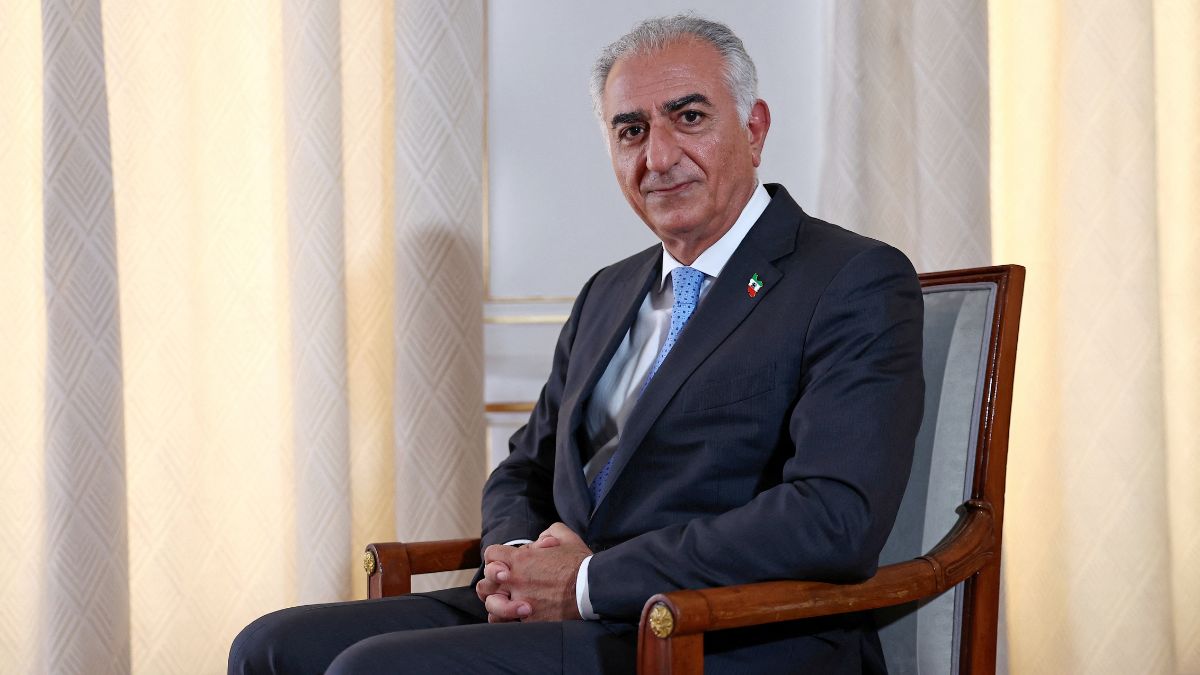
 "Iran protesters call for return of monarchy under Reza Pahlavi: Who is the ‘crown prince’?")
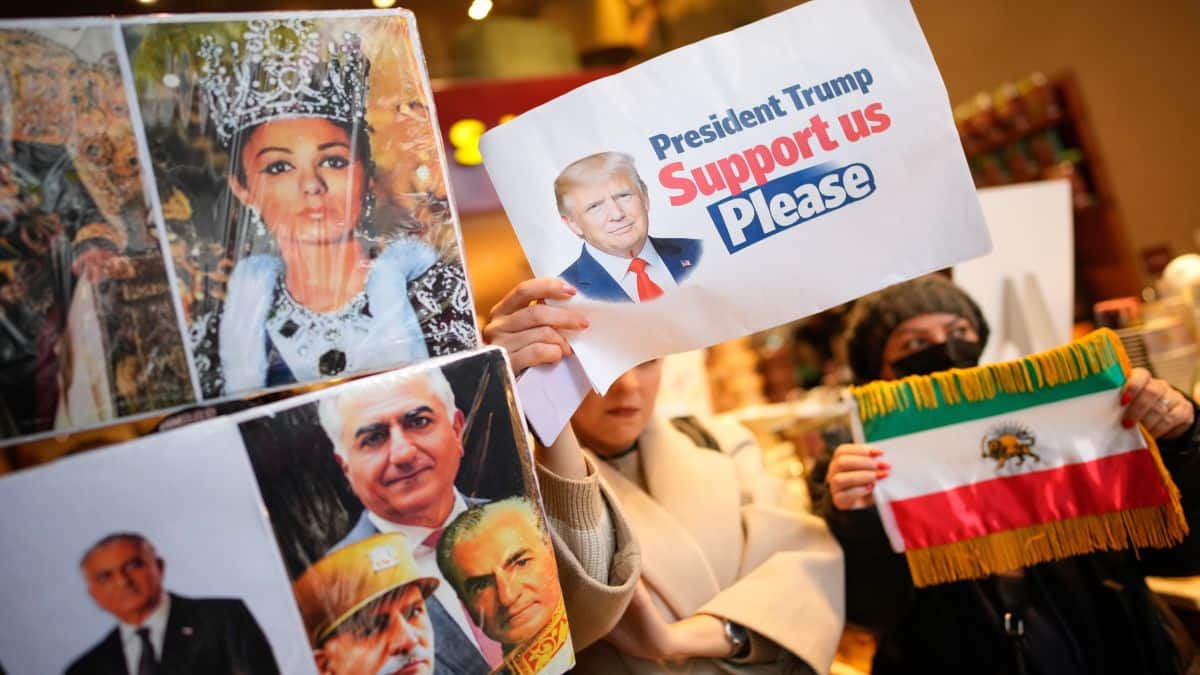
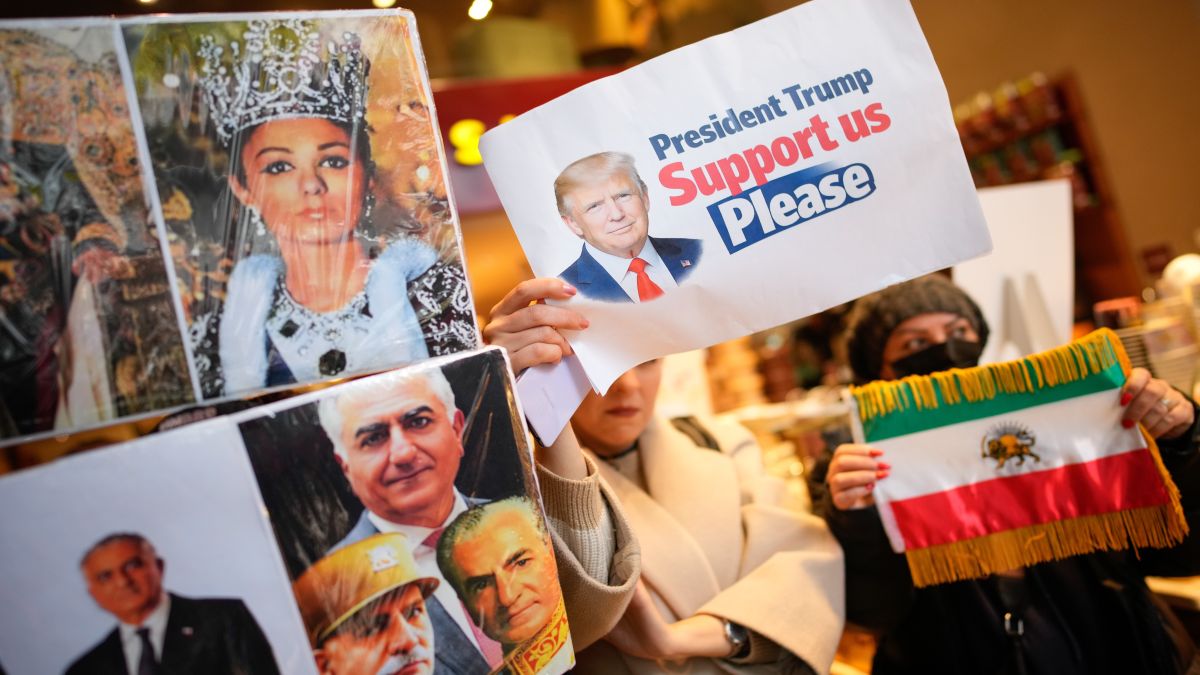
Protests in Iran refuse to die down. Demonstrators have been taking to the streets since last month to express their frustration against the deepening economic crisis. These protests have now turned into broader anti-government demonstrations, with chants of ‘Death to the dictator’ — a reference to Supreme Leader Ayatollah Ali Khamenei — and ‘Long live the shah’ — the late monarch Mohammad Reza Pahlavi — reverberating in some streets.
A nationwide internet blackout was reported on Thursday (January 8) in Iran amid calls from ‘Crown Prince’ Reza Pahlavi for more protests. He heads the fragmented Iranian opposition, which is backing regime change in the West Asian country.
But who is he? We take a look.
Catch all live updates on Iran protests here.
Who is Reza Pahlavi?
Reza Pahlavi, 65, is the son of Iran’s last shah, Mohammad Reza Pahlavi, and Empress Farah Pahlavi. He has been living outside Iran for decades.
Pahlavi was once the crown prince of Iran’s pro-Western monarchy, which was toppled in 1979 after a mass revolution. This led to the rise of the Islamic Republic.
In 1978, Pahlavi left Iran at the age of 17 for military training in the United States at Reese Air Force Base in Texas.
Just months after his departure, the Iranian revolution in January 1979 forced the shah and his family to flee the country.
After completing his military training, Pahlavi reportedly joined his family, who moved from Morocco to the Bahamas and then to Mexico.
Mohammad Reza Pahlavi died of cancer in Egypt in 1980. Later, Pahlavi declared himself the shah at a ceremony in Cairo. “In a way, I’m king-elect,” he told The Washington Post in a 1989 interview.
Quick Reads
View AllPahlavi has been advocating for regime change in Iran that would lead to the establishment of a secular democracy led by the Iranian people.
Pahlavi, who has mostly lived in the US since leaving Iran in 1978, has promised that he will return. He told USA Today that he wanted to be a “catalyst” to help Iran achieve full democracy. Pahlavi said he aims to see a “successful campaign of nonviolent civil disobedience,” resulting in a referendum.
He also has close ties to Israel, which fought a 12-day war with Iran last year.
“Pahlavi travels the world meeting with heads of state, legislators, policy-makers, interest groups and student groups speaking about the plight of Iranians under the Islamic regime in Iran. He consistently speaks out against the widespread abuse and oppression of the Iranian people and calls for the establishment of a secular democracy in Iran. He calls for regime change through non-violent civil disobedience, and for a free and open referendum on a new government of Iran,” his website reads.
In a recent opinion piece for The Washington Post, he wrote: “The Islamic Republic has exhausted its legitimacy, and after almost 47 years, the country wants to be free.”
Reza Pahlavi calls for more protests
Pahlavi urged protesters to demonstrate at 8 pm local ( 10 pm IST) on Thursday and Friday. Witnesses told Associated Press (AP) that as the time came, protesters across Tehran were heard chanting: “Death to the dictator!” and “Death to the Islamic Republic!” Some even praised the shah, shouting: “This is the last battle! Pahlavi will return!”
Thousands took to the streets before all communication to Iran was cut.
“Iranians demanded their freedom tonight. In response, the regime in Iran has cut all lines of communication,” Pahlavi said. “It has shut down the Internet. It has cut landlines. It may even attempt to jam satellite signals.”
Violent clashes between protesters and security forces have killed at least 42 people, while more than 2,270 others have been detained, AP reported, citing the US-based Human Rights Activists News Agency.
Will the US back Pahlavi’s return to power in Iran?
US President Trump has reiterated his threat to intervene if the Iranian government targets protesters.
“They’re doing very poorly. And I have let them know that if they start killing people – which they tend to do during their riots, they have lots of riots – if they do it, we’re going to hit them very hard,” Trump said on Thursday.
In December, Trump had threatened to attack Iran if it rebuilds its nuclear or missile programmes.
The US president, however, declined to meet Pahlavi, whom he called a “nice person”, as protests continued in Iran.
However, Trump said that, as president, it would not be appropriate to meet him.
“I think that we should let everybody go out there and see who emerges,” Trump told The Hugh Hewitt Show podcast. “I’m not sure necessarily that it would be an appropriate thing to do.”
Trump’s comments reflect that the US has not backed Pahlavi’s offer to “lead [a] transition” in governance in Iran, in case the current regime collapses.
Meanwhile, Pahlavi thanked Trump and claimed that “millions of Iranians” protested on Thursday night.
“I want to thank the leader of the free world, President Trump, for reiterating his promise to hold the regime to account,” he wrote in a social media post.
Millions of Iranians demanded their freedom tonight. In response, the regime in Iran has cut all lines of communication. It has shut down the Internet. It has cut landlines. It may even attempt to jam satellite signals.
— Reza Pahlavi (@PahlaviReza) January 8, 2026
I want to thank the leader of the free world, President…
“It is time for others, including European leaders, to follow his lead, break their silence, and act more decisively in support of the people of Iran.”
“I call on them to use all technical, financial, and diplomatic resources available to restore communication to the Iranian people so that their voice and their will can be heard and seen,” Pahlavi added. “Do not let the voices of my courageous compatriots be silenced.”
With inputs from agencies

 "Trump announces 25% tariff on Iran’s trading partners. How India may be affected")
 "India, US to resume BTA talks after 5 months as Gor pushes for trade deal with 'real friends'")
 "ICC sources rubbish Bangladesh sports adviser’s sensational claim of BCB being asked to drop Mustafizur")
 "Jerome Powell: The 'Fed chair with a spine' taking on Trump")
 "Trump announces 25% tariff on Iran’s trading partners. How India may be affected")
 "India, US to resume BTA talks after 5 months as Gor pushes for trade deal with 'real friends'")
 "ICC sources rubbish Bangladesh sports adviser’s sensational claim of BCB being asked to drop Mustafizur")
 "Jerome Powell: The 'Fed chair with a spine' taking on Trump")



