

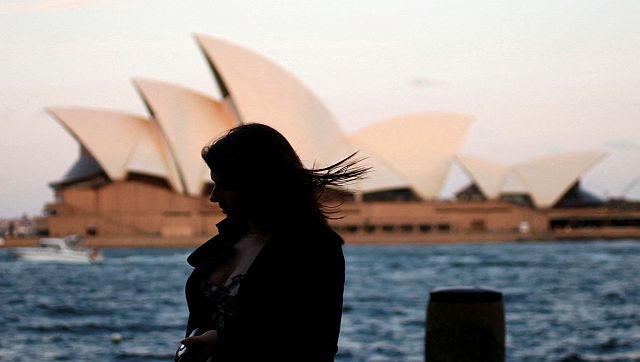
 "How Australians are fighting for the right to work from home permanently")
For many, working from home is wonderful. It reduces commuting, allows you more time with your family, and gives you more freedom and independence, all of which increases productivity. But are you willing to go to court to get your desire met? This is something that Australians are doing. On 12 July, the Finance Sector Union, which represents professionals in Australia’s finance and banking sectors, petitioned the Fair Work Commission — an Australian body that adjudicates labour disputes — to help stopping an in-person work mandate from the Commonwealth Bank of Australia (CBA). The country’s largest bank, CBA, had urged employees to begin spending half of their working hours in the office. The union claimed that the rule was imposed without consultation, violated pre-existing contracts, and harmed employees who needed childcare or had family responsibilities, reports Fortune. CBA’s management had been vocal against remote work, with HR Chief Sian Lewis stating at a conference that they believed no role could be fully done remotely. Lewis expressed concerns about reduced collaboration and potential gender imbalances if extended flexibility was allowed. The negotiations between the parties are ongoing, with the first Fair Work Commission hearing took place on Wednesday. As the work-from-home trend gains traction, we look at how Australian unions are battling to make it the standard amid calls for office reopenings. Fight to make work from home the norm Before COVID-19 sent one-third of the global workforce home, the Melbourne property surveyor that employs drone operator Nicholas Coomber called its 180-strong staff into the office every day at 9 am to hand out assignments. Now that they work from home, the surveyors travel straight to the field as early as 7.30 am, enabling Coomber to pick up his children from daycare earlier than before the pandemic.
“If they were to say ’everyone back in the office’, I would probably be asking for a raise,” said Coomber, who still visits the office once or twice a week. “You get more family time. You can actually finish work at five, rather than finishing at five spending 45 minutes trying to get home.” As corporate leaders from JPMorgan Chase CEO Jamie Dimon to Tesla and Twitter boss Elon Musk call for an end to pandemic-era remote work arrangements, unions in Australia are setting a precedent and fighting back, taking to court the country’s biggest bank and wrangling with the federal government to demand WFH, as it is known, to become the norm. “All the deep changes in the Australian labour market have come out of crises. When you have a jolt, you never return to the way the world was,” said John Buchanan, head of the University of Sydney’s Health and Work Research Network. “We’re always ahead of the pack in the English-speaking world, say compared to the UK, US, New Zealand.” Empowered by the lowest unemployment rate in half a century, staff at Commonwealth Bank of Australia (CBA.AX) took the $114 billion (Rs 9.42 lakh crore) lenders to the industrial tribunal to challenge a directive to work from the office half of the time. [caption id=“attachment_12952092” align=“alignnone” width=“640”] CBA and NAB say that even before the union deals, their policies allowed flexible working arrangements, which were widely used. File image/Reuters[/caption] In April, the CEO of Australia’s third-largest bank, National Australia Bank (NAB.AX), ordered 500 senior managers back to the office full-time. In July, NAB agreed to a union deal that gives all employees, including the 500 managers, the right to request WFH, with limits on grounds of refusal. That same week, the public sector union struck a deal the which lets Australia’s 120,000 federal employees request work-from-home an unlimited number of days. By comparison, Canada’s federal workers ended a two-week strike in May with a wages agreement that came without the WFH protections they wanted. And in the European Union, lawmakers are still negotiating updates to decades-old “telework” protections to fit a post-lockdown economy, where actual office attendance is down on 2019 levels anywhere from a fifth in Tokyo to more than half in New York, according to global real estate company Jones Lang Lasalle (JLL.N). “The genie’s out of the bottle: working from home is something that is staying well beyond COVID and the pandemic,” said Melissa Donnelly, the Community and Public Sector Union secretary who negotiated the Australian federal agreement. “What was possible around working from home has absolutely been transformed,” she added. “This is what this deal achieves. It will have a flow on effect across different industries.” CBA and NAB say that even before the union deals, their policies allowed flexible working arrangements, which were widely used. ‘Historic confrontation’ Though the number of remote-work days sought by employees differs between country and industry, the gap between employee WFH demands and their bosses’ return-to-office orders is a global constant, said Mathias Dolls, deputy director of the ifo Centre for Macroeconomics and Surveys in Hamburg which polled 35,000 workers and employers in 34 countries as part of a project with Stanford University. [caption id=“attachment_12952102” align=“alignnone” width=“640”]
 According to a survey, among employees with WFH experience, 19 per cent wanted to return to the office full-time. File image/Reuters[/caption] Among employees with WFH experience, 19 per cent wanted to return to the office full-time, the survey found. Workers wanted two days a week of WFH, double what bosses wanted, and “the gap is not shrinking,” said Dolls. “I don’t think we will see WFH levels going back to pre-pandemic levels.” Jim Stanford, director of the Centre for Future Work at the Australia Institute, a think tank, said individual union deals would not necessarily end the stalemate since employers would get more bargaining power if unemployment rose, a widely-expected by-product of rising interest rates. “The overall weight of opinion among workers is strongly they’d like to keep doing it and I think an emerging majority of employers are thinking, no, they want people back to work,” Stanford said. “That sets the stage for a historic confrontation.” Changed workforce The shift to remote work, from as little as two per cent of Australian hours worked in 2019 to a standard of white-collar employment, has already disrupted the business model of office landlords who report declining building valuations amid concerns about reduced floorspace being rented by companies. About one-sixth of Australian capital city office space is vacant, a multi-year high, industry data shows, as in-person attendance remains at least a third below pre-pandemic levels. While WFH spells pain for investors in bricks and mortar, employees like drone operator Coomber can only see benefits: flexible work arrangements recently allowed him and his wife to keep working for two weeks when their children were too sick to attend childcare. “It just helps get through life a little bit easier,” he said. With inputs from Reuters

 "Russian drones over Poland: Trump’s tepid reaction a wake-up call for Nato?")
 "As Russia pushes east, Ukraine faces mounting pressure to defend its heartland")
 "Why Mossad was not on board with Israel’s strike on Hamas in Qatar")
 "Turkey: Erdogan's police arrest opposition mayor Hasan Mutlu, dozens officials in corruption probe")
 "Russian drones over Poland: Trump’s tepid reaction a wake-up call for Nato?")
 "As Russia pushes east, Ukraine faces mounting pressure to defend its heartland")
 "Why Mossad was not on board with Israel’s strike on Hamas in Qatar")
 "Turkey: Erdogan's police arrest opposition mayor Hasan Mutlu, dozens officials in corruption probe")



