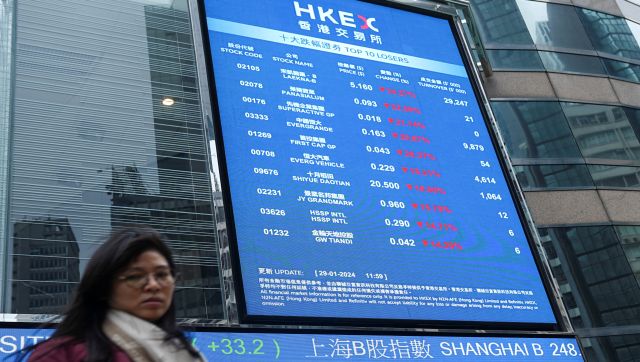
Evergrande Group was once China’s biggest property developer. Now, it has been ordered to liquidate by a Hong Kong court on Monday. “Enough is enough,” said judge Linda Chan, after the property giant failed to come up with a restructuring proposal. After the announcement, Evergrande shares fell by more than 20 per cent in Hong Kong. Trading in the shares has now been suspended. So, does this mean that the Chinese real estate developer will fail and collapse? How the news is causing shockwaves in China’s already fragile capital and property markets? What happens next? What happens after the court orders that Evergrande be liquidated? Once a liquidation
order is issued
, a provisional liquidator and then an official liquidator will be appointed to take control and prepare to sell the developer’s assets to repay its debts. [caption id=“attachment_13664212” align=“alignnone” width=“640”]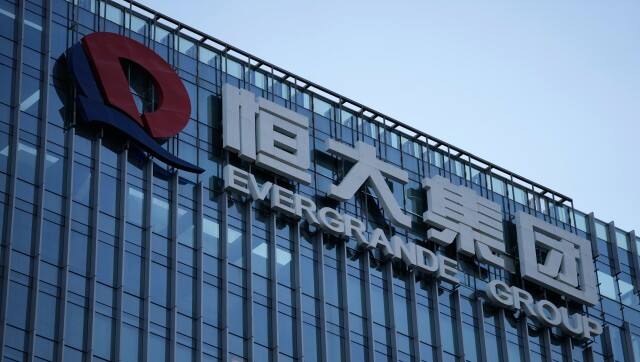 The Evergrande Group headquarters logo is seen in Shenzhen in southern China’s Guangdong province. AP File[/caption] The liquidators could propose a new debt restructuring plan to offshore creditors holding $23 billion (Rs 1.9 lakh crore) of debt in Evergrande if they determine the company had enough assets or if a white knight investor appeared. They would also investigate the company’s affairs and could refer any suspected misconduct by directors to Hong Kong prosecutors. Evergrande could appeal a liquidation order, but the liquidation process would proceed pending appeal. Shares in Evergrande and its listed subsidiaries were suspended from trading after the liquidation order. Listing rules require a company to demonstrate a business structure with sufficient operations and asset values. How much debt can creditors recover, and what are the major challenges? Evergrande cited a Deloitte analysis during a Hong Kong court hearing in July that estimated a recovery rate of 3.4 per cent if the developer were liquidated.
Also Read: How the crisis at China’s Evergrande is worsening
However, after Evergrande said in September its flagship unit and its chairman Hui Ka Yan were being investigated by the authorities for unspecified crimes, creditors now expect a recovery rate of less than three per cent. Evergrande’s dollar bonds were bid at around one cent on the dollar on Friday. Most of Evergrande’s assets have been sold or seized by creditors, leaving its two units listed in Hong Kong — Evergrande Property Services Group (6666.HK), opens new tab and Evergrande New Energy Vehicle Group (0708.HK), opens new tab. Their combined market capitalisation had dropped to $973 million (Rs 8,089 crore) as of Friday. A liquidator could sell Evergrande’s holdings in the two units although it might be difficult to find buyers. After a liquidation, the liquidator could take control of Evergrande’s subsidiaries across mainland China by replacing their legal representatives one by one, a process that could take months or years. [caption id=“attachment_13664402” align=“alignnone” width=“640”]
The Evergrande Group headquarters logo is seen in Shenzhen in southern China’s Guangdong province. AP File[/caption] The liquidators could propose a new debt restructuring plan to offshore creditors holding $23 billion (Rs 1.9 lakh crore) of debt in Evergrande if they determine the company had enough assets or if a white knight investor appeared. They would also investigate the company’s affairs and could refer any suspected misconduct by directors to Hong Kong prosecutors. Evergrande could appeal a liquidation order, but the liquidation process would proceed pending appeal. Shares in Evergrande and its listed subsidiaries were suspended from trading after the liquidation order. Listing rules require a company to demonstrate a business structure with sufficient operations and asset values. How much debt can creditors recover, and what are the major challenges? Evergrande cited a Deloitte analysis during a Hong Kong court hearing in July that estimated a recovery rate of 3.4 per cent if the developer were liquidated.
Also Read: How the crisis at China’s Evergrande is worsening
However, after Evergrande said in September its flagship unit and its chairman Hui Ka Yan were being investigated by the authorities for unspecified crimes, creditors now expect a recovery rate of less than three per cent. Evergrande’s dollar bonds were bid at around one cent on the dollar on Friday. Most of Evergrande’s assets have been sold or seized by creditors, leaving its two units listed in Hong Kong — Evergrande Property Services Group (6666.HK), opens new tab and Evergrande New Energy Vehicle Group (0708.HK), opens new tab. Their combined market capitalisation had dropped to $973 million (Rs 8,089 crore) as of Friday. A liquidator could sell Evergrande’s holdings in the two units although it might be difficult to find buyers. After a liquidation, the liquidator could take control of Evergrande’s subsidiaries across mainland China by replacing their legal representatives one by one, a process that could take months or years. [caption id=“attachment_13664402” align=“alignnone” width=“640”] A police vehicle is pictured outside the High Court where a court hearing on property developer China Evergrande Group is held, in Hong Kong, China. Reuters[/caption] Insolvency experts said it would be a challenge for the liquidator to change the representatives as Guangzhou, where Evergrande is based, is not one of the three Chinese cities that mutually recognise liquidation orders with Hong Kong. Even if a liquidator were to take possession of the units that have onshore projects, many of these have already been taken over by creditors, frozen by courts, have little value left or are even in negative equity because of falling property prices. What it means for China’s property market? While a winding-up of the developer with $240 billion (Rs 19.95 lakh crore) of assets would send shockwaves through already fragile capital markets, experts said it would not offer a blueprint on how liquidation might unfold for other embattled developers. Given the sheer size of Evergrande’s projects and debt, the process would involve many authorities and political considerations. Completing ongoing home construction projects will be a top priority for the company, the sector and the government. With inputs from Reuters
Hong Kong court orders liquidation of China's Evergrande. What comes next?
FP Explainers
• January 29, 2024, 11:35:28 IST
A Hong Kong court on Monday ordered China’s Evergrande, the world’s most indebted developer, to be liquidated. Here’s what happens next
Advertisement
 "Hong Kong court orders liquidation of China's Evergrande. What comes next?")
End of Article