

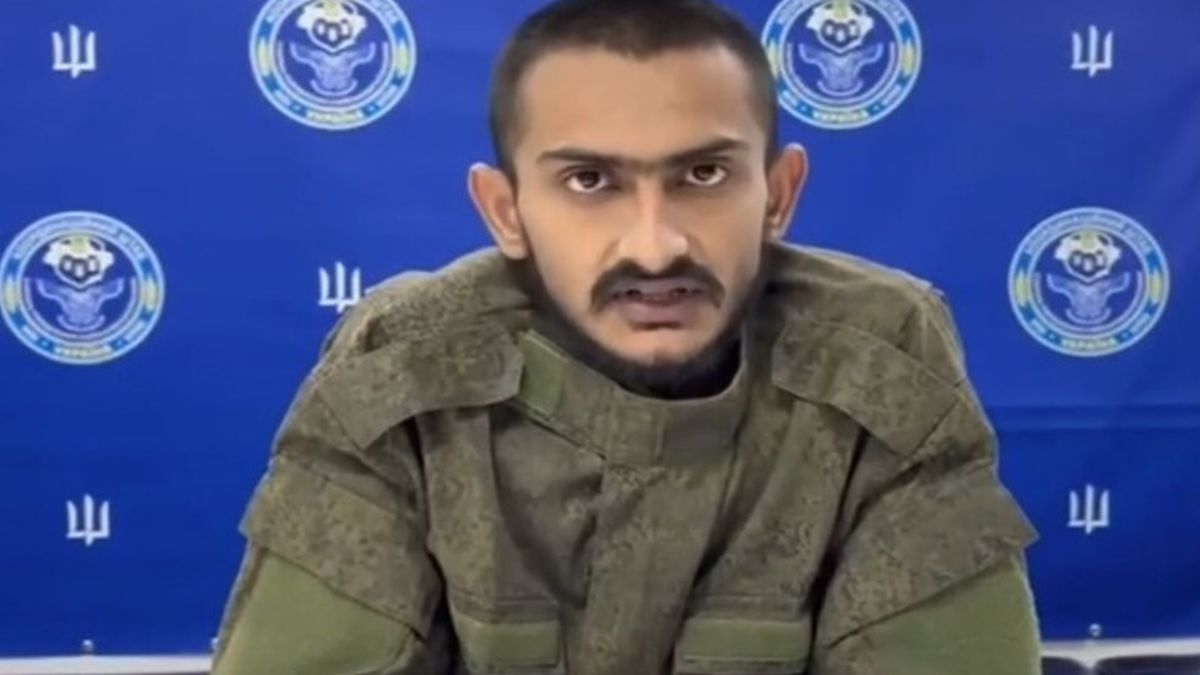
 "From Gujarat to prisoner of war in Ukraine: How Indian was forced to join Russian army")
“I feel hopeless. I don’t know what will happen. But I do have a message for young people who are coming to Russia, ‘be careful’.”
On Sunday (December 21), the family of Gujarat-based Sahil Mohammad Hussain, who is currently being held by Ukraine as a prisoner of war, received a video statement in which the 23-year-old appeals to the Indian government to secure his release. He also warns other young Indians to be careful “because there are so many scammers here. You may be trapped in criminal cases, narcotics cases, illegal cases, so take care of yourself. As far as possible, stay away from all this”.
But how did he end up at the frontlines of the Russia-Ukraine war? And what is he saying in his new videos? Here’s the full story.
An SOS call from Ukraine
In two recently released videos, Sahil Mohammad Hussain has appealed for help from the Indian government and Prime Minister Narendra Modi for his release and even cautioned Indian citizens going to Russia for studies or work to “be careful against scammers”.
In one of the two videos that his family in Morbi received, Hussain says, “Right now I am stuck in Ukraine as a war criminal. Now I am hopeless, I don’t know what will happen in future. But I want to send a message to my Indian citizens. Those Indians coming to Russia for higher studies or work, be careful because there are so many scammers here. You may be trapped in criminal cases, narcotics cases, illegal cases, so take care of yourself. As far as possible, stay away from all this.”
In the other video, he is seen making an urgent appeal to the Indian government — “I appeal to the Indian government, to Prime Minister Narendra Modi and S Jaishankar (Minister of External Affairs), if possible, please help. That’s all.”
While it’s unclear when the videos were made, one can assume they were recently made as the Indian student refers to Russian President Vladimir Putin’s recent visit to India. At one point in the video, Hussain can be heard saying: “….Now I am in an Ukrainian military jail because I signed the war contract when I was stuck in a Russian jail. I signed the contract only to escape from the Russian jail. Now I know about (Vladimir) Putin coming to India to meet my government. Also I want to tell my government to have a conversation with Vladimir Putin to help me return home. I want to come back home.”
From Gujarat’s Morbi to Russian frontlines
But how did Hussain land up in the custody of the Ukrainian army? In October, it emerged that the 23-year-old from Gujarat’s Morbi had been taken into custody by the Ukrainian authorities. He had gone to St Petersburg on a student visa in January 2024 to pursue a course in Russian Language and Culture from ITMO University.
At the time, Hussain revealed that he had gone to Russia to study when he was he was sentenced to seven years in a Russian prison on drug-related charges. He was then offered the opportunity to swap out his punishment for service in the Russian military. “I didn’t want to stay in prison, so I signed a contract for the special military operation (Russia’s term for its invasion of Ukraine). But I wanted to get out of there,” he said in an earlier video.
He further added that after being forced into the Russian army, he was given around 15 days of training before being deployed to the frontline in Ukraine. He later surrendered to the Ukrainian troops. “I came across a Ukrainian trench position about two-three kilometres away,” he reveals in his previous video. “I immediately put down my rifle and said that I didn’t want to fight. I needed help… I don’t want to go back to Russia. There is no truth there, nothing. I’d rather go to prison here (in Ukraine).”
He also revealed that he had been promised a monetary reward: first RUB 100 thousand, then half a million, and even 1.5 million. “They didn’t give me anything. In short, all the liars are there,” he said.
Hussain’s mother, Hasinaben Samsudinbhai Majothi, told the Indian Express that her brother had received a call on April 10 last year, from Hussain, during which he revealed that he was arrested by the Russian police. The family was unable to get in touch with him thereafter.
#WATCH | Gandinagar, Gujarat: Hasina Majoti, mother of Majoti Sahil Mohammad Hussain, who surrendered before the Ukrainian Forces after fighting for Russia, says, "Our Indian Embassy in Russia had issued a notice for Indian Nationals saying that no matter how many requests the… pic.twitter.com/R4zSf5uu5o
— ANI (@ANI) October 9, 2025
In a petition filed in the Delhi High Court in which the family is appealing for Hussain’s release, she submitted that her son while in Russia, “was working with a courier company on a part-time basis, was framed in a false drugs case as part of ploy to extort money from his family” and that she feared that her son has been duped into fighting for Russian forces in the country’s war with Ukraine.
India’s efforts to secure release of all nationals
Meanwhile, the Indian government has been working tirelessly to secure the release of all of its nationals who have joined the Russian armed forces — through coercion or other means.
Earlier during Putin’s visit to India, Foreign Secretary Vikram Misri noted that Prime Minister Narendra Modi had raised this issue with the Russian leader. “This issue of the recruitment of Indian citizens into the Russian armed forces was broached by PM Modi,” said Misri.
Notably, while Hussain may be the first such Indian to be taken into Ukrainian custody, there have been a number of Indians who have been recruited into the Russian army on contract and even been killed on the frontline. Many of the Indians, who fought for Russia and later returned to India, report that they were coerced, or misled into serving with Russian forces.
In fact, even Misri in his previous press briefing had cautioned Indians citizens against accepting offers to join the Russian military. “I would just take this opportunity to reiterate once again that our citizens should avoid very, very carefully any offers to join the Russian armed forces. We are seeing several cases of people stranded there, appealing to be rescued and brought out. As I said, we are actively engaged in that effort.”
Back in February, the Indian government had said that they were aware of 127 Indians being a part of the Russian army since the beginning of the war. Of those, 12 had died, 18 were missing and the rest had returned after being released.
With inputs from agencies

 "‘Bangladesh’s Yunus govt failed to control ‘mobocracy’’: BNP leader on attack on Indian mission")
 "Tarique Rahman to return to Bangladesh after 17 years: Can Khaleda Zia’s son influence February elections?")
 "US Congressmen raise alarm over anti-Hindu violence in Bangladesh")
 "‘Time to Kash out’: Why Kash Patel’s choice of new wheels has sparked a row")
 "‘Bangladesh’s Yunus govt failed to control ‘mobocracy’’: BNP leader on attack on Indian mission")
 "Tarique Rahman to return to Bangladesh after 17 years: Can Khaleda Zia’s son influence February elections?")
 "US Congressmen raise alarm over anti-Hindu violence in Bangladesh")
 "‘Time to Kash out’: Why Kash Patel’s choice of new wheels has sparked a row")



