 "G20 Summit: What role do langurs and mosquito-eating fish have to play?")

India is putting its best foot forward ahead of the G20 Summit. Security, however, is not the only concern. Warding off monkeys and keeping mosquitoes at bay are equally important as it prepares to host close to 40 world leaders. After
langur cutouts
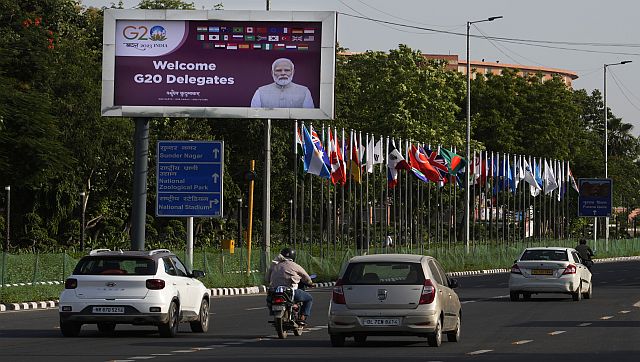
, New Delhi has now released mosquito-eating fish to keep dengue in check during G20. Special forces, bulletproof cars and men hired to chase away monkeys are among India’s elaborate G20 preparations as Prime Minister Narendra Modi readies for a weekend in the global spotlight. Photos of a beaming Modi are lining streets across the capital New Delhi to welcome world leaders to the summit, the most powerful gathering India has ever hosted. Here’s how authorities have rolled out the red carpet. Rooftop snipers and ‘Black Cats’ Security operations involve tens of thousands of security personnel, including rooftop snipers and anti-drone technology. India’s counter-terrorism “Black Cats” guards have been practising rapid deployments from helicopters, rappelling down ropes onto hotel roofs where presidents will be staying. [caption id=“attachment_13089672” align=“alignnone” width=“640”]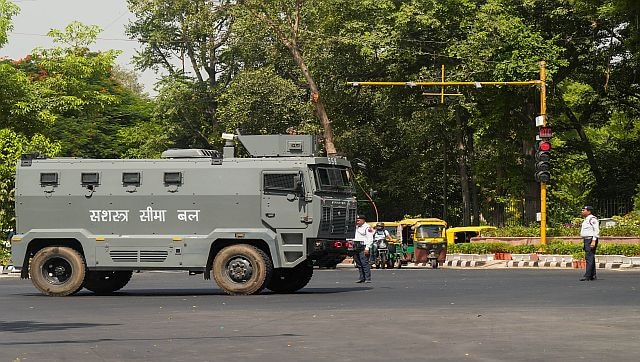 A Sashastra Seema Bal (SSB) vehicle on patrol near the Rajghat ahead of the G20 Summit, in New Delhi. PTI[/caption] Traffic police have promised “elaborate regulations” with a huge restricted zone slapped across much of the city centre, and bullet-proof limousines will ferry visiting leaders. Businesses have been ordered shut and a holiday declared — meaning normally jam-packed streets and their ubiquitous honking motorised rickshaws will fall silent. The summit takes place in
Bharat Mandapam
, a recently revamped conference centre.
Also Read: G20 summit: Why Delhi’s makeover has sparked a political war between AAP and BJP
The sprawling riverside site lies close to the towers of the 16th Century Mughal-era Purana Qila fort, as well Raj Ghat, the memorial to Mahatma Gandhi at the spot he was cremated — and where G20 leaders are expected to plant trees. Clean-up drive The Delhi metropolitan area, home to around 30 million people, has been on an intense beautification drive since India assumed the G20 presidency last year. City authorities are hoping to dispel the megacity’s reputation for chaotic roads and pollution. More than 4,000 homeless people living under bridges and on roadsides in the city centre have been moved into “shelter homes” ahead of the summit, according to municipal officials. [caption id=“attachment_13089642” align=“alignnone” width=“640”]
A Sashastra Seema Bal (SSB) vehicle on patrol near the Rajghat ahead of the G20 Summit, in New Delhi. PTI[/caption] Traffic police have promised “elaborate regulations” with a huge restricted zone slapped across much of the city centre, and bullet-proof limousines will ferry visiting leaders. Businesses have been ordered shut and a holiday declared — meaning normally jam-packed streets and their ubiquitous honking motorised rickshaws will fall silent. The summit takes place in
Bharat Mandapam
, a recently revamped conference centre.
Also Read: G20 summit: Why Delhi’s makeover has sparked a political war between AAP and BJP
The sprawling riverside site lies close to the towers of the 16th Century Mughal-era Purana Qila fort, as well Raj Ghat, the memorial to Mahatma Gandhi at the spot he was cremated — and where G20 leaders are expected to plant trees. Clean-up drive The Delhi metropolitan area, home to around 30 million people, has been on an intense beautification drive since India assumed the G20 presidency last year. City authorities are hoping to dispel the megacity’s reputation for chaotic roads and pollution. More than 4,000 homeless people living under bridges and on roadsides in the city centre have been moved into “shelter homes” ahead of the summit, according to municipal officials. [caption id=“attachment_13089642” align=“alignnone” width=“640”]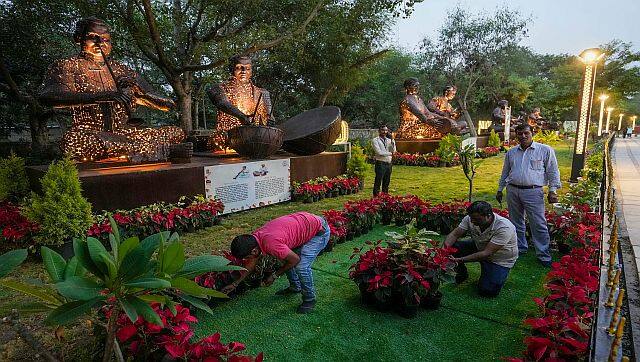 Preparations are underway for the G-20 Summit at Pragati Maidan in New Delhi. PTI[/caption] Several long-closed fountains are running again, while roadside markings that faded years ago are gleaming with a fresh lick of paint. Some 70,000 flower pots have been set out across the city. Maintaining and monitoring the foliage has become a major task in itself, with 35 water tankers deployed to keep the plants green, the Times of India reported.
Also Read: How Delhi is dealing with its stray dog problem ahead of G20 Summit
Statues have popped up across the city centre, including a 28-foot-tall (8.5-metre-tall) figure of the Hindu god Shiva at the G20 summit venue entrance. Monkey-men and mosquitofish A team of more than 30 “monkey-men” have been deployed and primate cutouts erected to deter marauding monkeys from munching on floral displays laid out for global leaders.
Monkeys
are a major menace in the city, often trashing gardens, offices and residential rooftops and even viciously attacking people for food. The men mimic the hoots and screams of the aggressive langur monkey — the natural enemy of the smaller rhesus macaque primates that wreak havoc in the capital’s leafy government areas. [caption id=“attachment_13089662” align=“alignnone” width=“640”]
Preparations are underway for the G-20 Summit at Pragati Maidan in New Delhi. PTI[/caption] Several long-closed fountains are running again, while roadside markings that faded years ago are gleaming with a fresh lick of paint. Some 70,000 flower pots have been set out across the city. Maintaining and monitoring the foliage has become a major task in itself, with 35 water tankers deployed to keep the plants green, the Times of India reported.
Also Read: How Delhi is dealing with its stray dog problem ahead of G20 Summit
Statues have popped up across the city centre, including a 28-foot-tall (8.5-metre-tall) figure of the Hindu god Shiva at the G20 summit venue entrance. Monkey-men and mosquitofish A team of more than 30 “monkey-men” have been deployed and primate cutouts erected to deter marauding monkeys from munching on floral displays laid out for global leaders.
Monkeys
are a major menace in the city, often trashing gardens, offices and residential rooftops and even viciously attacking people for food. The men mimic the hoots and screams of the aggressive langur monkey — the natural enemy of the smaller rhesus macaque primates that wreak havoc in the capital’s leafy government areas. [caption id=“attachment_13089662” align=“alignnone” width=“640”]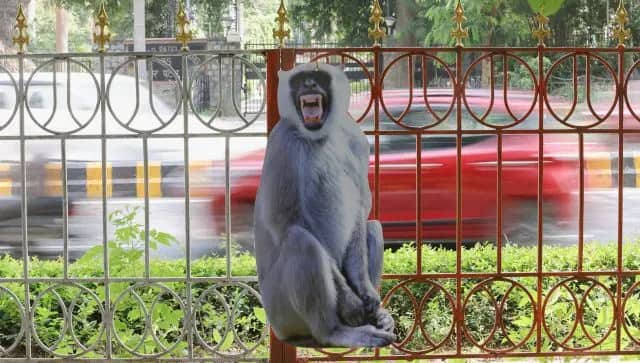 Delhi authorities are putting up cut-outs of langurs to scare away monkeys ahead of the G20 Summit. Reuters[/caption] Officials however halted a bid to solve another city challenge — to round up and hide thousands of stray dogs — after the canine-catching scheme sparked anger from Delhi residents and animal rights activists. New Delhi suffers from both mosquito-borne dengue and malaria, and eight teams equipped with insecticide sprayers are dousing likely mosquito-breeding sites across the G20 venue, the Hindustan Times reported. One official told the newspaper that batches of larvae-eating mosquitofish were released ahead of the conference into around 180 lakes and fountain pools. With inputs from AFP