

 "Revealed: The not-so-transparent funding of Europe's political parties ahead of EU elections")
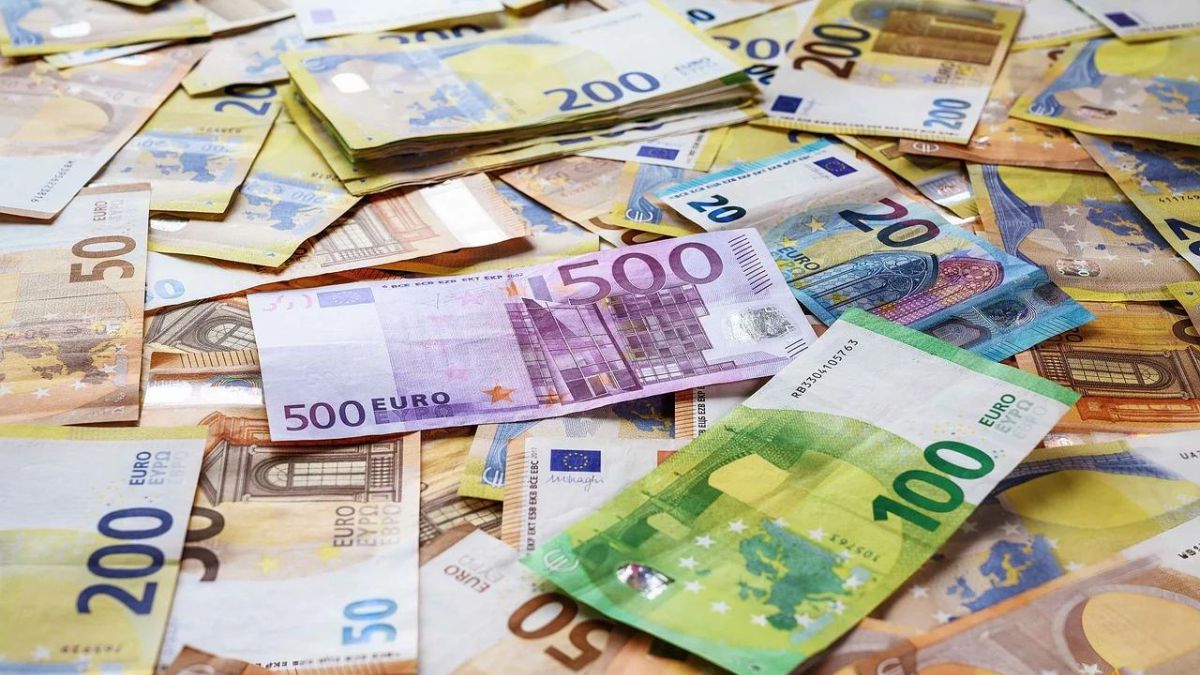
Political parties in the European Union (EU) received almost a billion euros in donations between 2019 and 2022, revealed an investigation into their funding. The analysis, conducted by Follow the Money and 26 European media partners, sheds light on the financial practices of over 200 political parties in 25 countries, highlighting a deep-rooted transparency gap.
The report has been released ahead of the EU elections to be held next week. Between 6 and 9 June, up to 450 million citizens across the EU’s 27 member states will vote to elect over 700 members to the European Parliament, the world’s only directly elected transnational assembly.
The investigation also reveals a notable lack of trust in political parties among the European public. According to a Eurobarometer poll, 6 out of 10 Europeans believe that corruption is widespread among political parties.
We take a look at a few of the key findings in the report:
Rise of populist and extreme parties
A quarter of all private donations in the EU goes to far-right, far-left, and populist movements, amounting to €150 million between 2019 and 2022. Far-right groups alone received over €97 million during this period, reveals the report.
Far-right parties have seen a dramatic rise in financial support in countries like France, Latvia, and Italy. In France, three parties on the extremes of the political spectrum – Reconquête and Marine Le Pen’s National Rally on the right and La France Insoumise on the left – have experienced a dramatic rise in financial support, taking 38 per cent of non-public money raised in 2022.
Impact Shorts
More ShortsIn Latvia, which is expected to see a significant rise in anti-European and populist MEPs next month, non-public funding for these parties has increased from 9 per cent to 36 per cent over the past four years, primarily driven by the populist centre-right Latvia First party.
The analysis reveals that far-right, far-left, and populist parties collectively attract more than half of the non-public funding in Slovenia, Italy, Poland, Hungary, Portugal, and Greece.
Hungary’s ruling Fidesz party, which has been in power for 14 years and has reduced state funding, captured 55 per cent of all non-public money in 2022.
In Poland, the far-right Law and Justice party, a close ally of Fidesz and led by Mateusz Morawiecki until April this year, took 44 per cent of all non-public funding in 2022.
In Italy, four populist parties—Giorgia Meloni’s Brothers of Italy, Matteo Salvini’s League, Forza Italia, and the Five Star Movement—secured 55 per cent of non-public funding in 2022, according to the data.
In some countries, far-left parties also have a significant share. The Communist Party of Greece receives more than half of the country’s non-public funding, while its Portuguese counterpart, the Partido Comunista Português, accounts for over 50 per cent of the total.
Polling indicates that nationalist and far-right parties are likely to finish first in Hungary and eight other EU states, including Austria, France, Italy, the Netherlands, and Poland.
When other forms of funding, such as membership fees and donations from a party’s own politicians or officials, are included, hardline and populist parties captured one-fifth of the money raised between 2019 and 2022, totaling almost €500 million, the data shows. For far-right parties, the sum was close to €200 million, equivalent to €1 in every €11.
The 641-million-euro case of Germany
One of the big reveals of the report is that 75 per cent of anonymous donations in the EU, go to parties in Germany.
German parties received a staggering 641 million euros in donations from 2019 until 2022. However, for 495 million of this, or 78 per cent, the name of the donor(s) remains a secret.
For instance, the German populist party Alternative für Deutschland (AfD) reported receiving 6.4 million euros in donations in 2022, but only 1.3 million euros in donations were publicly disclosed, leaving a significant gap of 5.1 million euros.
Efforts to reform the German system for more transparency have faced opposition, with the Christian democratic CDU, the party of European Commission President Ursula von der Leyen, blocking a recent attempt to lower the donation disclosure threshold.
Annual financial reports of all the parties in Germany show that 329 million euros come from companies and private citizens, and 312 million euros from politicians.
However, it is impossible to determine how much of the 495 million euros with undetermined origin, stems from a politician belonging to a party, or private individuals and companies: the records of individual donations don’t make it clear if a payment is a donation or contribution from a politician. All of them have been included in the German calculation, states the report.
Varied levels of transparency across Europe
While all EU member states have adopted regulations regarding the reporting and public disclosure of donations, rules vary widely, leading to a lack of transparency.
“The countries that transformed from communist one-party states into democracies in the early 1990s embraced best practices. For the countries on the western side of the curtain that came down 35 years ago, a lack of accountability is still the norm,” reads the report.
In Portugal and Luxembourg, for example, records can only be accessed by physically going to the court of auditors or national parliament, and even then it is forbidden to make the names of the donors public because of “data protection," says the report.
Also Read: Will Germany’s decision to reduce voting age in EU elections benefit the far-right?
Countries in central and eastern Europe, which joined the EU in the 2000s, have embraced best practices in political financing transparency. Each year, all donations and their donors are published, although sometimes buried deep inside financial reports.
However, transparency remains a significant issue, especially in powerful western European countries like Germany and France. In Belgium and France, not a single name of a donor is made public due to privacy concerns.
The investigation shows only Bulgaria, Czech Republic, Estonia, Greece, Latvia, Poland and Croatia require the source of all donations to be identified.
This lack of transparency extends to other countries as well, such as Spain, where the names of donors are only published if the donation exceeds 25,000 euros. However, audits reveal that no donations above this threshold have been made since 2015, indicating another instance of a lack of transparency in political funding.
Italy mandates the disclosure of donations exceeding €500. However, many donations are not made directly to political parties but to affiliated organisations, such as foundations or electoral commissions. These entities then contribute funds or provide in-kind assistance to the political parties.
In 2019, a change in Italian law imposed the same transparency rules on foundations as on political parties, requiring them to identify their donors. However, many of these foundations responded by changing their status to non-profit organisations to evade the stricter transparency regulations.
Structural issues, such as regional chapters or party-affiliated foundations receiving donations and sending that money to national parties, obscure the actual sources of funding, said the report.
Challenges and recommendations
The investigation highlights several challenges, including high donation thresholds, loopholes that allow for undisclosed donations, and inadequate enforcement and oversight mechanisms.
Experts suggest setting a ceiling for the amount donors are allowed to donate to avoid parties becoming too dependent on specific donors. However, only some countries, like Belgium, have set such limits, the report stated.
Recommendations include lowering donation thresholds, setting donation limits, and improving enforcement and oversight mechanisms to enhance transparency and accountability in political financing.
Germany doesn’t cap donations, and neither do seven other countries: Denmark, Sweden, Hungary, Ireland, Luxembourg, Estonia, and Bulgaria. All the others set a ceiling, but the limits vary between 500 euros – in Belgium – and 300,000 euros in Slovakia.
Calls for more transparency and controls in political funding have been made, but parties seem reluctant to change, citing concerns about limiting their freedom. As Europeans prepare to vote in the upcoming elections, the analysis underscores the importance of transparency and accountability in political party funding.
The analysis entirely excluded two countries: Austria, due to the regional nature of party disclosures which made it impossible to reliably record a universal figure; and Lithuania, because its political parties are not required to report annual financial statements.
The 27 EU countries are: Austria, Belgium, Bulgaria, Croatia, Republic of Cyprus, Czech Republic, Denmark, Estonia, Finland, France, Germany, Greece, Hungary, Ireland, Italy, Latvia, Lithuania, Luxembourg, Malta, Netherlands, Poland, Portugal, Romania, Slovakia, Slovenia, Spain and Sweden.
Results will be announced during the late hours of 9 June.

 "Russian drones over Poland: Trump’s tepid reaction a wake-up call for Nato?")
 "As Russia pushes east, Ukraine faces mounting pressure to defend its heartland")
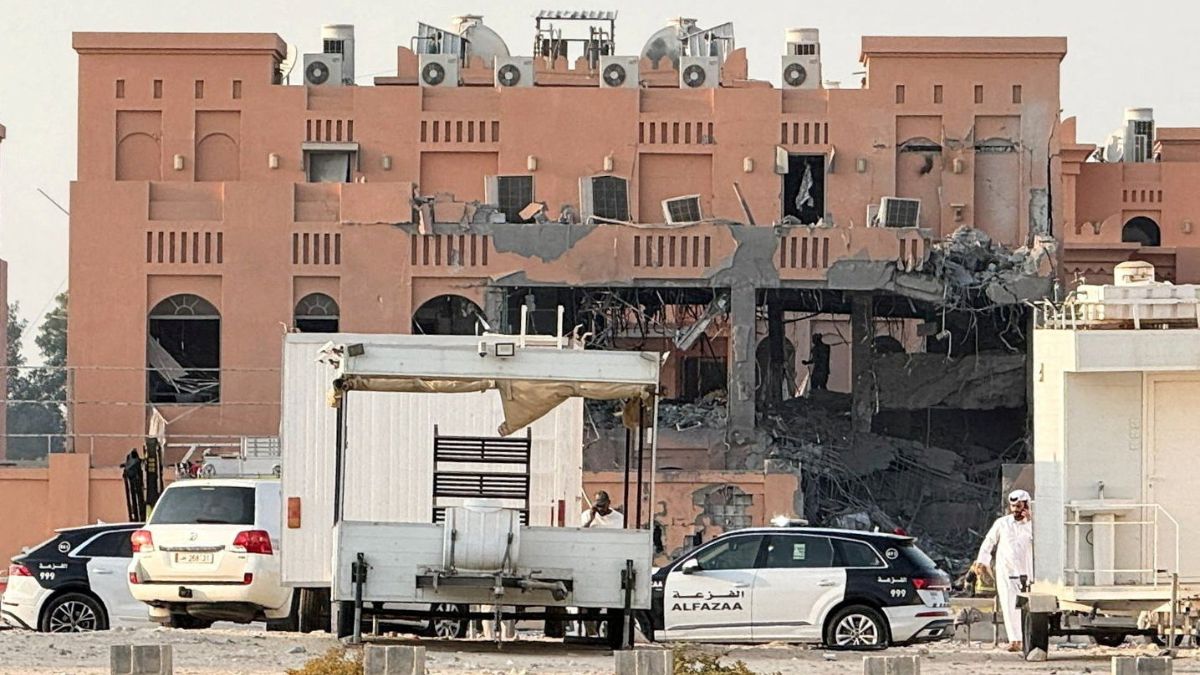 "Why Mossad was not on board with Israel’s strike on Hamas in Qatar")
 "Turkey: Erdogan's police arrest opposition mayor Hasan Mutlu, dozens officials in corruption probe")
 "Russian drones over Poland: Trump’s tepid reaction a wake-up call for Nato?")
 "As Russia pushes east, Ukraine faces mounting pressure to defend its heartland")
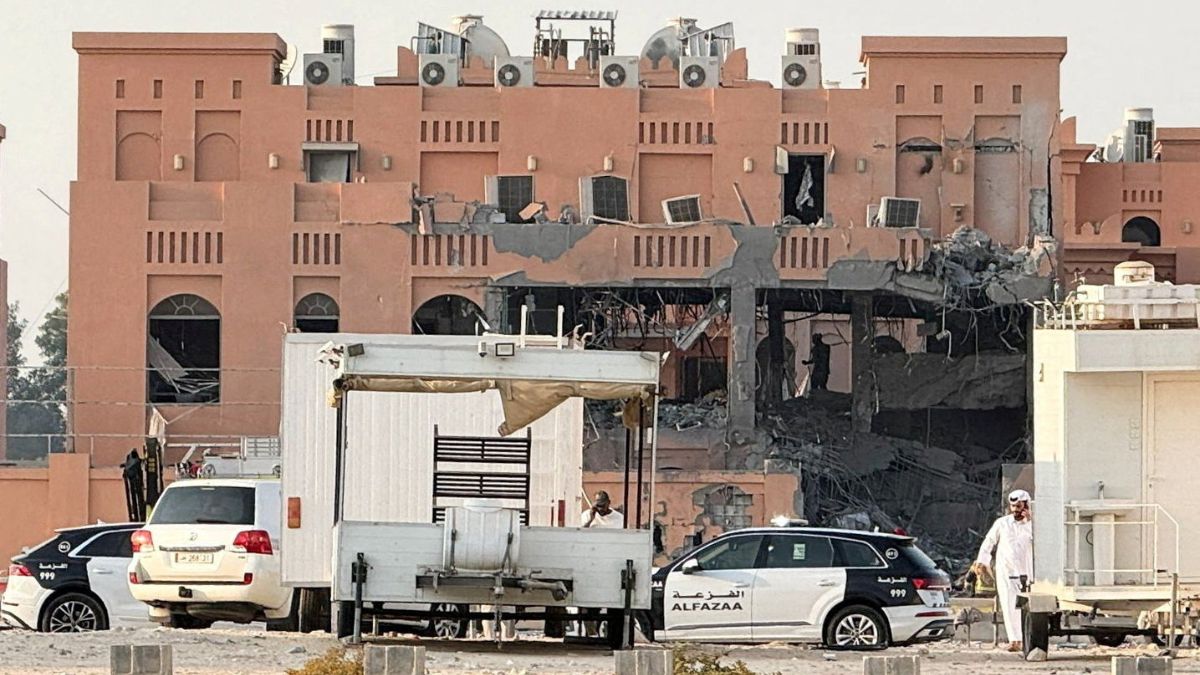 "Why Mossad was not on board with Israel’s strike on Hamas in Qatar")
 "Turkey: Erdogan's police arrest opposition mayor Hasan Mutlu, dozens officials in corruption probe")



