

 "Fumio Kishida apologises to victims of forced sterilisation: A look at Japan’s dark and controversial eugenics law")
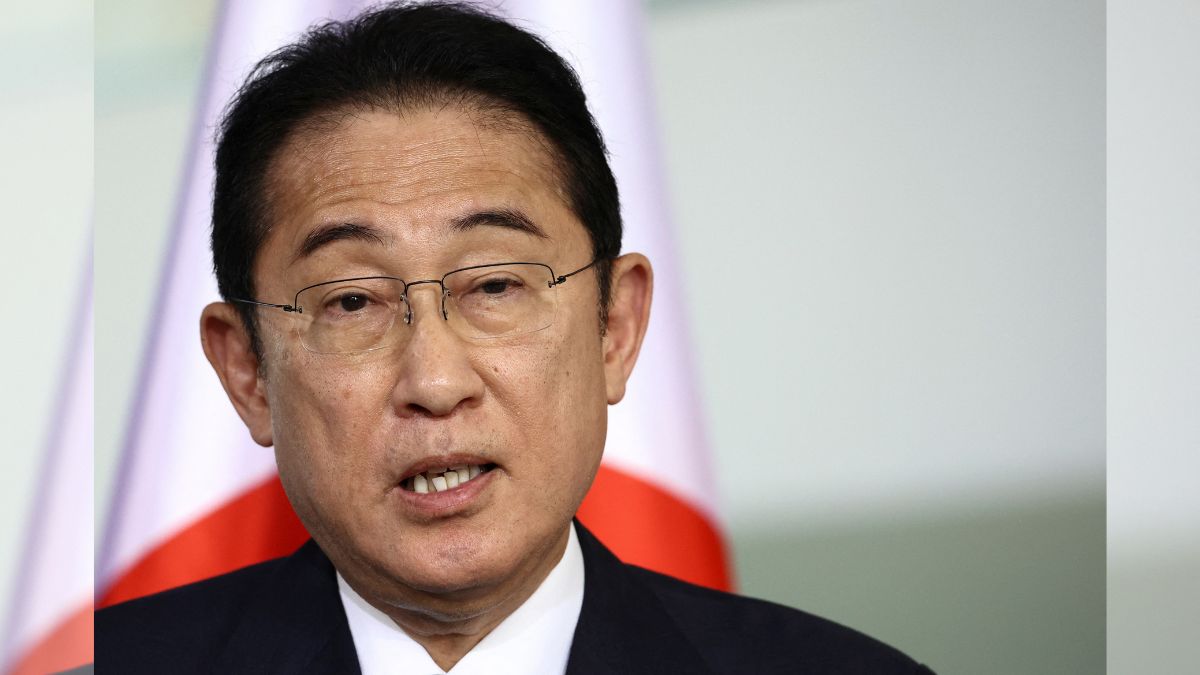
Japan’s Prime Minister Fumio Kishida apologised on July 17 to the victims of the now-defunct Eugenic Protection Law, which led to the forced sterilisation of thousands of individuals between 1948 and 1996. Kishida’s apology comes in the wake of a Supreme Court ruling that declared the law unconstitutional and mandated compensation for the victims.
“The responsibility of the government as the enforcer of the eugenics law is extremely heavy,” stated Kishida at his office in Tokyo. “I express my heartfelt apology, representing the government,” he said, bowing to a group of victims.
“The former Eugenic Protection Law violated the Constitution, and as the law’s enforcer, the government bears extremely grave responsibility, including the way in which it was enforced,” Kishida also wrote in a post on X.
優生手術等は個人の尊厳を蹂躙する、あってはならない人権侵害です。
— 岸田文雄 (@kishida230) July 17, 2024
みなさま方が心身に受けられた多大な苦痛と、長い間のご苦労に思いを致しますと、その解決は先送りできない課題です。
国会とも相談しながら、速やかな解決に向け、全力を尽くしてまいります。
The eugenic protection law
The Eugenic Protection Law was enacted in 1948, aimed at preventing the birth of “inferior descendants” by sterilising individuals with mental or physical disabilities, hereditary disorders, or conditions like leprosy.
Impact Shorts
More ShortsThe law allowed for both voluntary and involuntary sterilisations. Although some individuals technically consented, many were coerced or pressured into the procedures. A 1953 government notice even permitted the use of physical restraint, anesthesia, and deception during operations.
The law remained in effect until 1996 and led to the sterilisation of at least 25,000 people, of whom around 16,500 did not consent.
Eugenics is the study of how to arrange reproduction within a human population to increase the occurrence of heritable characteristics regarded as desirable. The term “eugenics” itself was coined in 1883 by British scientist Francis Galton and was widely adopted globally, including in Japan.
Japan’s dark history with eugenics
The concept of eugenics, introduced to Japan in the late 19th and early 20th centuries, influenced the country’s policies on public health and population control. The concept arrived in Japan through various international influences, including American eugenicists like Charles Davenport and John Coulter, German Mendelian genetics, and French Lamarckian studies.
The idea highlighted the notion of “pure blood” (純血, junketsu) as a marker of the unique identity of the Yamato people, contrasted with “mixed blood” (混血, konketsu).
This movement gained popularity due to long-standing beliefs in racial purity and monoculture, deeply rooted in Japanese society. The initial eugenic ideas were less about modern scientific ideals and more about maintaining the purity of the native population against outsiders.
Prominent figures such as Yamanouchi Shige, trained under American eugenicist John Merle Coulter, were instrumental in the early development of Japanese eugenics. Shige promoted a blend of Lamarckian and Mendelian theories, seeking to genetically enhance the Japanese race to compete with the dominant Western races of the time.
Eugenics in Japan was framed under nationalism and empire-building, as noted by Jennifer Robertson of the University of Michigan, who identified “positive eugenics” (promoting healthy reproduction) and “negative eugenics” (preventing reproduction among those deemed unfit).
Eugenics policies gained momentum in the 1920s and 1930s. Ikeda Shigenori, a journalist influenced by German eugenics, started the magazine Eugenics Movement in 1926 and promoted “Blood-purity day” in 1928.
Detailed “eugenic marriage” questionnaires were distributed to ensure the genetic fitness of spouses, aiming to avoid class differences and maintain racial purity. In 1940, the National Eugenic Law was promulgated, limiting compulsory sterilisation to inherited mental diseases and promoting genetic screening.
The law was expanded post-World War II with the Eugenic Protection Law of 1948. This law remained in effect until it was replaced by the Mother’s Body Protection Law in 1996. During its enforcement, about 25,000 people, mostly women, were forcibly sterilised, with many not consenting to the procedures.
Eugenics practices faced opposition from various quarters, including right-wing factions and Shinto ultranationalists who viewed them as demeaning to the Japanese people. Despite this, eugenic policies were implemented extensively until the mid-20th century.
How did the legal battle begin?
The struggle for justice began in earnest in 2018 when a woman in her 60s sued the government over a sterilisation procedure performed on her at age 15. This case opened the floodgates for similar lawsuits across Japan. By 2019, 39 people had filed lawsuits in 12 district courts, seeking compensation and acknowledgment of the injustices they endured.
The July 3 Supreme Court ruling that not only declared the law unconstitutional but also rejected the application of a 20-year statute of limitations that had previously prevented some victims from receiving compensation.
The court stated that the statute of limitations should not apply to cases involving the eugenics law, calling its application “intolerable” and “an abuse of power.” The ruling mandated compensation and set a precedent for ongoing legal battles.
“The government, which enforced the law, bears extremely grave responsibility. I am deeply sorry and I offer an apology on behalf of the government,” Kishida said, addressing over 130 plaintiffs, lawyers, and supporters.
The 2019 government compensation of 3.2 million yen (around $20,000) per victim was deemed insufficient by campaigners and plaintiffs.
In the landmark ruling on five lawsuits, the Supreme Court awarded victims between 11 million yen ($69,500) and 16.5 million yen, with 2.2 million yen awarded to spouses of deceased victims. Kishida has pledged to establish a scheme to provide “sufficient and appropriate” compensation, taking into account the court’s ruling.
What now?
Kishida has committed to resolving the issue swiftly. “I have instructed (the relevant people) to reach a conclusion as soon as possible on the form of compensation. I will do everything in my power to resolve the issue as quickly as possible,” he said. Kishida also stated that compensation would extend not only to the victims but also to their spouses.
During the meeting, an 81-year-old plaintiff, using the pseudonym Saburo Kita, expressed dissatisfaction with the ruling and urged the government to “firmly take responsibility.” Another plaintiff, Kikuo Kojima, recounted his traumatic experience of being forcibly sterilised at the age of 19, saying, “I will never forget that.”
With inputs from agencies


 "Russian drones over Poland: Trump’s tepid reaction a wake-up call for Nato?")
 "As Russia pushes east, Ukraine faces mounting pressure to defend its heartland")
 "Why Mossad was not on board with Israel’s strike on Hamas in Qatar")
 "Turkey: Erdogan's police arrest opposition mayor Hasan Mutlu, dozens officials in corruption probe")
 "Russian drones over Poland: Trump’s tepid reaction a wake-up call for Nato?")
 "As Russia pushes east, Ukraine faces mounting pressure to defend its heartland")
 "Why Mossad was not on board with Israel’s strike on Hamas in Qatar")
 "Turkey: Erdogan's police arrest opposition mayor Hasan Mutlu, dozens officials in corruption probe")



