"Why has the euro crossed $1.20 against the US dollar? Why does it matter?")
The euro has hit a new milestone against the dollar, highlighting the single currency’s renewed push higher as sentiment towards the greenback sours.
Here’s a look at what’s behind the euro’s to just over $1.20, its highest level since 2021.
WHY DO WE CARE ABOUT THE EURO HITTING $1.20?
Well, traders like big round numbers and $1.20 marks the latest milestone for a currency that surged roughly 13% last year – its best year versus the greenback since 2017.
European Central Bank Vice President Luis de Guindos signalled it as a pain threshold last year.
But the path to $1.20 has been rocky – the euro neared the level in September before easing as the dollar recovered.
Still, since falling to lows not far from just $1 a year ago, the euro has strengthened, helped also by European fiscal stimulus led by heavyweight Germany.
Historically, the $1.20 level is just above the single currency’s average since it was established in 1999. But it’s much lower than the $1.60 it touched in 2008.
WHY IS IT SO STRONG?
The main reasons are well known: U.S. President Donald Trump’s confrontations with allies over trade, Greenland and attacks on the Federal Reserve have weakened the dollar.
The euro’s latest gains came as speculation around joint U.S.-Japanese intervention to stem yen weakness pushes the dollar down broadly.
Trump said on Tuesday the dollar’s value was “great”, when asked whether he thought it had declined too much.
Efforts to boost euro zone security and long-term growth efforts, especially in Germany, and a wish to diversify away from the dollar have helped.
COMPANIES MUST BE FEELING PAIN?
Indeed. The impact of renewed currency strength, making exports more expensive abroad, could start to show up in upcoming earnings.
Companies in the STOXX 600 index (.STOXX), opens new tab derive 60% of their revenues from abroad, of which the U.S. accounts for nearly half, Goldman Sachs estimates.
Equity investors have so far largely overlooked the impact of currency strength given an overall brighter economic outlook.
Yet European earnings are expected to have shrunk last year. Barclays reckons last year’s euro rise explained about half of earnings-per-share downgrades.
IS THE ECB WORRIED?
ECB officials typically care more about the speed and scale of FX moves rather than the level.
The ECB is monitoring how a weakening dollar could impact euro area inflation, the ECB’s François Villeroy de Galhau said.
They are likely to pay attention since the euro jumped around 2% last week – its biggest weekly jump since April, when Trump’s sweeping Liberation Day tariffs sparked global turmoil.
Its rise since last summer has been more gradual than its surge last spring, which should ease some concern.
Further euro appreciation may put downward pressure on import prices. The ECB already expects to miss its 2% inflation target this year and next.
COULD EURO REPLACE DOLLAR AS TOP RESERVE CURRENCY?
The euro’s stellar rise reflects increased positive sentiment, but it doesn’t mean the euro is about to replace the dollar soon.
The dollar accounts for just under 60% of global currency reserves, versus the euro’s 20% share. U.S. dominance in global trade and commerce and its deep capital markets mean this is not likely to change any time soon.
ECB President Christine Lagarde argues that erratic U.S. economic policy means the euro could play a greater global role, but that would require the bloc to resume a long-stalled process to complete its financial architecture.
Also Watch:


 "Why Bangladesh’s China-backed drone factory is raising alarm bells in India")
 "Starmer heads to China, doesn't want UK to 'blow hot and cold' but…")
 "India-EU FTA deal: How have ties with the bloc evolved?")
 "Ajit Pawar and parivaar: Who's who in Maharashtra’s powerful political family?")
 "Why Bangladesh’s China-backed drone factory is raising alarm bells in India")
 "Starmer heads to China, doesn't want UK to 'blow hot and cold' but…")
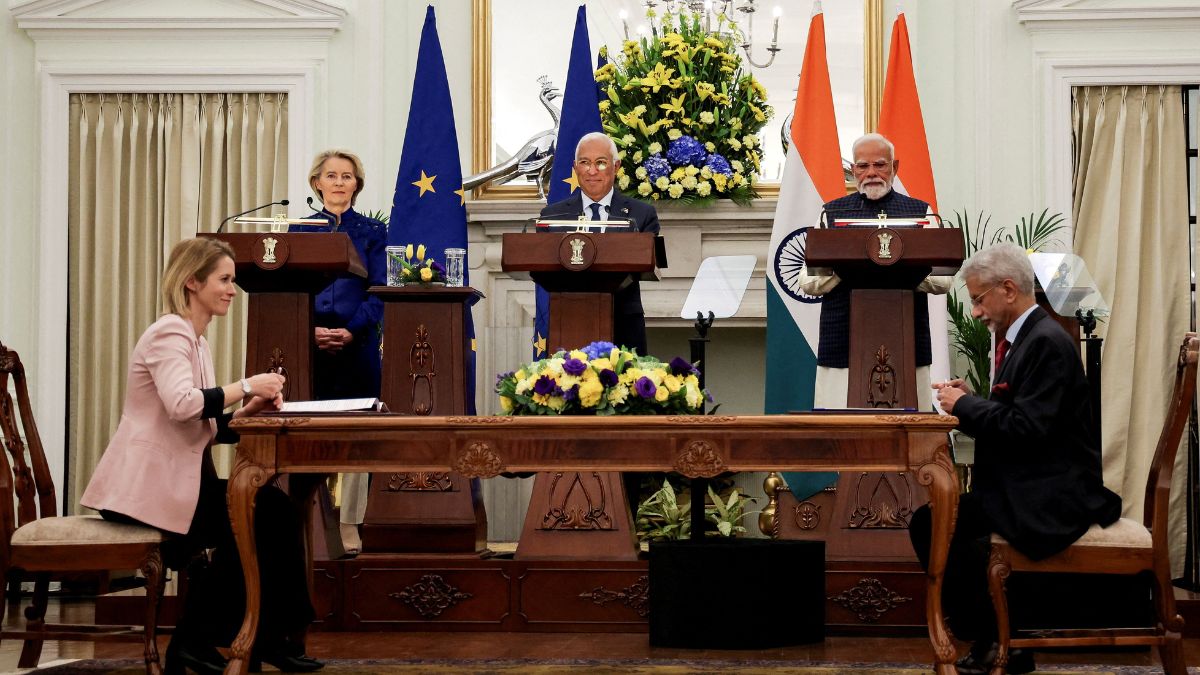 "India-EU FTA deal: How have ties with the bloc evolved?")
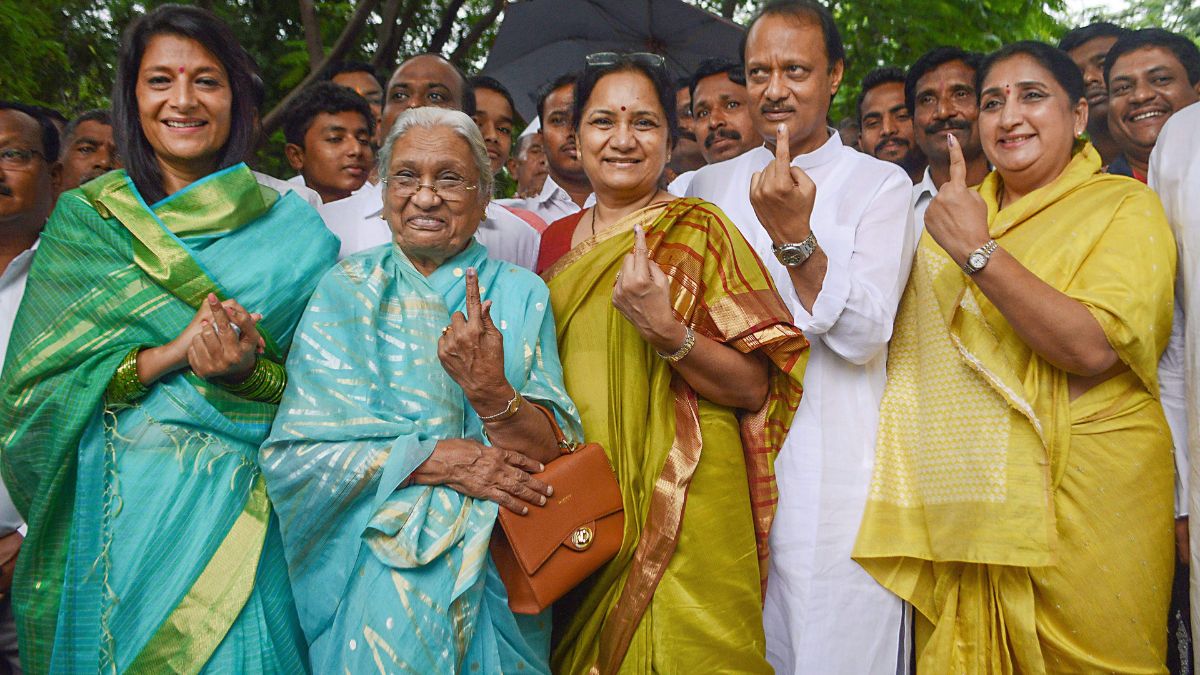 "Ajit Pawar and parivaar: Who's who in Maharashtra’s powerful political family?")