

 "Is the China-Japan standoff entering its most dangerous phase yet?")
Though China and Japan are experienced in dealing with diplomatic crises, relations between the two neighbours appear to have reached a new low. And this time, their conflict may not be easily resolved.
What’s behind the latest crisis and what’s driving the escalation?
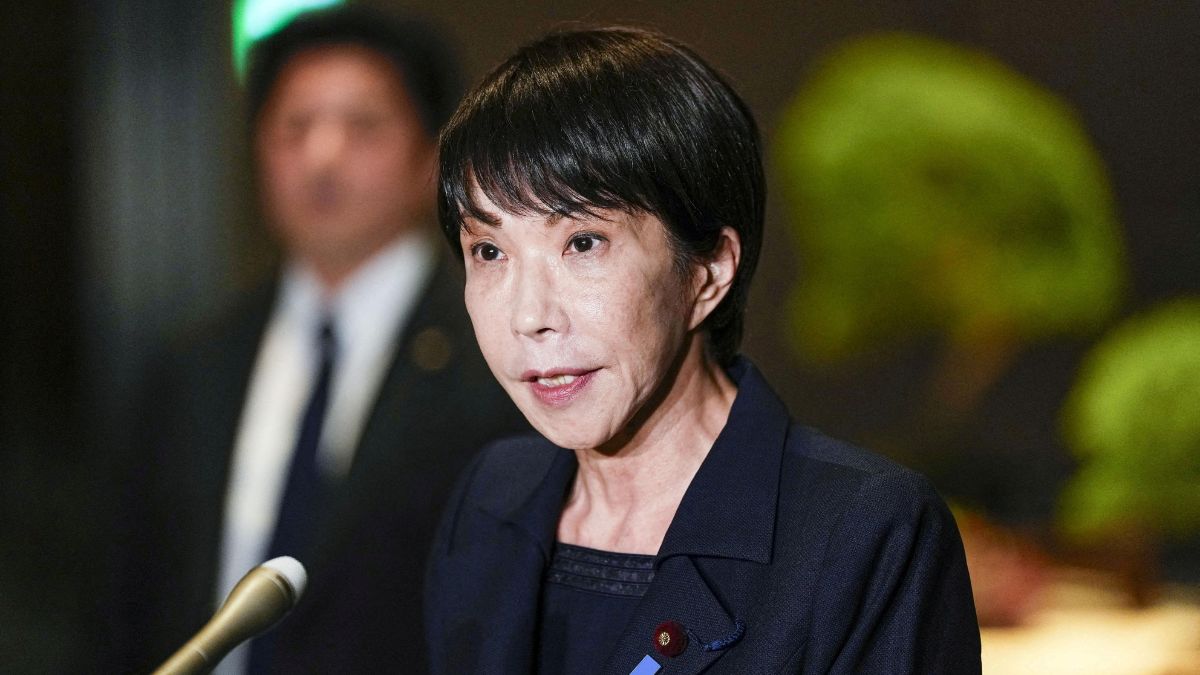
The current round of tensions was triggered by Japanese Prime Minister Sanae Takaichi’s remarks in the Diet (Japanese parliament) on November 7, suggesting a move by Beijing to use military force against Taiwan would trigger a Japanese military intervention.
Presented as a “worst-case scenario”, such a Chinese attempt would constitute a “survival-threatening situation” for Japan, she said, justifying its right to collective self-defence to support its US security ally in restoring peace and stability across the Taiwan Strait.
Diplomatic crisis
Taiwan was a Japanese colony from 1895 to 1945. Later, it harboured Chiang Kai-shek’s Nationalists after their defeat by Mao Zedong’s communist troops in 1949.
Today, Beijing considers Taiwan a province of China, though it has never been under the Communists’ rule. Statements to the contrary are considered an intervention in China’s domestic affairs, crossing a red line for Beijing’s elite.
Demanding a swift retraction of Takaichi’s remarks and an apology, Beijing’s brigade of “ wolf warrior diplomats” launched a war of words against her. With the Japanese prime minister not backing down, Beijing then retaliated with a mix of political, economic and military pressure.
China’s Communist leadership warned its citizens against travelling to Japan, and students were told to reconsider their plans there, apparently because of safety concerns. Imports of Japanese seafood were reduced or put on hold, while concerts and movie screenings featuring Japanese artists were cancelled.
China’s Coast Guard and Navy vessels also passed through the waters of the Senkaku islands, a territory administered by Japan but claimed by China as the Diaoyu islands.
Amid all this, an international campaign to blame Japan for the current crisis was rolled out to isolate Tokyo. A formal protest was issued to the UN, and in talks with Chinese President Xi Jinping, global leaders were pressured to align with his Communist government against Japan.
The diplomatic turmoil reached a climax in early December with Chinese military planes directing their radars at Japanese fighter jets.
Tension spills into trade
China and Japan are key trading partners. This year alone, a fifth of Japan’s inbound tourism came from China.
Beijing’s tightening the screws on Japan will therefore have a measurable impact on the Japanese economy. Some estimate the economic fallout could reach ¥2.2 trillion (A$14.2 billion).
Nevertheless, Beijing’s measures still fall short of past episodes of conflict between the two.
In the early 2000s, Japanese prime ministers’ pilgrimages to the Yasukuni war shrine and revisions of Japanese history textbooks triggered massive anti-Japanese protests across China.
In 2010, Beijing stopped exporting rare earth minerals to Japan in retaliation for Japanese authorities arresting a Chinese captain and his crew after they rammed their ship into a Japanese Coast Guard vessel.
Japan’s “nationalisation” of the disputed Senkaku islands in 2012, buying the isles from their private owner, triggered a significant increase in China’s military presence in the East China Sea.
In light of Japan’s wartime past and China’s economic and military rise, diplomatic disputes have been a default in Sino-Japanese relations since both countries normalised their ties in 1972.
Beijing and Tokyo, however, established a path that has skilfully avoided this from spilling over into trade and business. Japanese investments and economic aid were instrumental in driving China’s industrial modernisation, and both countries have developed close trade relations.
So, when relations hit a low in the 2000s, then-Japanese Prime Minister Shinzo Abe made a point by choosing Beijing as his first visit abroad in 2006, declaring a “mutually beneficial relationship based on common strategic interests”.
Ever since, this wording has served as the broader framework for manoeuvring tensions in Sino-Japanese relations.
No off-ramp in sight
This time, however, de-escalation and a return to the status quo may not be as easily achieved.
Takaichi has portrayed herself as an arch-conservative who has inherited her mentor Abe’s policy agenda. She has pledged to restore a “strong Japan” by beefing up Tokyo’s defence capabilities and further strengthening the alliance with the United States.
The current dispute should not come as a surprise. Takaichi has established herself as a China hawk. She has repeatedly visited Taiwan, and in April this year called for a “ quasi-security alliance” with Taipei.
This reflects concerns in Tokyo that have linked the security of Taiwan directly to that of Japan, and put security across the Taiwan Strait at the centre of the US-Japan alliance.
Following Russia’s invasion of Ukraine in 2022, then-Prime Minister Kishida Fumio declared “Ukraine may be the East Asia of tomorrow,” explicitly putting Taiwan at the core of international security.
Already, Takaichi has announced plans to increase Japan’s defence budget to 2% of its GDP by the end of March 2026, two years ahead of schedule. To secure the financial resources, tax hikes are part of the discussion. A nation on alert against foreign threats will help temper opposition.
Supported by Taiwan’s leadership and large portions of the island’s public, Takaichi has used the standoff with Beijing to present herself as a resolute leader. She has also redirected the public’s focus away from her party’s past scandals to the current security crisis. Two months into office, her cabinet enjoys high support.
A quick end to the crisis is not in sight. Xi’s China is more powerful than it was a decade ago, leaving it with plenty of options to escalate tensions. The weaponisation of trade and increased military exercises are the tools Beijing will likely employ.
Yet, Japan has learned from past crises. Its supply chains have become more resilient. De-risking its investments and production away from China is an established strategy.
Takaichi’s current governing coalition also does not include the Komeito party, which has strong ties to Beijing. Within her Liberal Democratic Party (LDP), members of the old guard, such as Toshihiro Nikai, who maintained channels to Beijing’s elite, have lost their influence. Figures sceptical of China’s rise, such as Taro Aso, remain at the centre of the party.
With diplomatic channels in short supply and domestic political agendas paramount, an off-ramp for the current dispute is not in sight.
Most importantly, however, geopolitical transitions have created a new context for Sino-Japanese tensions to play out. A confident China has backed Russia in its war in Ukraine and claims leadership of the Global South.
The Trump administration has undermined confidence in established US alliances, accelerating polarisation in the international system. Deterring China will become an increasingly difficult task.
Also Watch:
Associate Professor, International Relations, Contemporary Japanese Politics & Society, University of Tokyo
This article is republished from The Conversation under a Creative Commons license. Read the original article.


 "India allows 100% foreign direct investment in insurance")
 "ChatGPT is now a murder accused: How a son killed his mother before dying by suicide")
 "Is the US’ $686-million package for Pakistan’s F-16 upgrade a concern for India?")
 "IndiGo fiasco: DGCA sacks 4 operations inspectors over oversight lapses, CEO summoned again")
 "India allows 100% foreign direct investment in insurance")
 "ChatGPT is now a murder accused: How a son killed his mother before dying by suicide")
 "Is the US’ $686-million package for Pakistan’s F-16 upgrade a concern for India?")
 "IndiGo fiasco: DGCA sacks 4 operations inspectors over oversight lapses, CEO summoned again")



