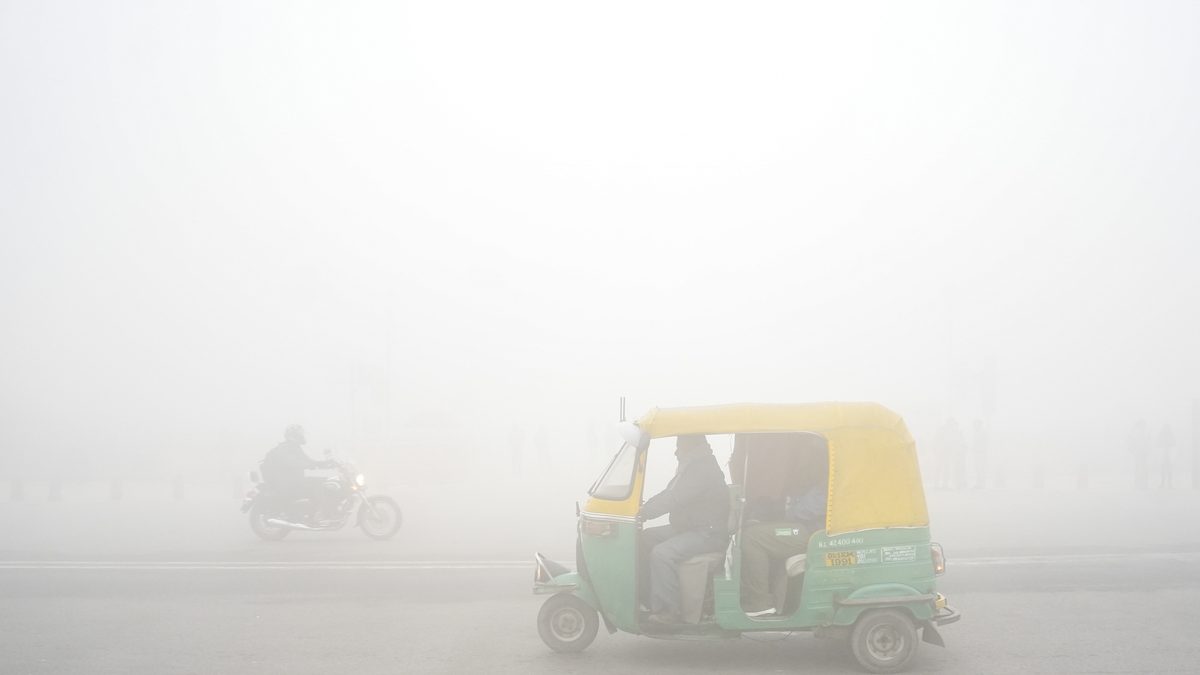
 "Delhi has activated Stage IV of the Graded Response Action Plan (Grap), which includes restricting non-BS-VI vehicles. PTI")
As Delhi continues to grapple with toxic air, the National Capital has brought in a slew of anti-pollution measures.
Delhi has activated Stage IV of the Graded Response Action Plan (Grap), which includes restricting non-BS-VI vehicles. Authorities have also deployed Transport Enforcement Teams to examine vehicles. They have also ordered pumps to stop giving fuel to cars without valid Pollution Under Control (PUC) certificates.
But how did even cars that are just six years old become too old for Delhi’s roads? And can your vehicle enter the national capital amid the pollution crisis?
Let’s take a closer look.
A brief look at Bharat Stage (BS)
First, let’s take a brief look at the Bharat Stage (BS) emission rules.These essentially outline how much pollution vehicles are allowed to emit under the law, including carbon monoxide (CO), nitrogen oxides (NOx), hydrocarbons (HC) and particulate matter (PM). They are comparable to Europe’s Euro standards.
BS-I: Deals with vehicles made prior to 2005. Such vehicles emitted a high amount of pollution and have now mostly been phased out.
BS-II: Placed tighter emission limits on vehicles and was in effect between 2005 and 2010.
BS-III: Clamped down on emissions even further and was applied nationwide between 2010 and 2017.
BS-IV: Tightened pollution emission standards even further, especially for diesel vehicles. Was implemented between 2017 and 2020.
BS-VI: Came into effect in April 2020. These vehicles, which use low-sulphur BS-VI fuel, emit far lower levels of pollution.
Quick Reads
View AllIt is important to note that India went directly from BS-IV to BS-VI norms. It did so to reduce pollution quickly. Diesel vehicles under BS-VI emit around 70 per cent fewer nitrogen oxides, while petrol vehicles emit around 25 per cent less. The BS-VI diesel engines are also equipped with advanced filters that reduce particulate matter emissions by almost 80 per cent. The reduced sulphur content in BS-VI fuel also results in less smoke.
How did even 6-year-old vehicles become too old for Delhi’s roads?
The issue comes from the timing of India’s emission norms and Delhi’s stricter pollution-control measures.
As mentioned before, India switched from BS-IV to BS-VI emission standards only in April 2020. This means that any petrol or diesel vehicle sold before that date — even if it is just six or seven years old — falls under the non-BS-VI category.
While these vehicles may still be legally registered and roadworthy, Delhi’s air-pollution rules go a step further. Under the Graded Response Action Plan (Grap), emergency restrictions are imposed when air quality deteriorates sharply. At Grap Stage IV, authorities restrict the entry of non-BS-VI vehicles, regardless of their age.
This is separate from Delhi’s existing end-of-life vehicle rules, which permanently ban 10-year-old diesel and 15-year-old petrol vehicles from plying in the capital.
In effect, a vehicle may not be “old” in terms of age, but during severe pollution episodes, it can still be considered too polluting to be allowed on Delhi’s roads.
Can your vehicle enter Delhi?
Yes, if your petrol or diesel vehicle complies with BS-VI standards while Grap Stage IV is in force. Those with CNG, LNG, electric, or hybrid electric vehicles can also enter Delhi.
If you are unsure which BS category your vehicle belongs to, you can find out by checking your BS category via registration details:
Your vehicle’s emission norms would be mentioned on your Registration Certificate (RC) book. If you have a smart card, check under “Emission Norms” or “Bharat Stage”.
You can also go to the Ministry of Road Transport and Highways’ Vahan portal, enter your vehicle registration number on the website and check your vehicle details, including your BS emission norms.
Next, you must keep in mind the Delhi government’s pronouncements when it comes to vehicles and Grap measures, which range from Grap I to Grap IV and are emergency actions taken to prevent the deterioration of air quality depending on the severity of the AQI.
For example, the government has restricted non-BS-VI vehicles from entering the city today, which means that BS-IV and BS-III vehicles registered outside Delhi cannot enter the city under Grap Stage IV rules.
However, the government has now clarified that this restriction on non-BS-VI vehicles will only remain as long as Grap Stage IV measures continue to apply. “If enforced beyond Stage IV, it would have led to massive disruption,” a government official told The Times of India.
It seems the fight against air pollution in Delhi is set to continue.
With inputs from agencies