

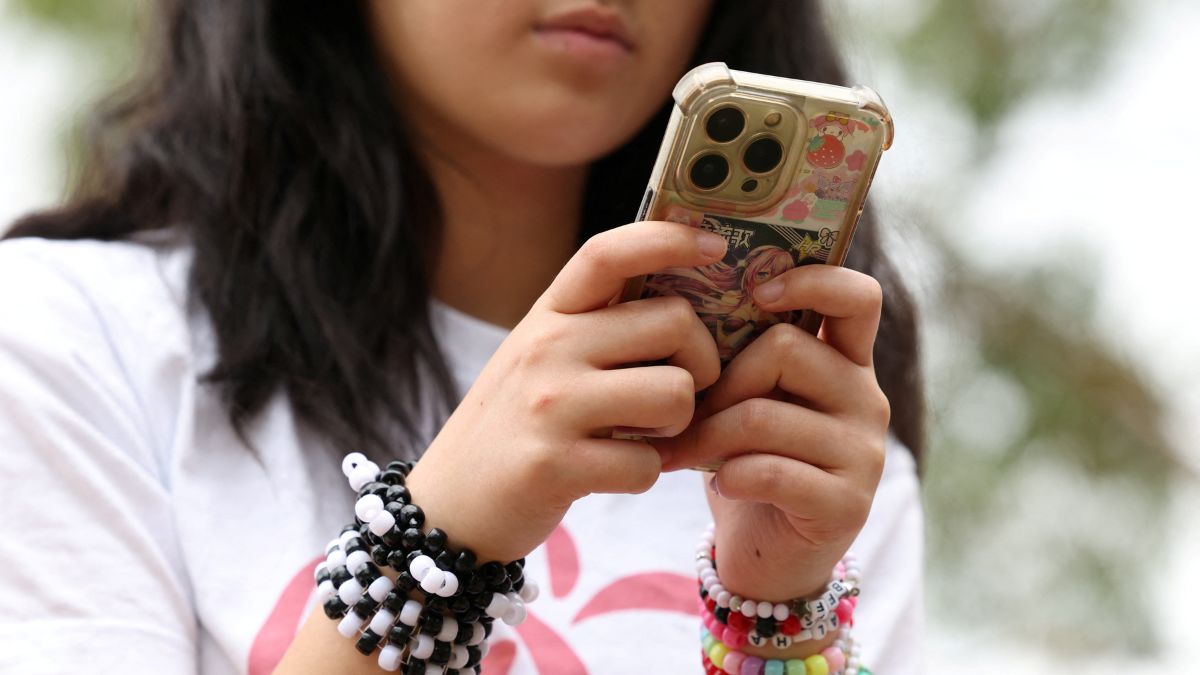
 "Why countries are watching Australia's social media ban for children")
Australia is about to enforce one of the most sweeping age-based digital restrictions in the world, requiring major social platforms to block users under 16 and prevent them from creating new accounts.
Set to begin on December 10, the policy marks the first time a national government has mandated broad-scale account removals for minors across global social networks.
Its implementation is being watched closely by regulators from Europe to Asia and Latin America, many of whom are exploring similar measures and examining how effectively large technology companies can carry out such an extensive mandate.
The ban, driven by concerns over digital harms, mental health risks, and the influence of data-driven platform design on young people, has triggered preparation by Meta, TikTok, Snapchat, YouTube, X, Reddit, Twitch, Kick and other major services.
Why the world is watching
Several countries have also either proposed or are actively developing similar frameworks.
Denmark is planning restrictions for under-15s, with exceptions for 13- and 14-year-olds who have parental approval.
Danish digital affairs minister Caroline Stage Olsen said she welcomed Australia’s ambition and highlighted the need to address the growing influence of online environments on young people.
Her long-term objective is to see broader regulations adopted across the European Union.
Brazil, as well, intends to require minors under 16 to link their accounts to a legal guardian. Officials see Australia’s approach as a practical reference point for structuring enforcement and compliance.
In Asia, Malaysia has announced that it will introduce restrictions next year, and Indonesia plans to implement a rule requiring parental consent for users under 18.
Indonesian communications minister Meutya Hafid noted that her government had “learned a great deal from Australia.”
Spain, New Zealand and Singapore have expressed an interest in adopting similar age-based frameworks, though each country is at a different stage of policy development.
The measure is overseen by eSafety Commissioner Julie Inman Grant, whose office is responsible for ensuring platforms take “reasonable steps” to identify and remove users under 16.
Grant has repeatedly described the regulation as the “first domino,” noting widespread global interest in how Australia implements the law.
Governments, she said, have followed the process closely as platforms prepared to comply, adding that the tech companies “pushed back” in anticipation of the policy’s broader international implications.
Her remarks also revealed that lobbying by platforms extended beyond Australia, with companies taking their arguments to the United States.
Inman Grant said the US House Judiciary Committee had asked her to testify about what it characterised as an attempt by Australia to influence American free-speech norms.
She commented that “by virtue of writing to me and asking me to appear before the committee, that’s also using extra-territorial reach,” while not confirming whether she would accept the invitation.
What the ban covers
The law applies to a wide range of major digital services — both global and youth-heavy platforms — with the current list including Facebook, Instagram, TikTok, Snapchat, X, YouTube, Reddit, Twitch, Kick and Threads.
Threads is included automatically because it requires an Instagram login.
These services must remove or suspend all users under 16 and stop minors from creating accounts. For context, around 96 per cent of Australians under 16 — more than one million people — use social media, meaning the ban affects a significant portion of youth activity online.
The government describes the list as fluid. Platforms not presently included may be added if they attract large numbers of young users or present similar risks.
One example is Lemon8, which eSafety has already flagged as a potential addition if minors move there after losing access to mainstream networks.
Notably, several platforms are exempt for now. These include Roblox, YouTube Kids, Discord, WhatsApp, Pinterest, LinkedIn, Google Classroom, LEGO Play, GitHub, Steam, Steam Chat and Messenger.
eSafety has explained that services like YouTube Kids and Google Classroom have built-in structures designed specifically for children or education, while others such as LinkedIn are primarily designed for adults and work environments.
Bluesky, an alternative to X, is considered “very low risk” due to its small Australian user base and minimal youth participation.
However, as the law matures, platforms that reach a threshold of size or influence may be asked to self-assess and consult eSafety about compliance. Officials have pointed out that the framework is intended to adapt as online behaviours evolve.
How social media platforms plan to identify underage users
The main challenge has been determining how companies will detect which accounts belong to minors. The law allows flexibility in methods but forbids relying solely on government identification.
Meta has declined to publicly outline how it will identify users under 16, arguing that disclosing methods may help younger users circumvent detection. Instagram, Facebook and Threads began disabling accounts days before the official deadline, according to screenshots circulated by affected users.
Teenagers have been informed they can download their photos, videos, and messages before choosing whether to delete their account or place it in a paused state until they turn 16.
Tik Tok has committed to a “multi-layered approach” combining automated systems with human reviewers to uncover accounts created using inaccurate birthdates.
Users will be offered the option to deactivate or erase their accounts, with their content archived during the deactivation period.
Snapchat will evaluate behavioural characteristics alongside birthdates provided during registration. In a previous Senate inquiry, the platform said it would place underage accounts into a “frozen state” until users can prove they are old enough to reactivate them.
It has estimated that around 440,000 Australian Snapchat users aged 13 to 15 will fall under this requirement.
Kick will adopt the same K-ID age assurance technology used by Snapchat, relying on a layered process to determine users’ ages.
YouTube will assess the age connected to users’ Google accounts, incorporating additional signals where necessary.
Teen users will regain access upon turning 16, with stored content remaining intact. Before deactivation, users will be able to download or delete their existing content.
Services such as Reddit, Twitch and X have indicated they will comply but have not yet released detailed implementation plans.
What next
NSW Libertarian MP John Ruddick has initiated a High Court challenge, arguing that the legislation infringes on freedom of political communication. The case remains pending.
A parliamentary committee studying the issue also recommended delaying full enforcement until mid-2026, but the government rejected that timeline, insisting that the risks to young users warranted immediate action.
The government has acknowledged that the first phase of implementation will be imperfect. Grant told Australian Senate estimates that authorities do not expect the transition to happen instantaneously.
“We do not anticipate that all the under 16 accounts will automatically or magically disappear on December 10th overnight,” she said.
She explained that some companies would complete the process more efficiently than others and stated that enforcement will initially focus on platforms hosting the largest concentrations of underage users.
Despite the scale of the ban, many young people anticipate continuing to use social media. A poll of children indicated that 75 per cent intend to keep accessing platforms, suggesting that workarounds such as alternative apps, VPNs, or shared family devices may become more common.
As the deadline approached, app stores saw rising downloads for messaging and photo-sharing apps resembling restricted services.
The government views this trend as a reason to maintain a “dynamic” banned list. If minors move rapidly to platforms not currently covered, those services may be analysed and added where appropriate.
And with global social media advertising forecast to exceed US$245 billion in 2025, even modest reductions in teen participation could influence revenue models for major platforms.
Also Watch:
With inputs from agencies

 "In a first, China posts a trillion-dollar trade surplus — despite Trump tariffs")
 "How a Trump-backed ceasefire between Thailand and Cambodia has collapsed in 6 weeks")
 "Smriti Mandhana: The world champion doesn’t deserve gossip and ridicule, but respect and privacy")
 "Will Donald Trump kill Netflix-Warner Bros deal?")
 "In a first, China posts a trillion-dollar trade surplus — despite Trump tariffs")
 "How a Trump-backed ceasefire between Thailand and Cambodia has collapsed in 6 weeks")
 "Smriti Mandhana: The world champion doesn’t deserve gossip and ridicule, but respect and privacy")
 "Will Donald Trump kill Netflix-Warner Bros deal?")



