

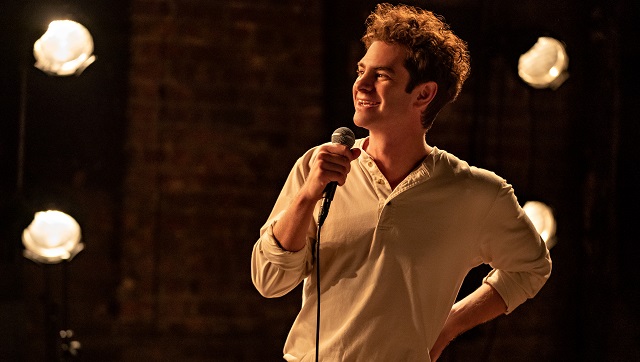
 "Tick, Tick...Boom! movie review: Andrew Garfield's Netflix musical is an electric ode to the creative process")
Language: English Jonathan Larson is missing a song. The year is 1990 and 29-year-old Larson, admittedly one of the handful (of a dying breed of) musical theatre artists in New York city, has been working on his musical Superbia for eight years. He’s missing a song in his second act. He needs to write it for a presentation that big-shot Broadway/off-Broadway producers will hear in six days’ time. The problem is, Larson, who works at a diner to pay for his monthly sustenance, is quite overwhelmed. So, he sits around all day staring at his Macintosh computer, the blinking cursor serving as the only reminder of the passing seconds, minutes, hours, days, months, years. The stakes couldn’t be higher, with the possibility of the presentation fetching him his first paycheck from musical theatre. After this, he won’t be just another broke artist in NYC, marinating in his ideals. His ‘passion’ will also be his profession. He is about to be ‘discovered’. Fame, money and reverence of his peers will soon start courting him. It all depends on this one song. Hence, nothing seems good enough. He writes a word, a sentence, and then deletes it. For someone who comes up with spontaneous songs as an exercise, he can’t seem to find a worthy lyric/tune for the most important bridge in his play. Even more scary is the fact that Larson will turn 30 on the day after his presentation. A milestone, perhaps? And what does he have to show for it? All the writers, musicians he grew up admiring, had accomplished so much more by then. He still has to figure out the song. As he tries to align his faculties towards this one objective, he finds himself distracted all the time. Even apart from the missing song, there are a million things to do. There are overdue bills sitting on his kitchen table, Larson’s partner (Susan) is waiting for the ‘right time’ to talk to him about a job in a different part of town, there’s a friend who could use his advice on something ‘important’. He needs to reach out to his agent who hasn’t returned his calls for a year. He needs to figure out the logistics for bringing his vision to life in the best way possible in front of potential bidders, even if that means affording extra musicians by selling books and records.
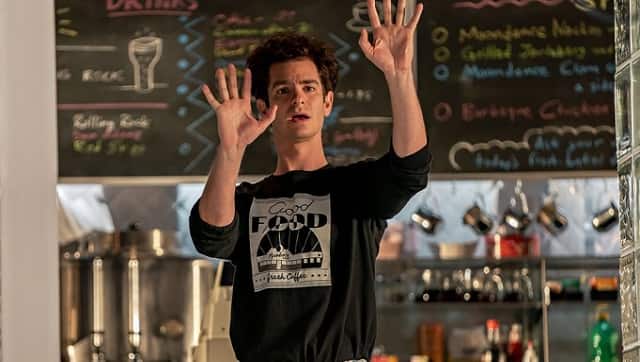
Lin-Manuel Miranda’s film, which is an adaptation of Larson’s off-Broadway musical of the same name, is stunning to watch because of how specific it is in its focus around the anxiety of an artist battling only two modes (or perhaps moods?): procrastination and burnout.
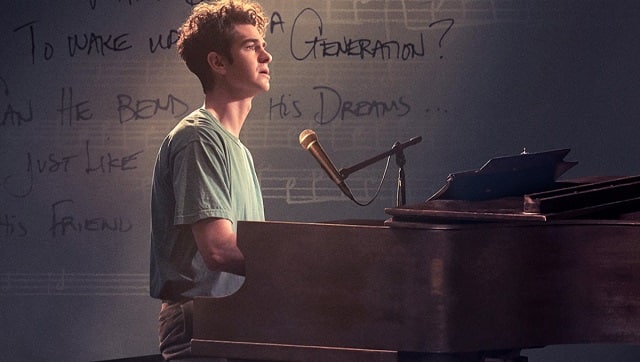
Larson’s sophomore musical draws from his days spent realising his first project, ultimately leaving him with countless epiphanies like “Fear or Love?” or “When the boss is wrong as rain”. It all becomes a part of the final song ‘Louder than words’. Miranda, who reinvented the Broadway musical with Hamilton (much like Larson’s 1996 rock musical, Rent), is on familiar ground here. He played the role of Larson in a 2014 off-Broadway revival of Tick, Tick… Boom! Here, he isn’t merely adapting Larson’s story into a vanilla film, but also extrapolating a man’s journey into a lesson for artists defeated by everyday pragmatism. Much like Damien Chazelle’s
_La La Land_, even Larson’s musical touched upon the need to preserve the integrity of one’s artistic voice and not ‘sell out’. It speaks about compromises in hushed tones, almost seeming conservative (or uptight) in its worldview. Andrew Garfield’s ‘Jon’ Larson is haunted by a ticking clock, just like how Ryan Gosling’s Sebastian was disillusioned by the reception of ‘pure’ Jazz for which the audience didn’t share his enthusiasm. Miranda’s film investigates this superiority complex of the artists and the premise of creating art which is ‘ahead of their time’. Like Chazelle’s Oscar-winning musical, even Tick, Tick… Boom! charts the coming-of-age of Jonathan Larson, and the lessons he learns while bringing Superbia to life.
Tatsam Mukherjee has been working as a film journalist since 2016. He is based out of Delhi NCR.

 "Charlie Kirk, shot dead in Utah, once said gun deaths are 'worth it' to save Second Amendment")
 "From governance to tourism, how Gen-Z protests have damaged Nepal")
 "Did Russia deliberately send drones into Poland’s airspace?")
 "Netanyahu ‘killed any hope’ for Israeli hostages: Qatar PM after Doha strike")
 "Charlie Kirk, shot dead in Utah, once said gun deaths are 'worth it' to save Second Amendment")
 "From governance to tourism, how Gen-Z protests have damaged Nepal")
 "Did Russia deliberately send drones into Poland’s airspace?")
 "Netanyahu ‘killed any hope’ for Israeli hostages: Qatar PM after Doha strike")



