 "The sheer genius of Rahul Dev Burman")
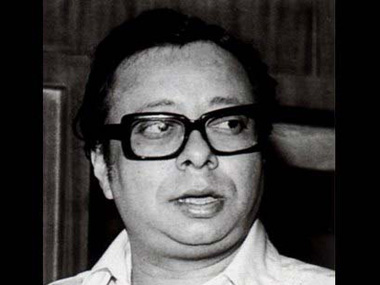
When Sanjeev Kumar and Suchitra Sen looked at each other with intensity and pain in their eyes in Gulzar’s classic Aandhi, that expression had to be given a musical language. The language came about in the form of the song Tere Bina Zindagi Se Koi, one of the finest compositions Hindi cinema has ever seen, and one which transcends generations of music lovers and touches their hearts. That, in essence, was what Rahul Dev Burman was all about. A man whose music spoke a million languages, talked to generations of followers and captures the imagination of people even today, several years after he passed away on January 4, 1994. Had RD – or Pancham as he was known in music and film circles – lived, he would have been 73 today. [caption id=“attachment_359426” align=“alignleft” width=“380” caption=“Courtesy: IBN LIVE”]
 [/caption] But one can hardly conceive of RD as someone who would ever grow old, such was the everlasting freshness of the melodies he created. If popular film music ever had an idiom in India, RD was it. The sheer range of music he created – from popular western and African sounds to classical Indian melodies – mesmerized listeners over the several years which he strode the Hindi film music scene like a colossus. Teaming up with three other legends – Gulzar, Kishore Kumar and Asha Bhonsle who later became his wife – RD weaved his magic with classics in films like Ijaazat, Namkeen, Angoor, among several others and churned out equally brilliant melodies with singers like Lata Mangeshkar and Bhupinder. Throughout the seventies and the eighties, Hindi cinema hardly knew any other music composer with the versatility of Rahul Dev Burman. Every single blockbuster had to have music by RD – from Ramesh Sippy’s cult film Sholay to Hrishikesh Mukherjee’s Namak Haraam and several Rajesh Khanna mega hits like Amar Prem where his music transcended language to touch hearts and move listeners to tears. Chingaari Koi Bhadke, that brilliant song from Amar Prem rendered by the inimitable Kishore Kumar and picturised on Rajesh Khanna and Sharmila Tagore against the backdrop of a boat ride on a Calcutta evening will be part of cinematic history forever. And so will be the songs from Namkeen, where RD’s music merges with the pathos and the struggle of the protagonists effortlessly through songs like Raah Pe Rehte Hain and Phir Se Aaiyo Badra Bidesi. Not surprisingly, these were sung by his favourites Kishore Kumar and Asha Bhonsle respectively. But RD’s genius also lay in the range of his music. If Hum Kisise Kum Nahin was a mega hit, it was RD’s music which gave it the cult status the film enjoys today: from Bachna Ae Haseeno (later remixed into the title song of a movie of the same name) to Yeh Ladka Hai Allah to Kya Hua Tera Waada, the songs of HKKN have stood the test of time and enthralled listeners from the 70s through to 2012. Even before that, the sound of Zeenat Aman tapping her glass and crooning Chura Liya Hai Tumne (sung deliciously by Asha Bhonsle) in _Yaadon Ki Baaraa_t was stuff musical legend was made of. If RD has given us the quintessential rain song in Rim Jhim Gire Saawan, he has also given us the delightfully romantic Jaane jaan from Jawaani Diwani and the intense Gum hai kisike pyar mein from Raampur Ka Lakshman. And even in an average and relatively unknown film like Jeeva, RD managed to give us a classic in Roz Roz Aankhon Taley. Several of RD’s songs have their origins in Bangla, or have Bangla versions. Few can recall a Bengali Durga Puja without RD songs playing at the pandals – whether it is Phire Esho Anuradha (Saajan Kahaan Jaoongi Main from Jaise Ko Taisa), Ashbo Arek Din (Aaoongi Ek Din from Baseraa) or Mone Pore Ruby Ray (Meri Bhigi Bhigi Si in Hindi). RD’s own inimitable singing style – evidenced not just by the cult number Mehbooba from Sholay or Tum Kya Jaano from HKKN which became a rage with the youth but also by his several Bangla renditions like Jete jete pothey holo deri (the Bangla version of Tere bina zindagi se koi) – demonstrated the enormous range which the composer had. On RD’s 73rd birthday, all radio stations will play his songs. Several TV channels will be airing specials on the legendary music composer whose remixed compositions have also become super-hits and made millionaires of lesser music directors. But even as the world celebrates the musical genius of Rahul Dev Burman, the truth that he was forgotten in his last years must also rankle those who worked with him and did not give him his due when popular tastes changed. That he was good enough even in his last days is borne out by the thumping comeback he staged with Vidhu Vinod Chopra’s 1942: A Love Story, a soundtrack which gave Kumar Sanu a different level of fame. But that realization came too late, and RD had gone by then. Today, as new and talented music directors like Vishal Bhardwaj, Amit Trivedi and Vishal-Shekhar come up with new sounds and lasting melodies, they will always owe a debt to Rahul Dev Burman who, with his compositions, changed the meaning of Indian popular music forever.
Sourav Majumdar has been a financial journalist for over 18 years. He has worked with leading business newspapers and covered the corporate sector and financial markets. He is based in Mumbai.