

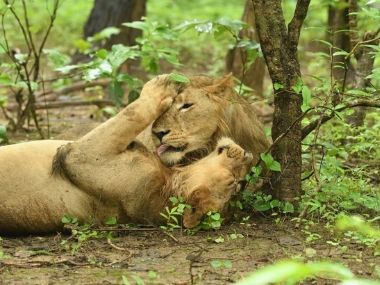
 "The Lion Kingdom: New series documents fight against canine distemper outbreak in Gujarat's Gir forest")
India loves its wildlife. And as more success stories of animal conservation surface, there’s an increased sense of pride in having those animals on our land – and a greater conflict with those animals for that land. In the face of irresponsible – instead of sustainable – development, the human-animal conflict, at the heart of which is the issue of land, seems inevitable. “But in a way Gir is slightly different because the people of the region have always lived with the lion, so there’s a historic coexistence,” says Upma Bhatnagar, director of the docuseries The Lion Kingdom, which documents the outbreak in late 2018 of the canine distemper virus (CDV), threatening the Gir National Park’s Asiatic Lion population. [caption id=“attachment_7940191” align=“alignnone” width=“825”]
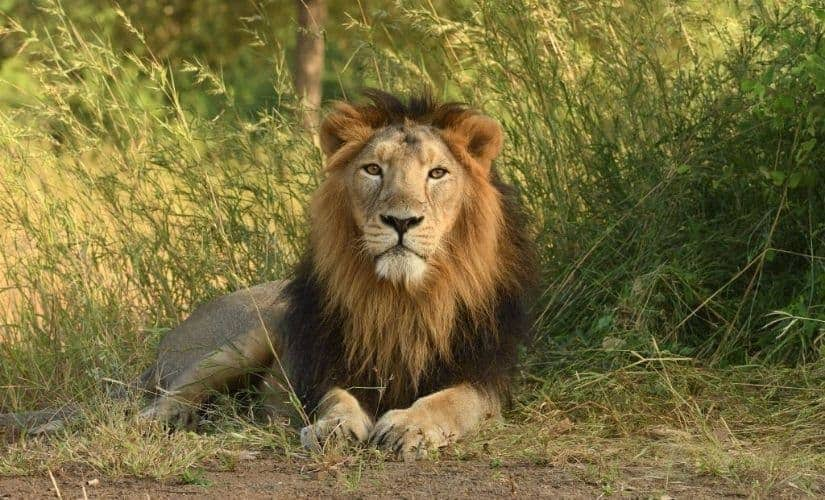
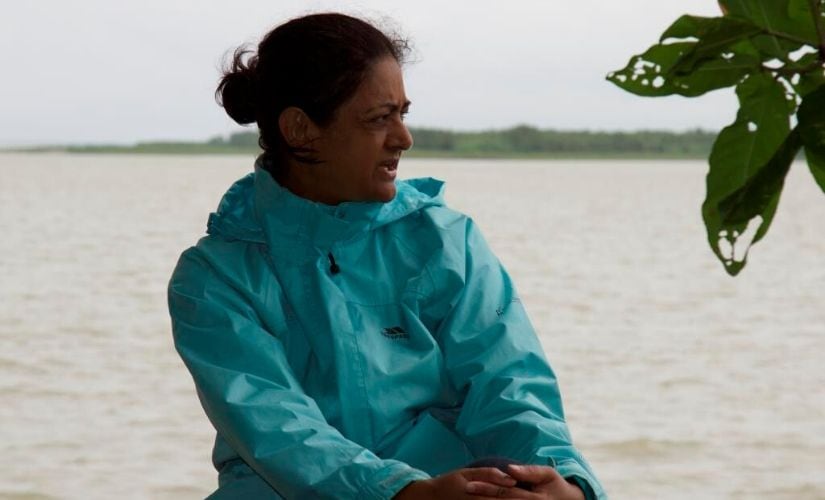 Upma Bhatnagar. All photos courtesy Animal Planet.[/caption] “People love their lions. Gujarat is very proud of the fact that they are the only state, and the only location outside of Africa, where lions exist,” she says. Having earlier seen the CDV outbreak in Africa’s Serengeti claim around a thousand lives, finding the virus in Gir’s lions caused nationwide concern for its small lion population of around 500. “In Africa they have numbers and they could still survive. But India, 500 is not a huge number in the global scenario. The fear was much bigger. What if the entire species was wiped out?” Being an airborne disease with no cure, as the CDV – traditionally limited to dogs –
mutated so that it was suddenly a threat to big cats; it killed 23 of Gir’s lions. The virus itself is endemic to India, rampant among dogs. And while there aren’t any dogs within the park, other wild animals like mongooses and jackals are also carriers, acting as a bridge for the virus to reach lions. “There was one pride that was totally wiped out,” says Bhatnagar. “Fortunately, the outbreak was in a smaller area, the eastern area.” Surrounding prides were quickly isolated and removed from the area, containing the virus before it spread to parts with a higher concentration of lions.
 Adding to the stress of the virus was the unprecedented monsoon in the region hindering visibility and movement, for both the forest staff and the filmmakers. “People are out there in gushing waters. They could be swept off. Rescuers and we, ourselves, were stranded in so many locations,” explains Bhatnagar about the challenges the staff faces when working in these conditions. This is the story Bhatnagar wanted to tell. “The fight of the forest staff to combat it [CDV] and really triumph against it, how they worked day and night.” Because of the monsoon, it was also one of the toughest filming conditions the crew has ever encountered. “How do you get your equipment out without damaging it?” This however, in Bhatnagar’s view, is also what makes the series exciting for a viewer, providing thrill and allowing for a greater appreciation of the lushness of the landscape.

With such rigorous monitoring and intervention however, the meaning of ‘wildlife’ is starting to change.
“Honestly, wildlife within the national park, people say, is no longer wildlife, because if you look at all the other wildlife which has been conserved in our national parks, it has to be monitored,” says Bhatnagar. With Gir in particular, there’s no tangible boundary or fence around the park, and without close monitoring, they’ll wander out, into the villages and to potential conflict. Without intervention, we inevitably risk losing the species. “But if we do, to what extent can we intervene? It is a moral dilemma. You have to find the right balance.”
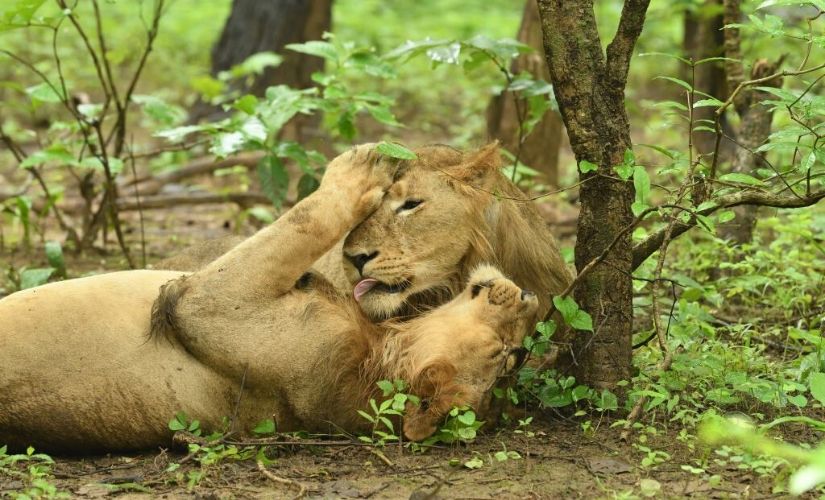
Because people want to coexist.
We all have to be very proud of the fact that India still manages to sustain and grow such a wide range of wildlife, despite the population.” The Lion Kingdom that will premiere on 27 January on Animal Planet and Animal Planet HD.

 "Charlie Kirk, shot dead in Utah, once said gun deaths are 'worth it' to save Second Amendment")
 "From governance to tourism, how Gen-Z protests have damaged Nepal")
 "Did Russia deliberately send drones into Poland’s airspace?")
 "Netanyahu ‘killed any hope’ for Israeli hostages: Qatar PM after Doha strike")
 "Charlie Kirk, shot dead in Utah, once said gun deaths are 'worth it' to save Second Amendment")
 "From governance to tourism, how Gen-Z protests have damaged Nepal")
 "Did Russia deliberately send drones into Poland’s airspace?")
 "Netanyahu ‘killed any hope’ for Israeli hostages: Qatar PM after Doha strike")



](https://images.firstpost.com/wp-content/uploads/2020/01/26.jpg)
](https://images.firstpost.com/wp-content/uploads/2020/01/1-min1.jpg)