

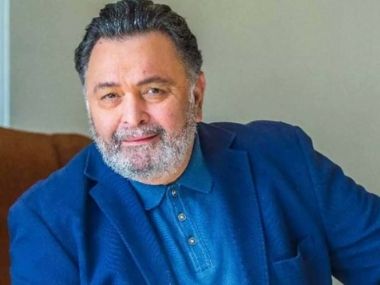
 "Rishi Kapoor, R.K. Pachauri, Kobe Bryant: Are there rules for what to say when public figures die?")
“If you have nothing good to say about him, don’t say it today.”
Not surprisingly, this comment and versions of it have appeared repeatedly on social media since Rishi Kapoor passed away just days back.
The death of the 67-year-old Bollywood star has elicited an outpouring of tributes, but alongside those were also several online comments about disquieting aspects of his life.
“His opinions were often problematic and most just gave him a lot of leeway because he was a star,” a fellow journalist wrote on Facebook. “My personal interaction with Rishi Kapoor during his book promotion was full of his derision and contempt for everyone. An alcoholic, who was accused of domestic violence, Rishi Kapoor no doubt was a good actor, but as a person he was not nice at all.”
The condemnation of this post was instantaneous and along expected lines. One person censured the journalist for not keeping quiet “especially at a time like this”. Another asked if this is the time to “blaspheme death”. Both were variations of the long-standing dictum, “don’t speak ill of the dead”.
[caption id=“attachment_7999551” align=“alignnone” width=“825”] 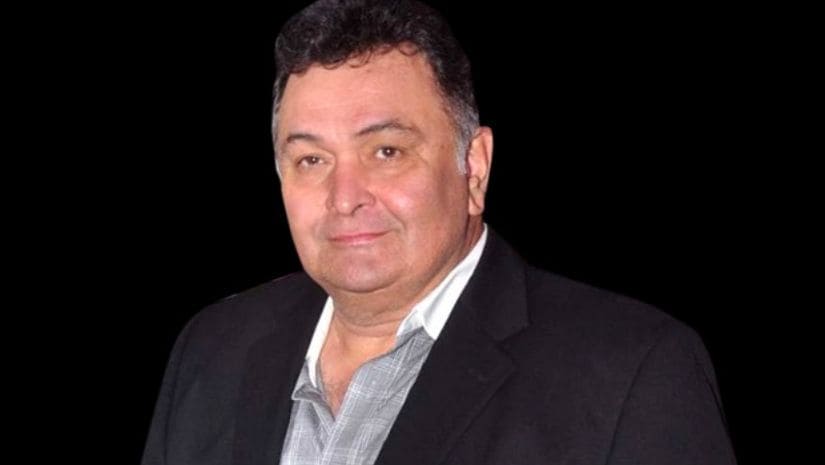 Rishi Kapoor. Image from Twitter[/caption]
Glossing over troubling truths about those who have died is a custom that merits discussion not just in the context of Kapoor. This February, for instance, when R.K. Pachauri passed away, several obituaries in the media relegated to passing mentions the multiple charges of sexual harassment by women colleagues against the internationally celebrated environmentalist. One news platform in particular drew flak for publishing a glowing eulogy that completely omitted the charges.
Chroniclers of Kapoor and Pachauri’s lives pale though in comparison with fans of US basketball legend Kobe Bryant who died this January. Bryant’s fans – among them the rapper Snoop Dogg – threatened and abused those who brought up the rape charge their idol faced in 2003 that was widely reported in the press back then.
Not only are history and journalism ill-served by the cover-ups such fans seem to want, their demands exemplify disturbing aspects of our common global socio-political reality.
Various justifications are offered when silence is sought about the wrongdoings of those who are now gone. The most common one is that speaking up is bad form since the dead cannot defend themselves – the logic of this stance falls apart when you picture a world in which this courtesy is extended to despots, bigots, terrorists and all criminals who are not beloved/sweet-faced/charming achievers in parallel professions.
The reason more frequently advanced to discourage critiques of celebrities when they die, especially those who have tragic, untimely deaths, is consideration for the grieving family. But what if a late lamented star left behind victims (including family members)? Is it sensitive to the victims of crimes/misdemeanours to pretend that the person who committed them was flawless? Or do living victims matter less than dead celebrities?
[caption id=“attachment_7973021” align=“alignnone” width=“825”] 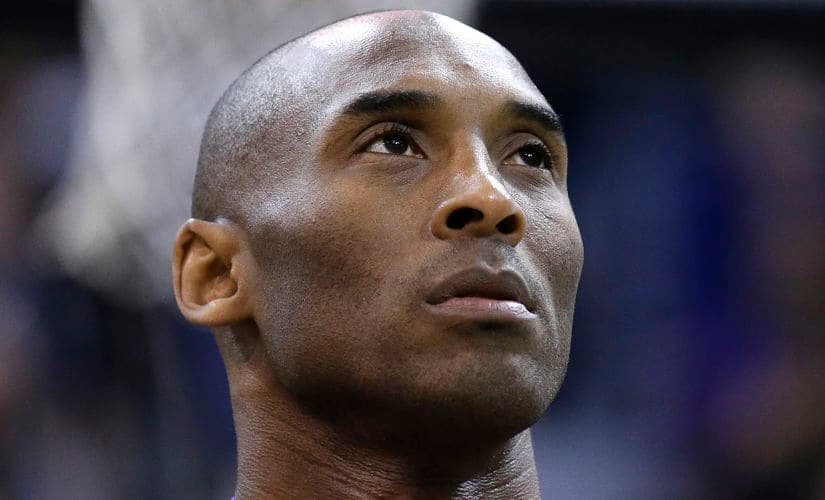 File image of Los Angeles Lakers forward Kobe Bryant. AP Photo[/caption]
The rape charge against Bryant provides an illustrative example for this discussion. The case against him was dismissed in 2004 when the accuser decided not to testify in court reportedly after she had been unrelentingly maligned, her reputation mauled by the media and Bryant’s lawyers. According to reports, she had agreed to a dismissal of the sexual assault charge against Bryant on condition that he issue an apology, which he did.
This is the inconvenient reality fans wanted ignored when they trolled The Washington Post reporter Felicia Sonmez for tweeting a link to an article about the rape case shortly after news of Bryant’s death broke. Some objected to the timing, others felt it was disrespectful, still others averred that this reminder would hurt Bryant’s wife.
Not one of them stopped to wonder about the mockery of the truth or the disrespect to Bryant’s accuser – and all survivors of sexual violence – if her assault, her two-year legal trauma and its presumably life-long after-effects were to not even be a footnote in social media reminiscences about Saint Kobe Bryant.
The trolling of journalists, especially women, and the intolerance of sports buffs, are well-known phenomena, and that might have been that if Sonmez’s newspaper had not surprised everyone by suspending her for the act of tweeting an article from a bona fide news platform. Washington Post is known as a liberal publication, so this was particularly shocking. The suspension was withdrawn after outrage from the media fraternity and others, but the paper sank itself further into the hole it had dug when its statement about Sonmez’s reinstatement described her tweet as “ill-timed”.
The Post’s conduct distinguishes the Bryant-Sonmez episode from every other instance where the rape charge was cited right after Bryant’s death, and from the reactions to Kapoor and Pachauri’s deaths in India. Most important, the messy saga raises two important issues: timing and intersectionality.
First, often the argument is not against criticism of the deceased, but against criticism immediately after their death. The question asked is: why now? If you are someone who constantly speaks up on pressing social issues, the answer is: if not now, then when? A renowned personality’s death, when he is being discussed worldwide, is a crucial opportunity to amplify concerns that society prefers to avoid.
This was the purpose served by Sonmez’s tweet, and by those who spoke last week about the domestic violence accusation against Kapoor. Even in 1997 when a call was made to a police station from the Kapoor household by a person identifying herself as Neetu Kapoor and alleging that her husband had been hitting her, the incident got limited media coverage. Twenty-three years later, in a country where wife beating is rarely discussed, a few people ensured that this part of the Rishi Kapoor saga was not cremated with him.
Second, blanking out parts of an individual’s life story that complicate an analysis of his legacy amounts to suggesting that the person’s professional achievements or personal popularity outweigh the social harm s/he caused.
[caption id=“attachment_3644823” align=“alignnone” width=“825”] 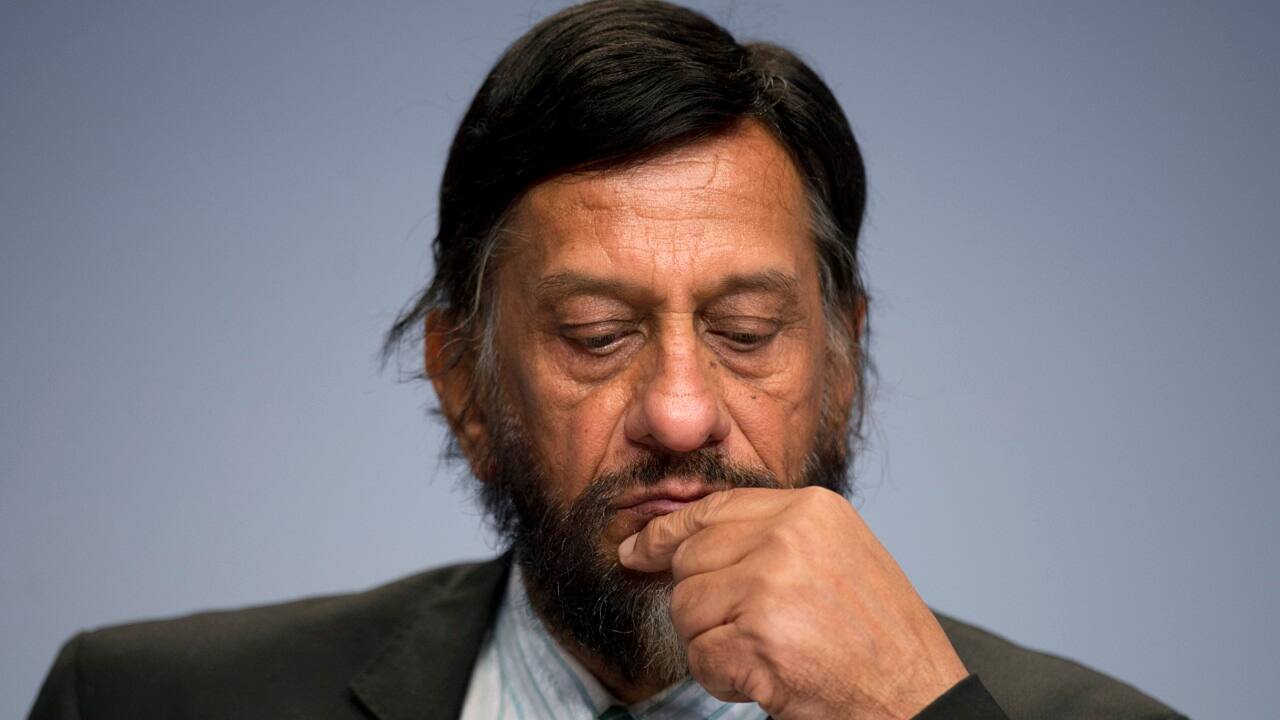 IPCC Working Group III Chairman Rajendra Pachauri attends a news conference to present Working Group III’s summary for policymakers at The Intergovernmental Panel on Climate Change (IPCC) in Berlin April 13, 2014. REUTERS/Steffi Loos (GERMANY - Tags: POLITICS ENVIRONMENT) - RTR3L1TB[/caption]
Never was this more evident than in India’s response to Atal Bihari Vajpayee’s death in 2018, when even most liberal journalists stressed the former PM’s affability, oratory, diplomacy and poetry, ignoring his communal ideology. On Twitter, journalist Nikhil Wagle went so far as to say that criticising “a deceased person on the day of mourning even if he is an ideological opponent” is against Indian culture. Politician Yogendra Yadav endorsed this view, adding that “there is a time and occasion for everything”.
The psychology at work here is worth researching. The fact is, it is hard to highlight an individual’s failings when he was a popular figure or you personally liked him. Vajpayee was well-liked not just by RSS acolytes; even citizens who are averse to RSS have been bred on the media’s mostly adulatory reportage on him. Therefore at the time of his death, to say anything to the contrary as an individual or organisation meant sticking your neck out even with vast sections of the public, a risk most chose not to take.
Third, of course is the question of the messaging that results when facts about a public figure are cherrypicked at the time of his death, usually to the detriment of minority and marginalised communities. It sends out a message that the concerns of these communities are less important than the sentiments of fans, a group that epitomises the basic human need to believe that talented people are also good people.
Intersectionality complicates the matter, as it did with Bryant. Several social media posts suggested that the rape charge was being used to mar memories of a black icon. So in this conversation, Sonmez was treated as representative of the exploitative other. Black people who spoke up, on the other hand, were viewed as traitors.
This was evident from a video by Snoop Dogg in which he addressed Gayle King, a prominent US media personality who also publicly referred to the rape charge after Bryant’s death. King is black, which explains the sense of betrayal with which Snoop Dogg asked her in the video: “Why ya’ll attacking us? We your people.”
He proceeded to say, “Funky dog head bch, how dare you try to tarnish my motherfing home boy’s reputation? Punk motherfer. Respect the family and back off, bch, before we come get you.” This was a clear threat of violence, yet he got away with it. His remarks were a reminder that worldwide, as in India, women of marginalised social groups are expected to hold community interests above women’s rights.
The rapper later apologised for his video. Ironically, in a statement accepting the apology, King herself was penitent. “I …understand the raw emotions caused by this tragic loss,” she wrote. “I’m deeply sorry that questions I asked added to that pain.”
“Raw emotions” is perhaps the new euphemism for threats and abuse by a man from a historically oppressed social group directed at a woman from that group who drew attention to an alleged crime by a dead male star from the same group.
The follow-up to Pachauri’s death was not as complex. Unadulterated partriarchy had been in play from the moment an FIR was lodged against him in 2015. Though most obituaries on February 13 hurried through the sexual harassment allegations against him, some did not, and the fact that the media was not flooded with paeans of praise was in itself an uncommon acknowledgement of his fall from grace. Then on February 17, The Wire – which is widely seen as a bastion of liberal politics – threw a curve ball at Indian feminism with the publication of a homage to Pachauri by veteran journalist Prem Shankar Jha, not featuring a whimper about the charges against the late environmentalist.
Vrinda Grover, lawyer for two of the women accusers, wrote a letter of protest to The Wire. It was published on the website along with an explanation from the editors that Jha’s was an opinion piece focused on Pachauri’s work at the UN’s Intergovernmental Panel on Climate Change (IPCC), which is why the harassment charges were not included, and that they were featured in the obituary already up on The Wire. This reply ignored the fact that Pachauri’s position at IPCC added to the power he wielded over the female associates he allegedly targeted at The Energy and Resources Institute (TERI) that he headed in India – mention of the harassment was crucial to an assessment of his IPCC tenure and because the allegations were the reason why Pachauri resigned from IPCC.
Jha, according to Grover’s letter, was Pachauri’s friend.
Patriarchal collusion, community interests, social niceties, populism, fear, friendships – there are many explanations for why the media and public handle the recently departed with kid gloves. The one explanation for why defying the norm is necessary: accuracy.
Which brings us back to the luminary whose death last week prompted this write-up. Rishi Kapoor was a fine actor and a huge star. According to media archives, his wife once called the police to report him for domestic violence – a formal complaint was not filed. Neetu Kapoor has decried his fondness for alcohol. He was feisty on Twitter till he became problematic. Many journalists remember him as an ill-tempered star. My encounters with him were fun – he was generous with his time at each of our meetings.
All the above are true. To state one without stating the other would amount to an incomplete remembrance. Canonising an individual – celebrity or non-celeb – simply because they are no more is an injustice to history, to the people they have wronged and to the study of the social realities that enabled those wrongs.
We do not owe our silence to the living or to the dead. All that we owe them is fairness and the truth.

 "Charlie Kirk, shot dead in Utah, once said gun deaths are 'worth it' to save Second Amendment")
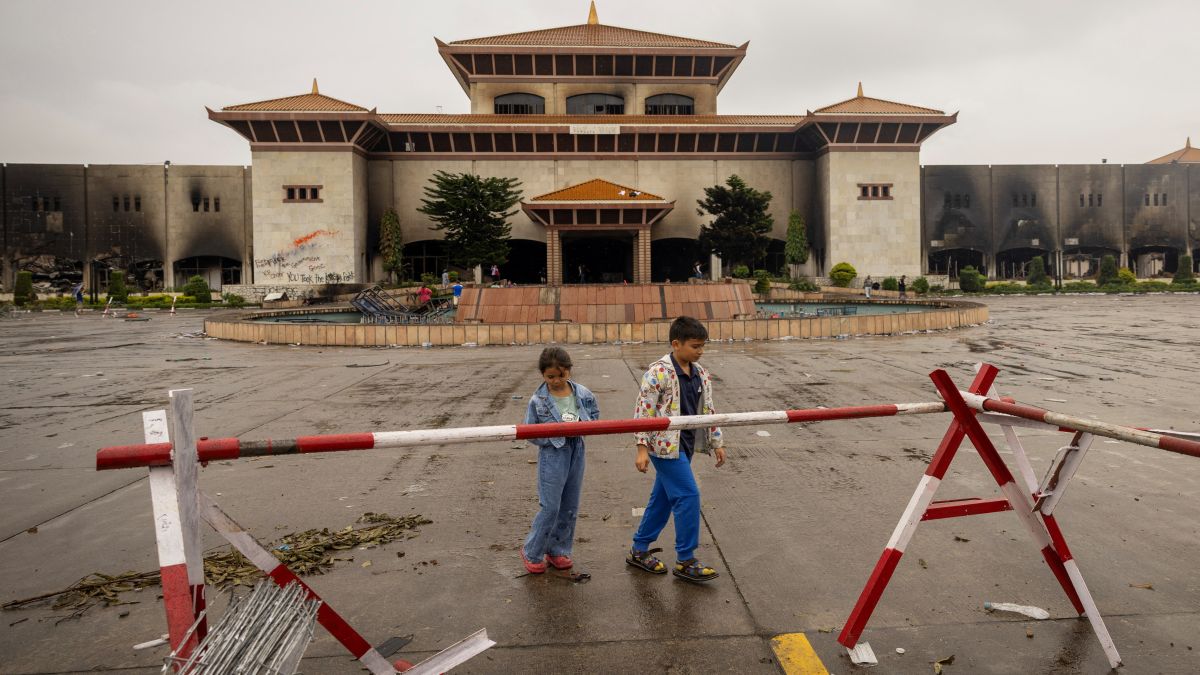
 "From governance to tourism, how Gen-Z protests have damaged Nepal")
 "Did Russia deliberately send drones into Poland’s airspace?")
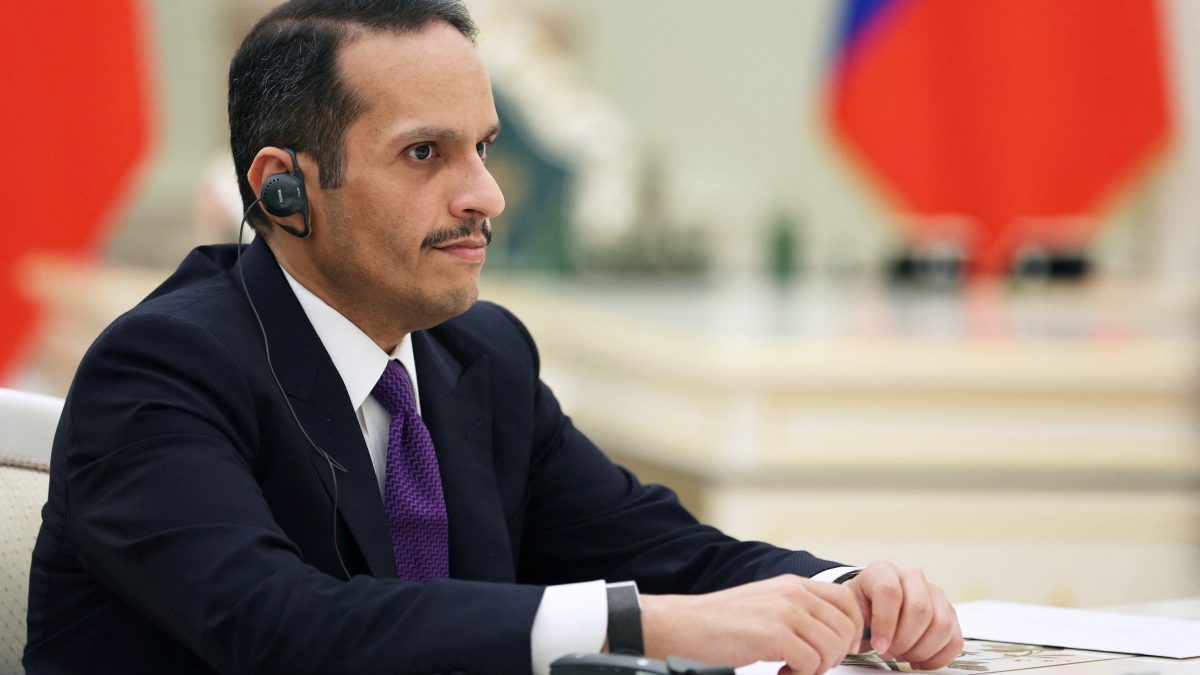
 "Netanyahu ‘killed any hope’ for Israeli hostages: Qatar PM after Doha strike")
 "Charlie Kirk, shot dead in Utah, once said gun deaths are 'worth it' to save Second Amendment")
 "From governance to tourism, how Gen-Z protests have damaged Nepal")
 "Did Russia deliberately send drones into Poland’s airspace?")
 "Netanyahu ‘killed any hope’ for Israeli hostages: Qatar PM after Doha strike")



](https://images.firstpost.com/wp-content/uploads/large_file_plugin/2020/02/1580794701_RishiKapoorS.jpg)
](https://images.firstpost.com/wp-content/uploads/2020/01/KOBE-BRYANT-NO-MORE-I_opt1.jpg)
](https://images.firstpost.com/wp-content/uploads/2017/06/Pachauri-2-Reuters-1280-social.jpg)