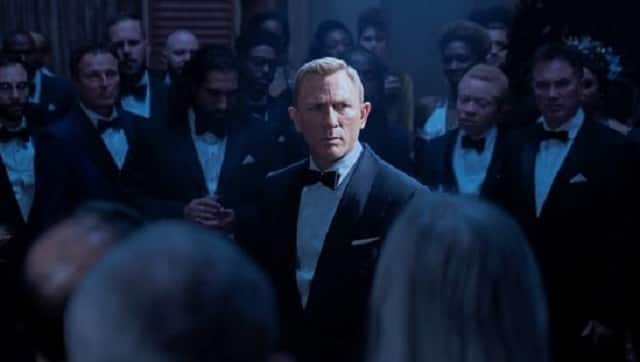
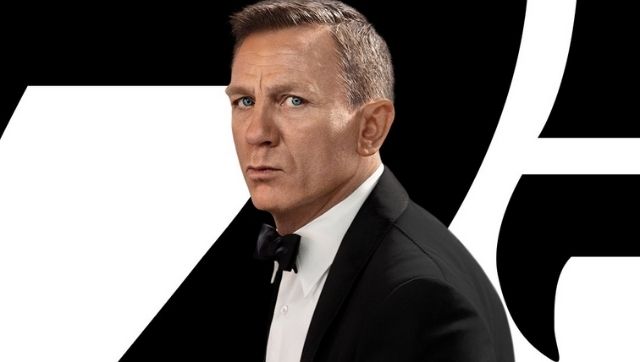
 "No Time To Die ending explained: A clean slate for James Bond or 007 agent hanging up his boots?")
Spoilers ahead This story discusses the ending of No Time to Die
. That such a spoiler warning is even necessary is strange in the world of James Bond. Doesn’t he save the world and get away with the girl? Isn’t that one of the immutable laws of 007, right up there with the tuxedos, Aston Martins and facially scarred villains of seemingly limitless financing? Just as surely as his foes can build a teeming lair in a volcano, Bond has a gadget, and a wry quip, to deploy at just the right time to rescue humankind. So sayeth the Book of Bond. And yet in No Time to Die, which debuted with $56 million in US and Canada theatres over the weekend, the unthinkable happens. For the first time in 25 films — and remember that spoiling warning —
James Bond
dies. In Cary Joji Fukunaga’s film, Daniel Craig’s
fifth and final
turn as the British spy, there is no doubt — no maybe he escaped if he suddenly found a jet pack or something — to the conclusion of No Time to Die. He lies on an otherwise deserted island, with nanobots coursing through his blood and bombs falling. It’s a new finality for the man with a license to kill, but, apparently, a revocable permit to live forever. It is, however, only a partial death. Lest you thought the explosions at the end of No Time to Die were fireworks for the demise of a many-billions-generating franchise, Bond will most assuredly go on. If you stay all the way through the credits, you’ll be comforted by the message: “James Bond Will Return.” “Bond can go on forever,” said Barbara Broccoli, Bond producer, in a recent interview. “My father told me that when they were making From Russia With Love, (Bond author) Ian Fleming said to him: ‘You know, Cubby, I think Bond will go on well beyond me.’ And Cubby said, ‘Yeah, and he’ll go well beyond me as well.’ He will be around forever.” This, then, is purely the finale to Craig’s serious and tortured 007 run, one that from the start has edged Bond more into plausible reality, ushering in once anathema things like grief and pain and romances that last past one movie’s runtime. Death loomed from the start. In his first Bond film, Casino Royale, Bond’s heart stopped, briefly. Tropes weren’t abandoned but deconstructed. When prompted by a bartender for his trademark shaken-or-stirred line, Bond replies in Casino Royale, “Do I look like I give a damn?” [caption id=“attachment_10023081” align=“alignnone” width=“640”]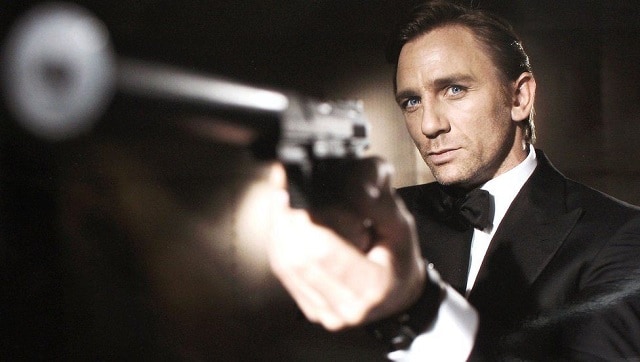 Daniel Craig in a still from Casino Royale[/caption] Craig’s 15-year era has been longer than any previous Bond actor, and he’s grown more evidently weary during that time. In No Time to Die, the most poignant of Bond movies, Craig steers the character toward family and love — Léa Seydoux’s returning Dr Madeleine Swann is prominent — and deeper emotional terrain than the globe-trotting secret agent has previously traversed.
Death arrives not like a shock but the natural culmination of a performance arc that has turned the superspy decidedly mortal.
It’s also an increasingly popular twist in a Hollywood where franchises are undying and reboots eternal. When intellectual property lasts infinitely, death is a novelty. If the fate of the world is always at stake and the protagonist’s future never in doubt, it’s a way to tweak a formula. To some, it smacks of meddling with the primal forces of Bond. Film critic Jordan Hoffman called it “New Coke syndrome.” “What kind of world is this?” Hoffman said in a video filmed on his way home from seeing the film. “What’s the point? He’s supposed to escape. This movie is escapism. This is not a serious movie. This is not a serious franchise.” If anything, the sentimentality of such demises lie not in the character’s fate but in an actor’s departure. Harrison Ford was ready to be done with Star Wars, and made his exit absolute in The Force Awakens. Robert Downey Jr’s 10-year reign as Iron Man was given an extensive wake in
Avengers: Endgame
, a film that toyed with the deaths of half of Marvel’s heroes in the lead-in “snap” cliffhanger. Craig, who said after the previous Spectre that he’d rather slit his wrists than make another Bond film, will certainly be spared any rumours of a future 007 return. It’s not so different from how some authors have felt about the iconic characters that define them. Arthur Conan Doyle dropped Sherlock Holmes off a cliff before eventually bowing to public pressure for a resurrection. Ian Fleming penned an obituary to Bond in 1964′s You Only Live Twice (from which No Time to Die cribs) that proved ultimately false but that included a number of details from Fleming’s own life. “It’s very complicated the relationship Fleming had to Bond,” Craig, who has had his own up-and-down feelings about the character, said in a recent interview. “He didn’t like him. He tried to kill him off. There’s not a lot there as far as character is concerned. Fleming called him ‘a shadow.’”