

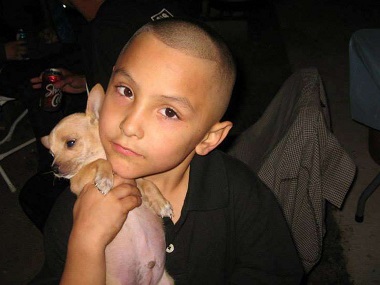
 "Netflix's The Trials of Gabriel Fernandez docuseries uses murder case of 8-year-old boy to indict a system that let him suffer")
‘Evil’ is a word that comes up a lot in the new Netflix true crime docuseries, The Trials of Gabriel Fernandez. Based on the murder of an eight-year-old boy in Los Angeles County, various individuals connected with the case and featured in this docuseries — the prosecutors at the District Attorney’s office, the school teacher who tries repeatedly to flag the abuse of her student, the jurors who must make a decision about the degree of culpability in a child’s death — grapple with the ramifications of ’evil’. They use it most often when talking of Gabriel’s killers — his mother Pearl Fernandez and her fiance Isauro Aguirre. But if there’s something this six-part docuseries by Brian Knappenberger achieves rather deftly, is to show the various ways in which evil manifests, in contributing to the death of one little boy: from those who are in a position to save him and do not, to a capitalistic system that values profit and economy over the need to protect an abused child. *** In the eight years that comprised his short life, Gabrielle Fernandez experienced several upheavals. With his biological father in prison, and abandoned by his mother in the hospital as a three-day-old infant, he was raised until the age of four by an uncle and his partner. Then, amid some disapproval over two gay men raising a child by themselves, Gabriel’s grandparents took over. Finally, Pearl herself reappeared on the scene, taking Gabriel away with her, to the home she shared with Isauro and her two older children. The reason was probably the additional welfare money she’d receive for having Gabriel under her roof. Gabriel’s home situation quickly deteriorated. As the docuseries shows, Pearl and Isauro beat, burned and starved him, taunted him for being “gay”, placing him bound and gagged into a small cabinet at night, and for several hours in the day. The litany of horrors perpetrated on Gabriel included forcing him to eat cat litter, and shooting him with a BB gun; as deputy DA Jon Hatami later noted in court, the extent of Gabriel’s injuries (he had also suffered broken ribs) meant that it would hurt him even to breathe. The cycle of violence escalated and culminated within a few months in Gabriel’s death. The nurse who attended to him when he was brought into the ER breaks down on camera when recalling the sheer extent of his injuries. [caption id=“attachment_8113711” align=“alignnone” width=“825”] 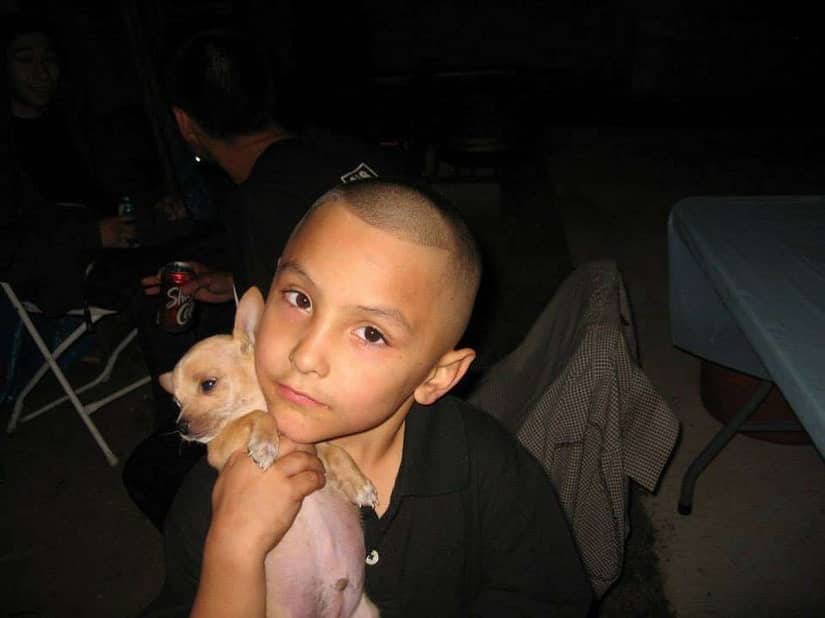 Gabriel Fernandez | Netflix[/caption] *** Even as you’re coming to grips with this report of the trauma inflicted on Gabriel, other details emerge: such as the fact that his teacher reported the abuse to the Los Angeles County Department of Children and Family Services (DCFS) — several times. The social workers mandated to check on him were content to accept Pearl’s versions of what had caused Gabriel’s substantial injuries: a fall from his bike, a particularly rough-and-tumble play session. Standard protocol (marking his injuries on a body chart in his file, for instance) was not followed, nor was he ever taken to a medical facility for attention. The social workers’ supervisors accepted their assessments and didn’t ask for more information. The DCFS wasn’t the only institutional body to fail Gabriel. Deputies from the Los Angeles County Sheriff’s Department visited the Fernandez-Aguirre home on several occasions, after receiving tip-offs that he was being abused. They never filed a single report about any of the visits; with one deputy being satisfied on a certain occasion by Pearl’s statement that Gabriel had left for Texas and no longer lived with her. That’s not even the worst of the institutional callousness. Brian Knappenberger highlights the testimony of a security guard at a welfare office, who saw Gabriel come in with Pearl and noted the injury marks on his body. When the guard spoke to a welfare officer about it, asking her to help the boy, she told him that she’d consulted with a supervisor, who told her “don’t get involved”. The reason: it was nearing the end of the workday (and work week) for the office, and if the welfare officer began checking out a new case, it would mean overtime — something the company that employed them wished to avoid. To save costs, the government was essentially farming out its work — like welfare for instance — to private, for-profit companies. And these private, for-profit companies — like any other private, for-profit companies — cut corners in whichever way they could to turn a buck, including not paying their employees overtime. Vulnerable children to them, were nothing more than revenue. If that is not evil, then what is? ***
The Trials of Gabriel Fernandez is not merely the story of one dysfunctional family. It is the story of a dysfunctional system, one that cannot or does not do enough to protect its most at-risk and defenceless members. A system that allows cycles of gross violence to perpetuate.
The docuseries ends on a mixed note: on the one hand, justice was ‘seen to be done’ in the cases of Isauro Aguirre and Pearl Fernandez. On the other hand, the four social workers who were also indicted on charges of having caused Gabriel’s death were acquitted. The sheriff’s deputies who didn’t perform adequate checks on a distressed child’s well-being were reportedly admonished, but faced no other action. And at least two other little boys — Anthony Avalos (10) and Noah Cuatro (4) — suffered the same fate as Gabriel in the following years: beaten to death by their parents, despite several reports to DCFS about their condition. Knappenberger, however, does not have a nihilistic approach. He tries to depict how an unwieldy, lumbering and outmoded system can be changed, and that there are people who care enough to do it. What’s also remarkable about the docuseries is the range of voices brought on board — through in-person interviews or on-camera footage from the trials — each contributing an additional layer of nuance to the narrative. From the emergency room nurse to the journalists and editors who worked on the story, to Gabriel’s family members and a friend, to experts in the field of children’s rights and welfare, witnesses (Gabriel’s schoolteacher and the security guard), jurors who deliberated in the case of Isauro Aguirre and Pearl Fernandez, legislators and former DCFS personnel, even one of the social workers who was on trial for Gabriel’s death — the perspectives that emerge are numerous. A major achievement of Knappenberger’s docuseries lies in its objectivity. Even though Aguire and Fernandez declined to speak with Knappenberger, he does attempt to flesh them out as more than the one-dimensional ‘monsters’ they’re labelled elsewhere. Pearl’s history of gang-rape and a developmental disorder, and Isauro ’s avatar as a conscientious caregiver for the elderly are incorporated into the narrative. With the social workers too, rather than merely dismissing them as shamefully derelict in performing their duties, Knappenberger is careful to show that their caseloads can be staggering and that inexperienced personnel are often placed in high-pressure, emergency response profiles. He gets experts to comment on how a misplaced emphasis on family rights rather than children’s rights informs the DCFS’ policies and practice. The dilemma of a juror who struggles with pronouncing a death sentence, or with assigning premeditation to Isauro’s actions, embodies the moral compass of the docuseries. Knappenberger presents all the material facts you may possibly need and leaves you to draw your conclusions. [caption id=“attachment_8113771” align=“alignnone” width=“825”] 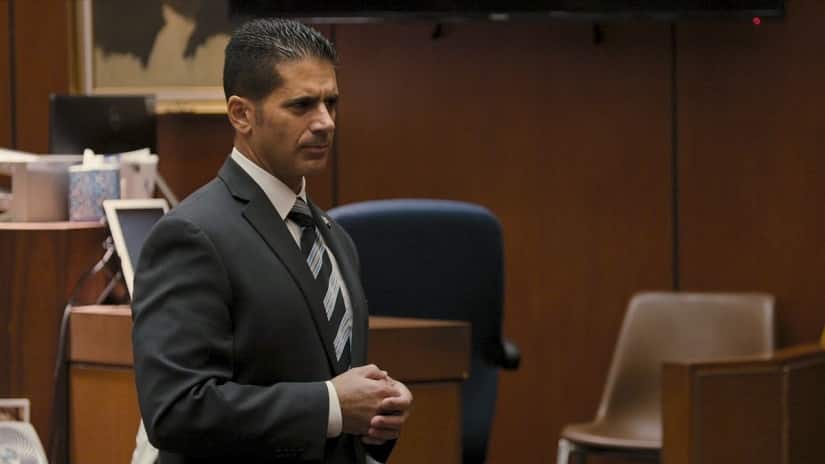 Deputy District Attorney Jon Hatami | Netflix[/caption] *** Knappenberger does take some time to hit his stride in The Trials of Gabriel Fernandez. The first episode (and to some extent, the second one as well) is marked by the use of a dramatic background score that seems needlessly sensational. Sweeping aerial shots follow vehicles on the road, and Los Angeles County, until these visuals seem a bit repetitive. Not all the interviewees are compelling. But the docuseries finds its feet as the investigation proceeds, becoming surer in tone and treatment. Through its six-episode run, it also manages to illumine several not-so-central but important aspects. For instance, it highlights the role that legacy media can play in bringing forward such cases. As with the New York Times’ reportage of Harvey Weinstein's predation , the Los Angeles Times too was instrumental in amplifying the story of Gabriel’s death, and more importantly, uncovering the system’s egregious failure to protect him. As one of the newspaper’s editors notes, few if any media houses in a dwindling industry now have the wherewithal to report on local/community news, which means stories like Gabriel’s have fewer chances of coming to the attention of the public. Another interesting aspect the series puts forward is an algorithm being developed to identify and help at-risk children. While its propnents seem gung-ho about the technology and its potential for ensuring those in need of help don’t slip through the cracks, other experts sound a note of caution in how the algorithm could be influenced by skewed data sets (because minority and low-income populations are unfairly represented in these samples). And as has been seen in the use of AI to “measure” the empathy of call centre employees, technology isn’t always more fail-safe than humans. *** The Trials of Gabriel Fernandez stands apart from other true crime docuseries in how it puts its victim front and centre. His uncle’s partner, his schoolteacher, his grandmother, his friend, his siblings — all narrate their interactions with Gabriel, giving an insight into the little boy’s personality. Gabriel is central to this story about his life and death. Photographs of him challenge you to look away from his dark eyes and a smile that reveals missing teeth. The sweetness indicated in these photographs seems almost impossible to sustain in the face of what you learn Gabriel was living through, every single day. The lingering image is of a class project Gabriel finished for Mother’s Day, just before his death. A drawing of a house bears the caption, “Open the door to see who loves you” with a photo of Gabriel behind a cut-out panel. “Coupons” for his mother to avail, bear the promise that he will be good, and a declaration that Pearl is “more beautiful than a flower”. A series of photographs of Gabriel, each showing him hold up, in sequence, placards with the letters M-O-M. He has bruises all over his face. But he smiles and strikes a goofy pose as he holds the “M” for the last photo. And so you come back to the word ’evil’. For what else might explain why this child was beaten to death? The Trials of Gabriel Fernandez is now streaming on Netflix. Watch the trailer here —

 "Charlie Kirk, shot dead in Utah, once said gun deaths are 'worth it' to save Second Amendment")
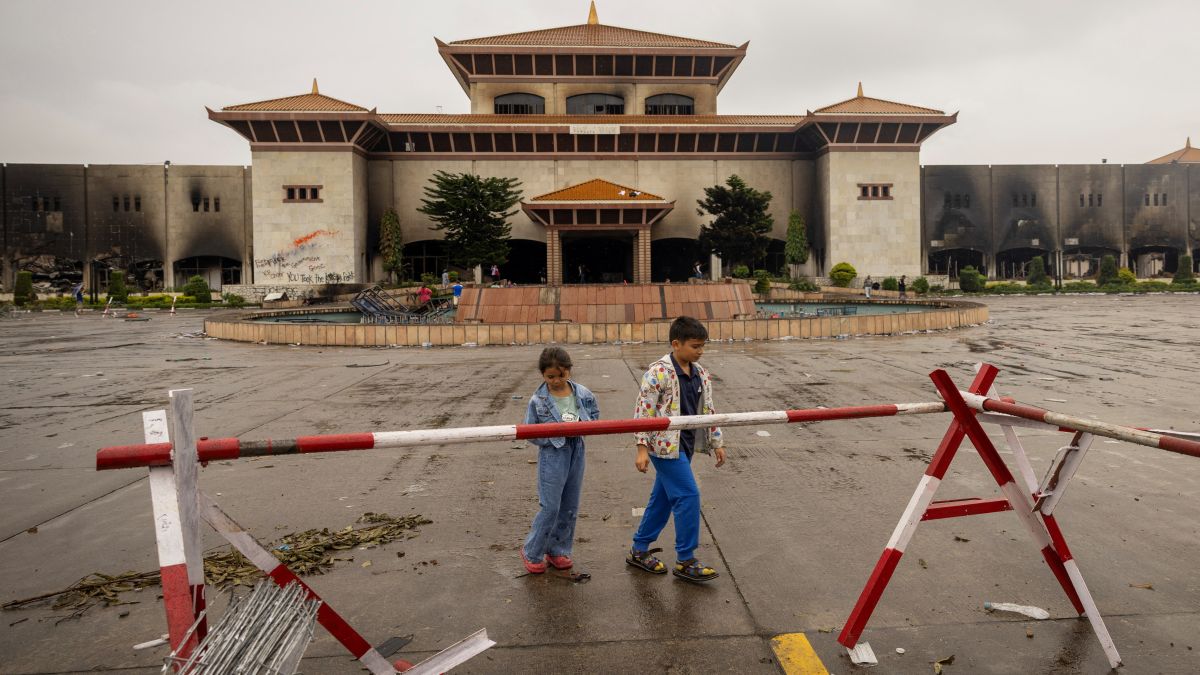 "From governance to tourism, how Gen-Z protests have damaged Nepal")
 "Did Russia deliberately send drones into Poland’s airspace?")
 "Netanyahu ‘killed any hope’ for Israeli hostages: Qatar PM after Doha strike")
 "Charlie Kirk, shot dead in Utah, once said gun deaths are 'worth it' to save Second Amendment")
 "From governance to tourism, how Gen-Z protests have damaged Nepal")
 "Did Russia deliberately send drones into Poland’s airspace?")
 "Netanyahu ‘killed any hope’ for Israeli hostages: Qatar PM after Doha strike")



](https://images.firstpost.com/wp-content/uploads/2020/03/gabriel-fernandez-min.jpg)
](https://images.firstpost.com/wp-content/uploads/2020/03/jon-hatami.jpg)