For many teenagers from Indian diaspora communities, who were growing up in the 2000s, Gurinder Chadha’s Bend it like Beckham (2002) was the first film where they felt seen. Among other things, the film established a rightful space for brown girlhood within cinematic imagination. A girlhood that wasn’t a punchline to a joke, wasn’t an excuse to use a funny accent; a girlhood that was just like any other girlhood, and yet so different. Chadha’s latest film, Blinded by the Light (BBTL), is the story of Javed Khan, a British-Pakistani teenager and Bruce Springsteen fan, growing up in the 80s Thatcherite Britain. BBTL is not only Chadha’s homage to Springsteen, whose music has been the soundtrack to many adolescent lives, but it is also essentially her claiming Springsteen and his music for the South Asian immigrant community, that she grew up with. She wrote the script with her friend, Sarfraz Manzoor, the author of the book Greetings from Bury Park; a Springsteen fan himself, who has watched “The Boss” in concert over 150 times! We caught up with Gurinder Chadha right before the American premiere of BBTL, which was attended by Springsteen himself.
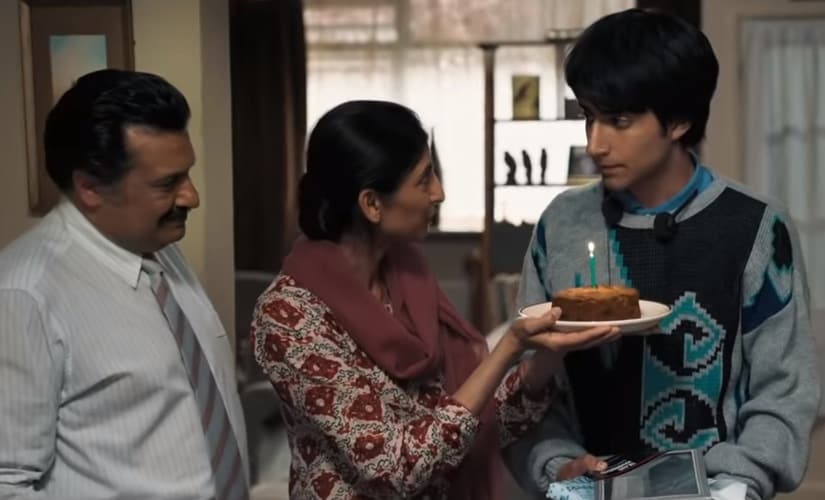
 A still from Blinded by the Light. Youtube screenshot[/caption] How did you go about adapting Sarfraz Manzoor’s book and incorporating Springsteen’s music? I had to juggle all these different elements I just spoke of. And one of the ways I did it was by making myself believe that there was a rock god called Bruce Springsteen and that guy had written some of his songs especially for me — just for me. Then the songs felt much more organic to me. It took the edge off of the mythical proportions of Springsteen and his songs. So much of Springsteen’s work is about ordinary people trying to make a living and people on the margins of the society, about war veterans… people who have helped build society but aren’t given the credit for it. All about people who hope that they can find their promised land within that struggle and make their life fulfilled. I feel that is such a beautiful way of looking at the world, and that is what Javed relates to, that is what Sarfraz and I relate to. His parents, my parents and all their experiences find a place in Springsteen’s music. For me, Springsteen is extremely relatable and as relevant today as he was 40 years ago when he was writing these songs. And I, for one, was not surprised that Bruce was number one with a new album out in 14 different countries, just months before the film’s release! How did you find all of your lead actors? I was out of touch with who was around, so I just did auditions. I had seen Viveik (Viveik Kalra, who plays Javed) briefly in a TV show and called him in for an audition. I liked the fact that he was quite inward-looking and looked like someone who could write poetry. But there was another guy I liked a lot as well. He was very confident and did great readings. That was Aaron Phagura, who plays Roops, Javed’s best friend. So yeah, I was very lucky. All these young actors had a spark that I always look for. There is something deep in them that I connect to. What, in an actor, puts you off? If I get a whiff of an ego in an actor, then I can’t cast them, because that always becomes a big barrier between me and them. I always cast people who care for my creative process. [caption id=“attachment_7189181” align=“alignnone” width=“825”]
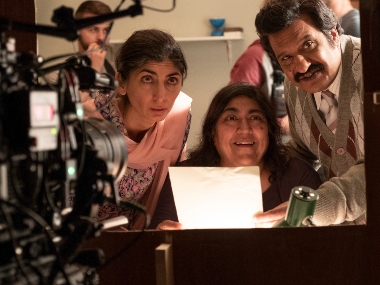
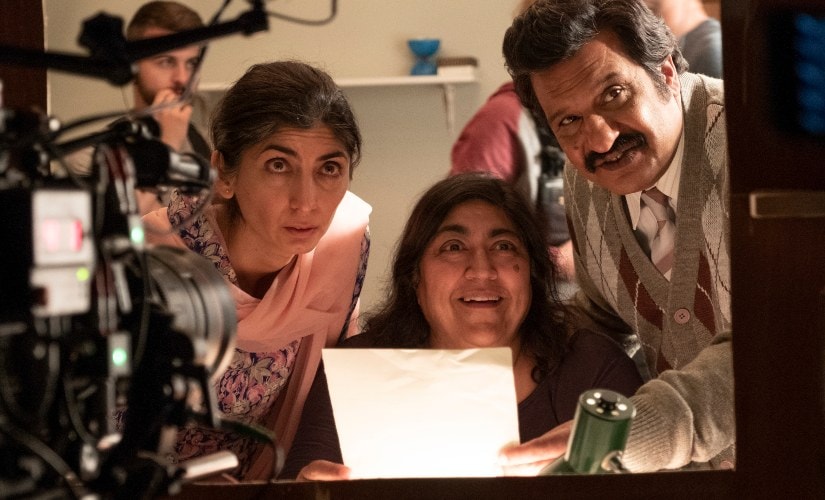
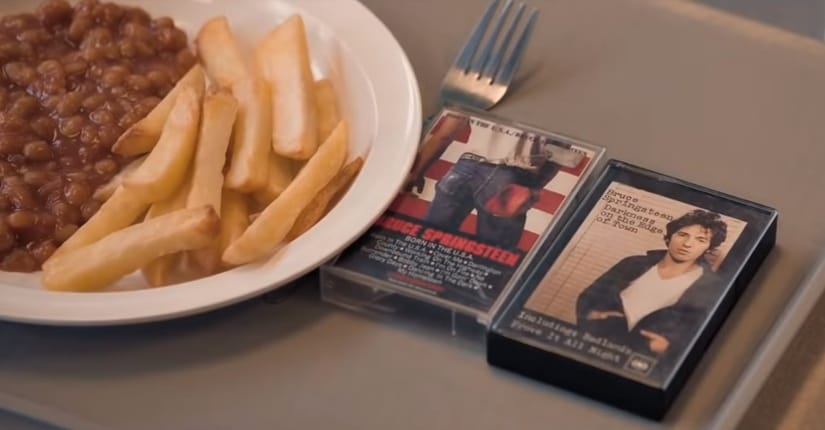
 I think that the world belongs to those of us who have multiple identities and multiple languages, says Chadha[/caption] How did you get 20-somethings to play kids from the 80s? We had to teach Viveik how to use a record player! There’s a scene where he pulls out the record of the Springsteen album, The River. The cameras were rolling and he put his hands all over it and then when he tried to put the record on the spindle, it wouldn’t play, as he was pushing it down with his hands. The record was buckling. I was cringing! So, I had to scream “Cut!” because he was going to break the original record. He didn’t know how to use a Walkman and cassettes. He was trying to slide in the cassettes like a SIM card. It was so funny how clueless he was about the 80s stuff. I don’t think he forgave me for his wardrobe in the film, especially those sweaters. Is this film your way of making younger people listen to Springsteen? It’s always a good thing. There have been young people at the screenings who have said, “Oh I’m really going to have a little debrief now. I’m going to download all his songs on Spotify!” “Popping your Bruce cherry,” as Roops says in the film, is always such a great thing, because Bruce’s is a voice that says, “Look how similar we are!” in a sea of people who keep emphasising that we are different. How did you choose which songs to feature in the film? I only wanted to use songs that were relevant to Javed’s narrative journey. I sat down with all the lyrics of all the songs and just literally put them into the script as dialogue. That way, I was able to choreograph the songs in and out of the narrative and adapted the script. I definitely didn’t want to make a jukebox musical where the songs just played in the background. I had to find a way to make them cinematic, so I had to make characters out of the words. Bruce’s words seem like a character who is advising Javed and telling him what he should and shouldn’t be doing at any point. You see Javed and almost shout to him, “Come on, Javed. Get out! Listen to Bruce.” Has Springsteen watched the film? This time last year, I took my director’s cut to Bruce Springsteen. He didn’t ask to see the film, but I wanted to show it to him. I was very nervous because I had taken his life’s work and didn’t know if he was going to think that I had made a mess of it all. So, I went to New York and sat in a small room with him and a few of his managers and put the film on. He watched it very intently but at the end, it was all silence and no one said anything. The managers probably wanted Bruce to speak first, but he was really quiet… You must have been scared. Oh, I was shitting bricks, as they say. I thought I’d go to the front, put the lights on and leave the theatre. I thought I’d leave the theatre, so that they could talk among themselves. When I went to the front and as I turned the lights on, Bruce stood up and moved over to me. And then he gave me a big kiss and put his arms around me and said, “Well, thank you for looking after me so beautifully.” And then I just melted.
Gurinder Chadha on Blinded by the Light, being inspired by Bruce Springsteen and recreating '80s Britain
Bedatri D Choudhury
• August 23, 2019, 09:39:08 IST
Gurinder Chadha’s latest film Blinded by the Light is the story of Javed Khan, a British-Pakistani teenager and Bruce Springsteen fan, growing up in the 80s Thatcherite Britain. In this conversation, she speaks about meeting Springsteen and the theme of assimilation vs sticking to one’s roots
Advertisement
 "Gurinder Chadha on Blinded by the Light, being inspired by Bruce Springsteen and recreating '80s Britain")
Why did you choose to make a film about the 80s in 2019? I had worked on the script a few years ago, then kept it away and started working on Viceroy’s House (2017), but then Brexit happened. Then all of a sudden, all these xenophobes came out of the woodwork and there was rampant racism and unfounded paranoia. There were people who felt that it was okay to get on a bus and start shouting at an elderly black woman who had worked for the NHS all her life. I saw a kind of breakdown of the society around me and it was terrifying. It was horrible and I felt like I needed to do something. That’s when I picked up the script of Blinded by the Light and channelised all my fears, frustration and anger at what I was seeing around me. I wanted to show a world which was much more inclusive and much more integrated and joyful. I wanted to speak about my reality and my experience as an immigrant to show that there is an alternative narrative to what was being peddled in the news. We had a screening in Dallas where a lady from the audience said to me that the film has come at a time when there seems to be a collective depression for so many people. I would like my film to be a collective hug. What was your greatest pleasure in making the film? The biggest joy of making this film was that I got to meet Springsteen a few times. I am a huge fan! Were you nervous while making it, especially since you’re such a big fan? Once Springsteen had given us the permission to make the film, there was a lot of pressure on me because then, I had to make a film that stood up to the legacy of his songs and his words. These are iconic songs… ‘Born to Run’, ‘Thunder Road’. I didn’t want to disappoint him and at the same time there were hordes of Bruce Springsteen fans around the world that I didn’t want to piss off! Also, I was sure that there would be a lot of people watching, really unfortunate people, who might not be Springsteen fans. There was also the need to tell the larger story well because, at the end of the day, the story is bigger than Springsteen and bigger than Javed. It’s about all of us at this point in time. [caption id=“attachment_7189161” align=“alignnone” width=“825”]
Did you scream? I had to be very professional! We sat for a while and he talked about all the things that he loved. He said, “The kid’s great!” and he particularly liked all the other 80s music I used in the film; stuff like Tiffany because she was high in the charts when none of Bruce’s songs were. Just the other day, his manager Barbara Carr said to me that she thought that he was so inspired by the film that he just directed his own film about his new album, Western Stars. So, I’m happy I was able to give as well as receive. What do you think makes the story of a brown boy in Thatcherite Britain so universally appealing? Everybody who has been a kid has wanted to do something that their parents didn’t necessarily agree with. Everyone has had their parents wanting one thing while they have wanted to do things differently. I love the drama in the way these two sides come together and all the negotiations that happen between them. That’s an emotion everybody relates to, because ultimately everybody seeks parental approval in some kind of way. And some people never get it, like Bruce. They carry that sadness through their lives, and that is why I think why the film is so relatable. That was the story of Bend it like Beckham as well. The immense effort of the protagonists to not hurt their parents while trying to do what their hearts desire. The story of negotiating and making it work with our parents is universal. We’ve all been there. Bend it like Beckham spoke to a generation of South Asian kids growing up in diaspora communities, who constantly tried to balance assimilation with sticking to one’s roots. Blinded by the Light is similar. So, when you write these characters, as someone who has made the same choices, how much assimilation is too much assimilation for you? I think it’s very personal. I do what I think works for me. I could be very Indian but I can be very English when I want. I value my Indian-ness as well as my English-ness. When I go to India, I carry cans of tuna fish because I can’t eat Indian food all the time. At the same time, when I’ve been working and traveling for days, there is nothing like coming home to some parathas. I see myself very much as an international identity; I’m not one thing or the other, and neither are my characters. My husband is Japanese-American; therefore, my children are British, Indian, Japanese and American. When I look at the world through their eyes, it is a very interesting place. They see multiplicity, and I think that the world belongs to those of us who have multiple identities and multiple languages. That’s the future. What’s next for you? A holiday, for sure. Blinded by the Light is opening in different countries at different times, so I am still travelling with the film. But I’m also writing a story about a very big and famous band, whose members don’t necessarily see eye to eye. My job is to tell that story in a healing way, in a way that I hope will bring them together. Do you have a dream project? I’d love to do a big superhero movie with a big budget! I am putting that out in the universe. Hopefully it’ll happen sometime soon.
End of Article