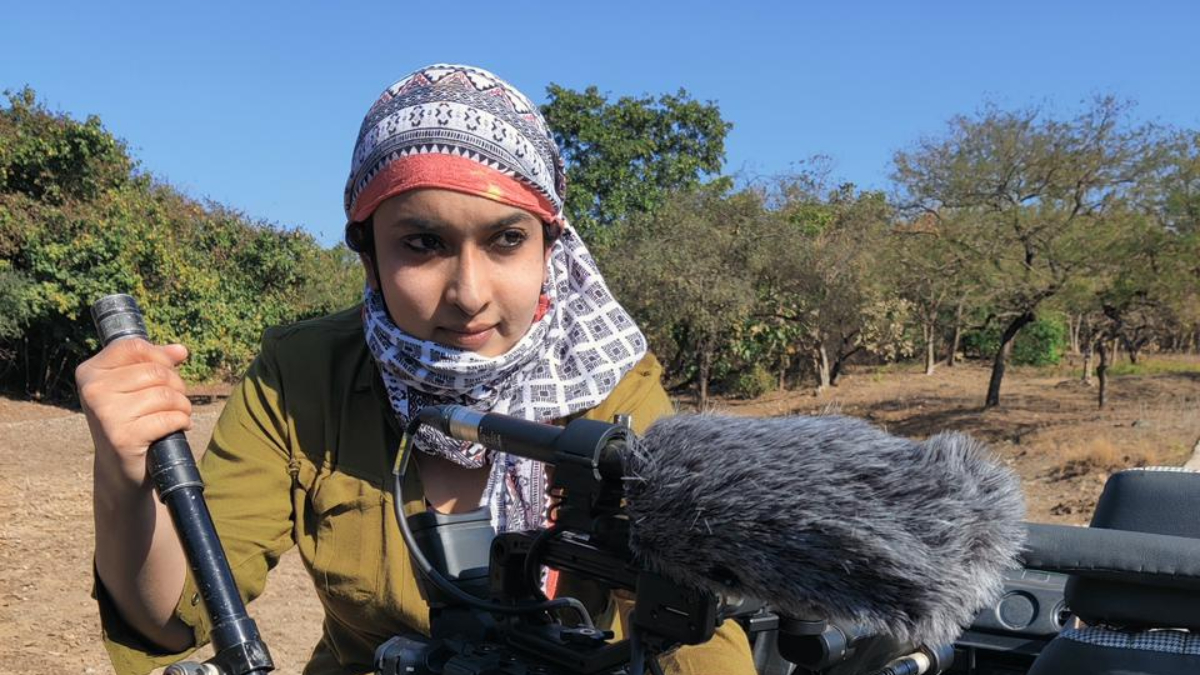
 "EXCLUSIVE | Nat Geo explorer Aishwarya Sridhar on her documentary 'India's Lion Queen': 'In a world today where habitats are shrinking...'")
India’s Lion Queen is a documentary featuring Nat Geo Explorer Aishwarya Sridhar. India’s Lion Queen is a cinematic dive into Gir, the last home of Asiatic lions, and how they adapt to hunt the streets of Sasan.
Aishwarya Sridhar is an international award-winning wildlife photographer and filmmaker. Founder of Bambi Films, she aims to use the power of visual medium to create positive conservation impact. She has travelled widely, documenting unique stories of India’s rare and endangered species.
From hiking across the Western Ghats to photograph the elusive and endemic lion-tailed macaque to journeying across the hot deserts of Little Rann of Kutch for the desert fox, Sridhar has worked in different habitats, including hostile terrains.
In an exclusive interview with Firstpost, Sridhar spoke about her documentary on Nat Geo and the habitats of India.
Edited excerpts from the interview
India’s Lion Queen places Asiatic lions within a global conservation conversation. Why do you think their story needed to be told now and what makes India’s lions so significant to the world?
So, first and foremost is that Asiatic lions are only found in India. They are one species that are found nowhere else on earth. So that way, we have a very unique positioning in terms of calling the Asiatic Lions as one of our significant ambassador species of our ecosystem.
Games
View AllIt’s found exclusively in Gir and in and around certain forests in Gujrat. Of course, the species have made a remarkable comeback in terms of conversation as well. Several years ago, it was almost on the verge of extinction and then, it bounced back. Secondly, there has never been a story that is a dedicated character driven story that looks into the Asiatic Lions and how they share the space with humans. It’s a very unique conservation success story and not only that, with regards to the habitat that Asiatic Lions live in, it is a shared landscape that they share with humans especially with the Maldhari tribe over there.
So, that is a remarkable environment for a Big Cat to thrive in. You think of wilderness and lions, you think of Africa and the Savannahs. Many people don’t know that in India that you do have Lions and they are thriving. They are living in dry residual forests like Gir and Girnan. These Lions are actually sharing space with humans and doing very comfortably.
Co-existence is happening really peacefully over there. So that is one of the main reasons why I wanted to highlight this particular story. One, as a character, it has never been done before. Secondly, I wanted to also showcase that these big cats are sharing space with humans. Times are now changing moving forward, it’s going to be a shared landscape. It’s time we begin to accept the wild as a part of our world and not see our wildlife and ecosystem as a different world.
National Geographic is known for character led, science-driven storytelling. How did you balance emotional narrative with scientific accuracy while bringing Noor’s journey to life?
That is a challenge that I had because I had to constantly be careful that I don’t project my own emotions onto the behaviour that we’re actually filming. It’s a very thin line to thread on otherwise it can be a huge ____ of the character and I didn’t want that. I wanted to stay accurate to science because it is coming on a platform like National Geographic. I wanted to stay true to the fact that for a Nat Geo story, it had to be iconic, it had to be epic.
At the same time, have the legacy of character led drama but also stay true to the science behind the behavior. So, what we tried and did was, there was obviously a tussle between showing her gentleness and her softness and her ferocity. We tried to balance the moment throughout the film. Whatever you see in the film, all the story, the development, the character and the emotional arc, they’re all built on solid scientific behavior that we see on the Asiatic Lions. Nothing has been changed or tweaked just for the sake of storytelling. It is completely rooted in animal behaviour and whatever you see in terms of behaviour, we’ve tried to give an emotional angle to.
Gir is portrayed not as untouched wilderness but as a shared human - wildlife landscape. What surprised you most while documenting lions living so closely alongside people?
I would say the co-existence surprised me the most. The fact that there’s hardly any mention of conflict. In a world today, where habitats are shrinking, where human pressure on the environment is increasing day by day. Here is an example of a perfectly shared wilderness that has found its perfect harmony among the people as well as the lions. So, each has adapted to live alongside the other, that for me was the most surprising.
Noor emerges as a powerful female leader without the protection of a dominant male. What does her story reveal about female leadership and resilience in the wild?
To me, Noor is a symbol of resilience in the wild. The way she has led her pride, the way in which she’s being a mother making sure that her first born ends up becoming the King of Gir. Her strategising ability in the wild, the fact that she didn’t mate with the dominant male in the pride because he was ageing. She chose to pick an outside who would have bought in a different genetic pool to forward her lineage. All of that kind of shows the fact that Kings may rule but true dynasties are built by Queens. That was the whole premise of the film as we began shooting and ended up getting more behaviour. Also, in terms of female leadership, the Asiatic Lions Society is clearly a matricial one. If you look at the way the pride dynamics is structured, you have the males roam in together or they are solitary males and they all stay with the pride unlike the African counterparts where the males and females all live in the pride.
In Asiatic Lions, the males are the visiting members of the pride. So, they end up coming, staying with pride during mating or maybe when there is a big hunt. If they have brought down say a buffalo or a deer, then the males if they’re in the area, they do pay a visit to the pride and end up sharing and eating the kill. Otherwise it is a largely female driven society that exists for the Asiatic Lions. So, Noor is a first time mother over here. She’s, of course, the ace huntress among the pride. The pure forms of the fact that its a true female leadership and the fact that women can lead with strategy, with calm as well strength.
India is the only country where Asiatic lions survive in the wild today. How has filming them changed your own understanding of coexistence as the future of conservation?
For me, I feel that today we’re living in the world where we’re in the future. We are going to be living in a shared landscape and it’s very important that we acknowledge that. It’s important that we also look at the way our times are changing. For me, it revealed the future of a conservation that doesn’t lie in isolation but in fact we need to look at co-existence.
Of course the balance is not guaranteed but it just demands a responsibility from us. Thoughtful use of our land, our community involvement, the understanding that this landscape is not just ours but equally theirs as well. In fact, I was talking to one of the Maldhari tribals during the shoot. I ended up asking him a question: don’t you ever get anger or frustration or resentment towards the Asiatic Lions for attacking your cattle. He gave a beautiful answer he gave me, the fact that forest is not our home, the forest is their home. We are just there on the land, we just live with this mentality. So automatically we don’t end up feeling any resentments towards these predators.
Towards the future, I would say that the romantic idea of one pristine wilderness has to change because now we’re seeing more and more carnivores surviving with India’s population living alongside human beings. So, there has to be a behavioural shift in the way in which we accept them and they accept us. That is what I wanted to bring out with this story. Of course, the filming was deeply changing and humbling for me. It changed the way I saw wilderness. Not as something separate from us but an integral part of our own life.
The film highlights how these lions adapt from hunting in dense forests to navigating villages and dry seasons. Is there something noteworthy you notice in these moments? You must have seen all this this unfolding in real time
You bring me back to my co-existence narrative and the fact that the Maldharis and also other towns that border the lion habitat live so peacefully, with these predators, with these big cats. They don’t see them as threats but they see them as respectful beings worthy of reverence. That for me, was the most special thing to see the big cats from their viewpoint and lens.
As the first Indian woman to win the Wildlife Photographer of the Year, how does India’s Lion Queen mark a new chapter in your journey as a storyteller on a global platform?
I’m deeply grateful and humbled that this film has found a home in National Geographic. It is a platform that truly is a pioneering platform in terms of science led storytelling. For me, that is a huge honour. It, of course, is a milestone in my career as well because I’ve always wanted to do an unsaid trilogy on India’s Big Cats. My first film was Tiger Queen of Taru which was about a tigress named Maya from Tadoba which premiered on Nat Geo Wild. Now, with my second film on Asiatic Lions also premiering on Nat Geo Wild, it is kinda taking forward the trilogy. It is a huge career growth for me. Also, to have a continued association with National Geographic. I’m not just a filmmaker whose films are on their platform but I’m also a National Geographic explorer and I’m associated with the society in the US.
You’ve often spoken about storytelling as a bridge between emotion and awareness. What do you hope audiences, especially in India feel and do differently after watching this film?
I really hope that they begin to see Wilderness not as something that is a distant concept but something that is living and thriving beside us. I also want to change the way they perceive these big cats. Not as carnivores who are raw primal beings but as sentient beings who have an own emotional side to them. I’ve seen Noor being a tender mother, a protective sister and a member of her pride. A true Queen who leads her pride fighting against all challenges including male, even with Maya for that matter. I’ve actually seen and discovered individualism in each of these big cats as I filmed them. That for me is one way I’d like to project them out to the audience around the globe. They are not hardcore primal beings who only know ferocity and only are killing machines but in fact, they are sentient beings who have their own emotional side to them. It’s high time we acknowledge that these cats are not very different from the way we are as human beings. Our core is emotional beings and that is something that is their core as well.

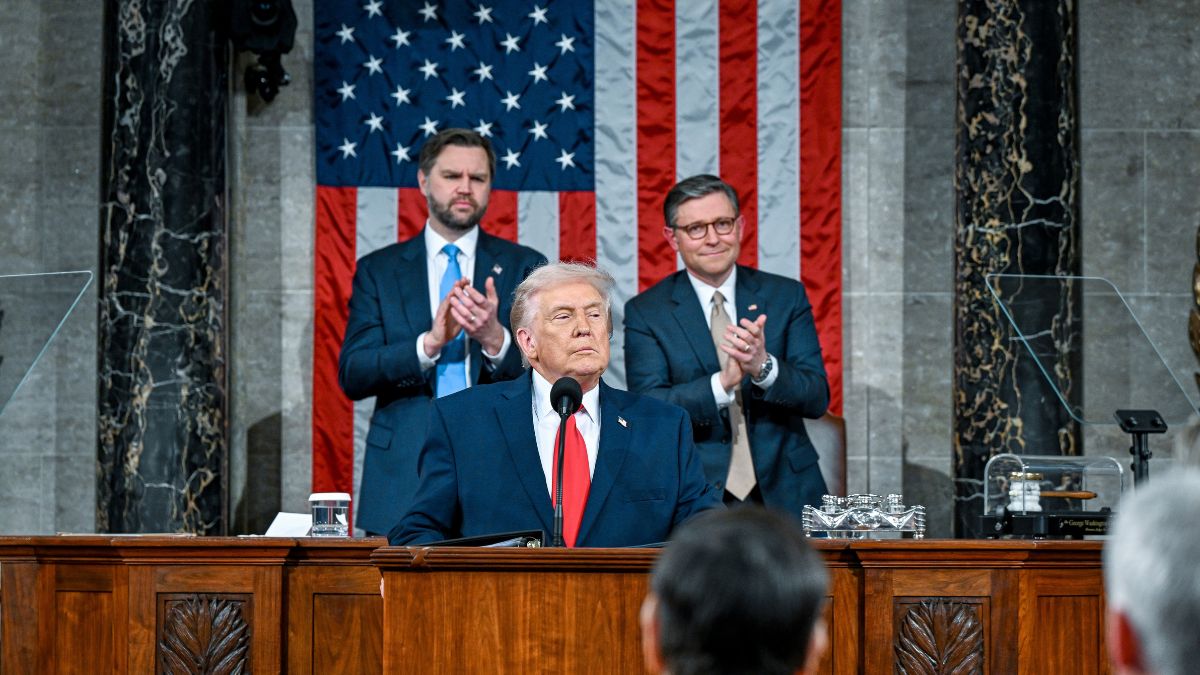 "India-Pakistan war, Iran nukes, tariffs: What Trump spoke of in longest State of Union speech")
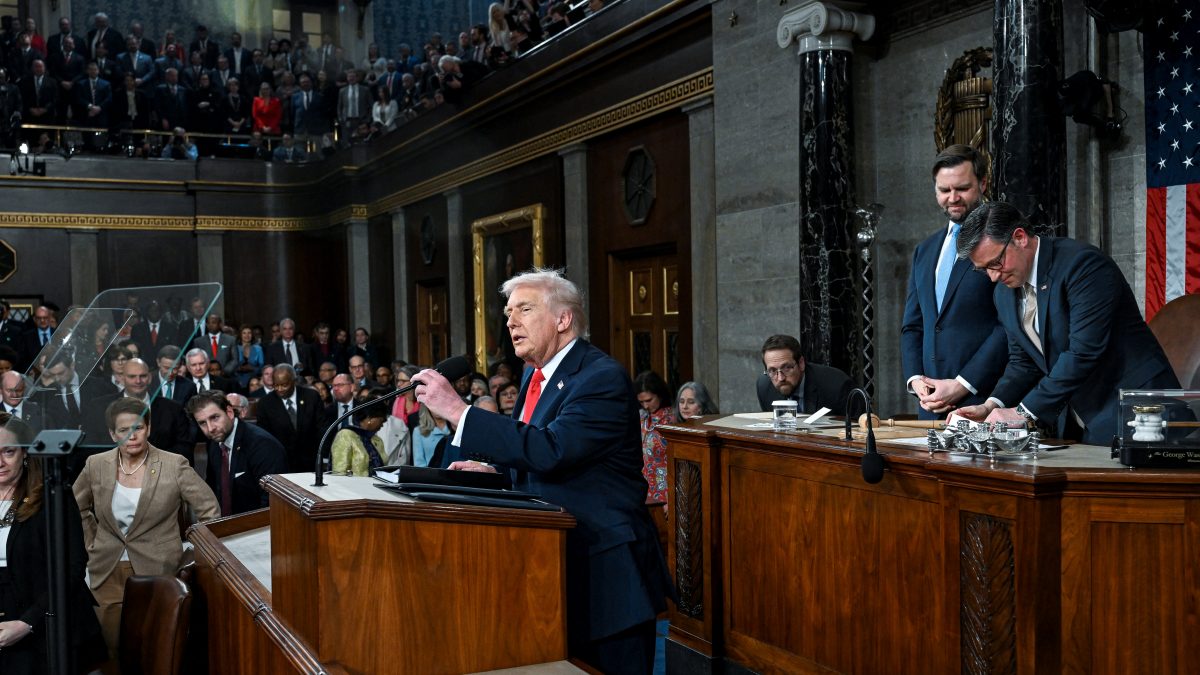 "State of the Union: Trump says 'almost all' countries want to keep trade deals amid SC's ruling")
 "4 things India need to change against Zimbabwe to stay alive in T20 World Cup 2026")
 "State of the Union: 'Pak PM said 35 million people would have died if it weren't for me', claims Trump")
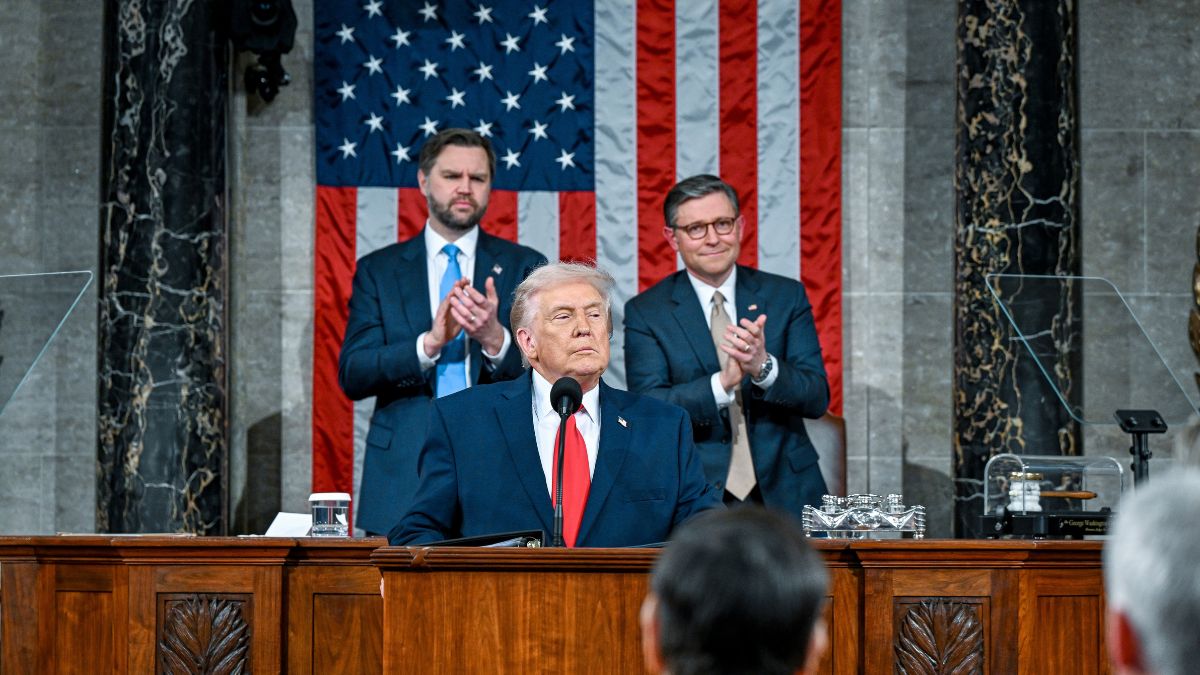 "India-Pakistan war, Iran nukes, tariffs: What Trump spoke of in longest State of Union speech")
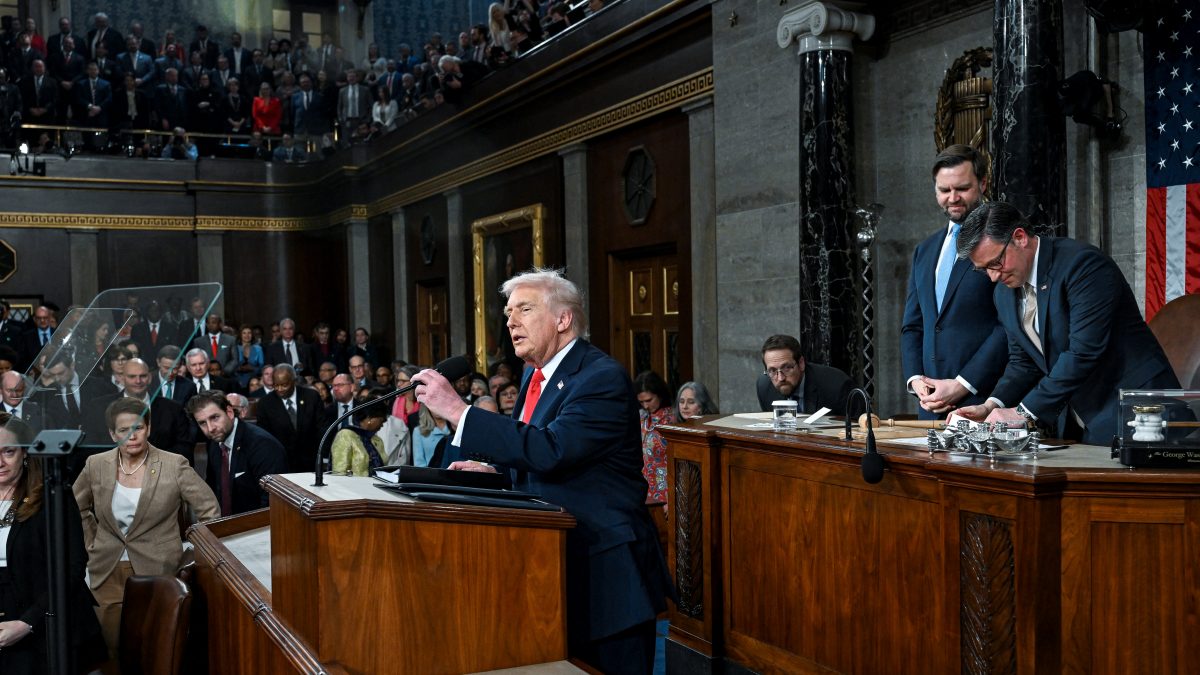 "State of the Union: Trump says 'almost all' countries want to keep trade deals amid SC's ruling")
 "4 things India need to change against Zimbabwe to stay alive in T20 World Cup 2026")
 "State of the Union: 'Pak PM said 35 million people would have died if it weren't for me', claims Trump")