

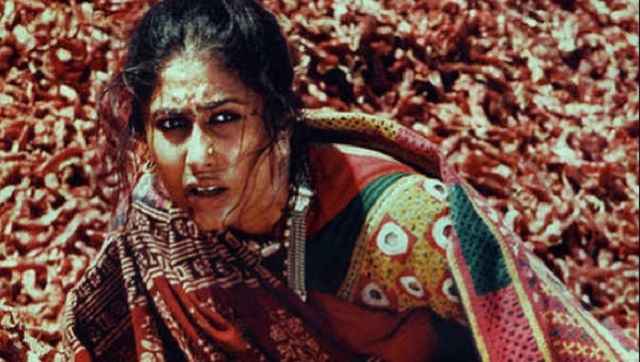
 "Flashback | 35 years on, Smita Patil's Mirch Masala remains a frenetic journey in search of a woman's right to her space")
Smita Patil died before she could see herself in Mirch Masala. Would she have placed it among her best works? She missed out on one of her most alluring performances in a film that refuses to age. What is it about Mirch Masala that is so tantalizing and engaging? Is it the congregation of these beautiful women in a Gujarati village, all strong and yet lorded over by the rules of a patriarchal society? Twenty-five years after it was made, Ketan Mehta’s Mirch Masala remains an enigmatic mesmeric parable on women’s rights. On the topmost level of perception, it’s an excellent thriller about a bunch of very attractive women who try to hide from a dangerous predator. Like those teen-slasher cheesy sex films where under-dressed girls scamper across dark corridors as a gruesome monster runs after them, Mirch Masala, at its most superficial level, is a parable on predatoriness. But in reality, Mirch Masala is a metaphor on individual space. Through the unforgettable character of Sonbai [Patil], director Ketan Mehta delineates a quirky, compelling satirical drama on sex. The not-so-single girl whose right to say no to a powerful predator eventuates in a battle of the sexes, which culminates in a kind of defiant feminist protest that today’s post-Nora Ephron generation of assertive women would find hard to applaud as anything but a token gesture of defiance. When Sonbai flees the lecherous tyrannical tax-collector, played with moustache-twirling glee by Naseeruddin Shah, she seeks asylum in a chilli factory where she is cocooned from the extraneous threat that looms large in her life, mainly because her husband [Raj Babbar in a guest appearance] has left her in the village for a job in the city. More than a gripping gender skirmish set against a flaming-red backdrop of ripe chillies, Mirch Masala is a profoundly seductive tale populated by some of the most attractive women you have seen under one cinematic roof. Mehta, known to have an eye for physical beauty, chose actresses who could blend into the rural Gujarati milieu without losing any of their innate charm.
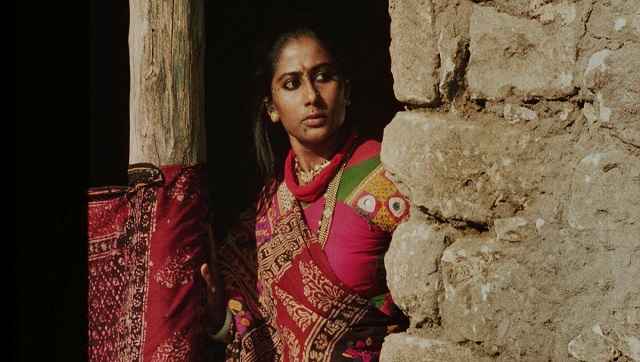
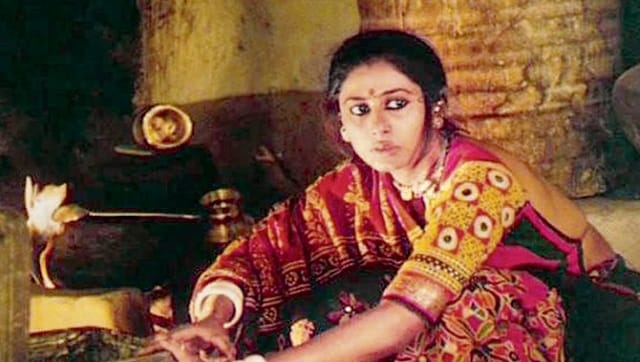
It could be perceived as a parable of female bonding or a straightforward thriller about the victim and the perpetrator. Either way, the poise and power of the film remain undiminished over the years.
The subedaar’s power-hungry mechanisations are manoeuvred by a tremendous satire. The cheesy subedaar has lately bought himself a miracle machine known as the Gramophone (the film is set in pre-Independence India). He plays his 78 rpm records on his new toy to terrorise villagers and seduce their women. He is the rogue element sanctioned by the State to perpetrate a power that he is ill-equipped to use. He therefore ends up looking ludicrous in his self-importance. Mirch Masala makes excessive power look ridiculous and funny. When the subedaar decides to break down the chilli factory’s gate, he thinks he’s breaking Sonbai’s defences. Absolute power does not just corrupt absolutely. It also blinds. No wonder the women throw chilli powder into the sickening Subedaar’s lustful eyes at the end. He cannot see his own brutish arrogance anyway. Mirch Masala Trivia
- Smita Patil’s last film; she died before its release.
- Mohan Gokhale, who plays the Oberoi’s kid brother, also died very young, at the age of 40.
- Suresh Oberoi won the National Award for the mukhiya role.
- One can see Paresh Rawal, who later played Sardar Patel in Mehta’s biopic, as one of the villagers.
- Dina Pathak, and both her daughters Ratna and Surpiya, were in the film. It is the only time they all appeared together in one film.
- Om Puri was only 30 when he played the 80-year old watchman of the chilli factory.
Ketan Mehta on Mirch Masala “Smita was a very dear friend. Mirch Masala was one of her best performances. It was her last film. She just dubbed the film, and went away. She got all the nuances right. I knew her from my film institute days. When I was assisting a senior director Arun Khopkar in his diploma film, Smita had come to act in it. She also acted in my first feature film Bhavni Bhavai. She was my only choice to play Sonbai. The moment she read the script, she slipped into the character. Mirch Masala is a film about the human condition. There’s a short story by a Gujarati writer Chunnilal Madia. It was a four-page story. But that was based in a tobacco factory in Saurashtra. And it ended with the watchman of the factory dying. I converted it into a chilli factory. The moment I saw these chilli fields in Gujarat, the idea came to me. The film ended with Sonbai throwing chillies in the villain’s eyes. The protest had begun. Do I feel the position of the rural woman has improved since I made Mirch Masala? No, not at all. All the actors in the film were my friends. Naseer and Om were with me in the film institute. Both were brilliant. Mohan Gokhale was also a friend. He too had acted in Bhavni Bhavai. Today, Mirch Masala is recalled with great fondness even 25 years later. It was shot in a village named Chotila near Rajkot. Funnily, I had selected another location. I had just finished Holi [1984]. Suddenly, the NFDC [National Film Development Corporation of India] funding for Mirch Masala came through. So I rushed to location, and got to know that if I didn’t finish all my shooting by March, all the chillies would be gone. So I asked all my cast and crew in January, and like a miracle, they all agreed to accommodate me. Smita, Naseer, Raj Babbar, Suresh Oberoi were busy actors. In 2010, there was a film festival devoted to women filmmakers in Chennai. They had invited Mirch Masala although I am not a woman. They obviously saw it as a film on women’s empowerment. So far away from Gujarat that evening, in Chennai, young Tamil women responded so well to Mirch Masala, they brought tears to my eyes. Is Mirch Masala my favourite work? That, and Bhavni Bhavai and Maya Memsaab." Subhash K Jha is a Patna-based film critic who has been writing about Bollywood for long enough to know the industry inside out. He tweets at @SubhashK_Jha.

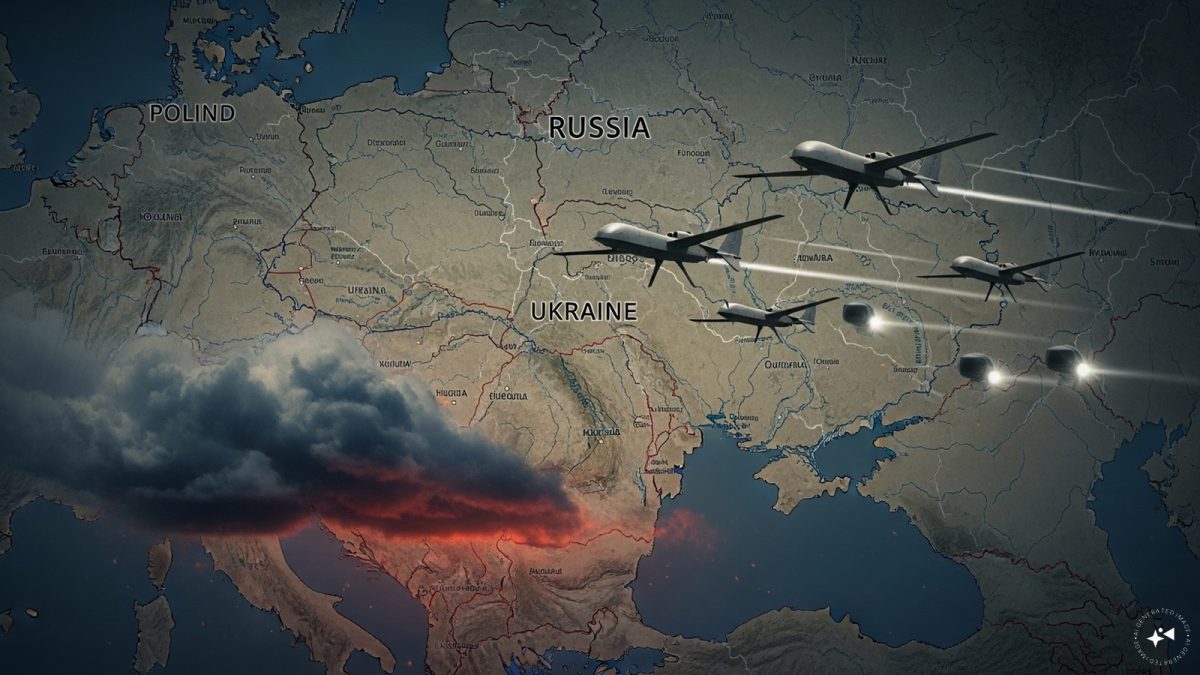 "Russian drones over Poland: Trump’s tepid reaction a wake-up call for Nato?")
 "As Russia pushes east, Ukraine faces mounting pressure to defend its heartland")
 "Why Mossad was not on board with Israel’s strike on Hamas in Qatar")
 "Turkey: Erdogan's police arrest opposition mayor Hasan Mutlu, dozens officials in corruption probe")
 "Russian drones over Poland: Trump’s tepid reaction a wake-up call for Nato?")
 "As Russia pushes east, Ukraine faces mounting pressure to defend its heartland")
 "Why Mossad was not on board with Israel’s strike on Hamas in Qatar")
 "Turkey: Erdogan's police arrest opposition mayor Hasan Mutlu, dozens officials in corruption probe")



